


Recycling symbols appear almost everywhere—from plastic containers and cardboard boxes to glass bottles, food packaging, batteries, and electronics. But what do recycling symbols mean, and can you rely on them to tell you exactly where an item should go?
The answer is not always as simple as it seems. Some recycling symbols identify the material a product is made from, while others indicate that packaging may be recyclable, contains recycled material, is compostable, or requires a special collection point. Certain logos relate to environmental certifications or producer-funded recovery programs and do not automatically mean an item belongs in your household recycling bin.
That is why recognizing the familiar recycling triangle or another green symbol is only the first step. Recycling rules can vary between countries, states, cities, waste collection companies, and individual processing facilities. Even packaging labeled as recyclable may not be accepted locally if the necessary sorting equipment or recycling infrastructure is unavailable.
In this guide, we’ll explain the most common recycling symbols and their meanings, including the Mobius Loop, plastic recycling numbers 1–7, the Green Dot, compostable packaging symbols, glass and metal recycling symbols, and the crossed-out wheelie bin. You’ll also learn how to check whether an item is recyclable where you live, avoid common recycling mistakes, and prepare packaging correctly before putting it in the bin.
The U.S. Environmental Protection Agency’s recycling guidance also emphasizes that recycling helps conserve resources and that local programs may not collect every material that is technically recyclable.
Quick Guide to Common Recycling Symbols
The table below gives you a quick overview of the most common recycling symbols and their meanings. These labels can help identify whether an item is recyclable, compostable, made from recycled material, or requires a special disposal method.
| Symbol | What It Means | Important Note |
|---|---|---|
| Mobius Loop | Commonly indicates recyclability or the recycling cycle | Local recycling programs may not accept it |
| Mobius Loop with a percentage | The product contains the stated percentage of recycled material | It does not necessarily mean the item itself is recyclable |
| Plastic numbers 1–7 | Identifies the type of plastic resin used | The number does not guarantee that the item can be recycled locally |
| Green Dot | The producer participates financially in a packaging recovery system in certain countries | It does not mean the packaging is recyclable |
| Glass recycling symbol | Indicates that glass packaging should be recycled where suitable collection is available | Bottles and jars are different from ceramics, mirrors, and drinking glasses |
| Aluminum recycling symbol | Indicates packaging made primarily from recyclable aluminum | Empty and rinse containers before recycling when required |
| Steel recycling symbol | Indicates packaging made from recyclable steel | Common on food cans, tins, lids, and some aerosol containers |
| Crossed-out wheelie bin | The item should not be placed in ordinary household waste | Commonly appears on electronics, batteries, and electrical equipment |
| Seedling compostable symbol | Indicates certified industrially compostable material | It may not break down properly in a home compost pile |
| Home compostable symbol | Indicates material designed to compost under home composting conditions | Follow the specific certification and disposal instructions |
| FSC logo | Shows that paper or wood comes from certified, recycled, or controlled forest-based sources | It is a sourcing certification, not a recycling instruction |
| Tidyman symbol | Reminds you to dispose of the item responsibly and not litter | It does not indicate that the item is recyclable |
This chart should be used as a quick recycling symbol guide, not as a universal disposal rule. Packaging labels can have different meanings depending on the country where a product is sold, and recycling programs often accept different materials even within the same region.
Before placing an unfamiliar item in your recycling bin, check the instructions from your local municipality or waste collection provider. This can help prevent contamination, reduce sorting problems, and improve the chances that recyclable materials are actually recovered and processed.
The Mobius Loop Recycling Symbol
Among the many recycling symbols found on packaging, the Mobius Loop is one of the most recognizable worldwide. It is made up of three arrows arranged in a continuous triangular loop, with each arrow flowing into the next.
When the symbol appears on a product or package, it generally indicates that the material is capable of being recycled under the right conditions. However, it does not guarantee that the item is accepted by your local curbside recycling program.
Whether an item can actually be recycled depends on more than the symbol. The material, size and shape of the package, whether several materials are bonded together, local collection rules, available sorting equipment, and demand for the recovered material can all affect what happens after it enters the recycling system.
For example, a plastic tray may display the Mobius Loop but still be rejected by a local program that accepts only bottles, jugs, and tubs. Similarly, packaging made from layers of plastic, foil, and paper may be technically recyclable in a specialized facility but difficult to process through ordinary curbside recycling.
The Mobius Loop can appear on plastic, paper, cardboard, glass, metal, and other types of packaging. When it appears by itself, it is best understood as a general recyclability symbol rather than a guarantee that the item belongs in your recycling bin.
Before recycling the item, look for additional information such as a plastic resin identification number, written disposal instructions, or a local recycling label. Your municipal recycling guide or waste collection provider remains the most reliable source for determining whether a specific item is accepted where you live.
Does the Mobius Loop Mean a Product Is Made From Recycled Material?
Not necessarily.
A plain Mobius Loop usually refers to the recyclability of the material, while a percentage shown inside or beside the symbol generally refers to the amount of recycled content used to make the product.
For example, a package marked with a Mobius Loop and “50%” may indicate that half of the material was made from recycled sources.
These are two different concepts:
- Recyclable means the material may be capable of being collected and processed into a new product.
- Recycled content means some or all of the material used to manufacture the item came from previously recovered material.
An item can therefore be recyclable without containing any recycled material. Likewise, a product can contain a high percentage of recycled content but still be difficult to recycle again because of coatings, mixed materials, contamination, or limited local processing options.
What Does a Percentage Inside the Recycling Symbol Mean?
When a percentage appears inside or next to the Mobius Loop recycling symbol, it usually indicates how much of the product or packaging was made from recycled material.
For example, a symbol marked “50%” generally means that about half of the material used to make the item came from recycled sources. The remainder may have been produced from virgin, or newly manufactured, material.
The important point is that this percentage refers to recycled content, not necessarily to whether the item can be recycled after use.
A package may contain a high percentage of recycled material but still be difficult to recycle. Mixed materials, plastic or wax coatings, adhesives, food contamination, very small components, or limited local processing options can all get in the way.
Post-Consumer Recycled Content
Post-consumer recycled content comes from materials that have already been used by consumers or businesses and then collected for recycling.
Common examples include recovered plastic bottles, aluminum cans, newspapers, cardboard boxes, and glass containers.
These materials are collected, sorted, processed, and used to manufacture new products or packaging.
You may see this abbreviated as PCR, which stands for post-consumer recycled material.
Pre-Consumer Recycled Content
Pre-consumer recycled content comes from manufacturing scraps or other materials recovered before the finished product reaches a customer.
This can include factory trimmings, paper offcuts, plastic production scraps, and metal remnants that are collected and reused in manufacturing rather than discarded.
Instead of being discarded, these materials are returned to the production process or used to manufacture other products.
Why Does Recycled Content Matter?
Using recycled material can reduce demand for newly extracted raw materials and help create a market for materials collected through recycling programs.
Post-consumer recycled content is especially important because it gives recovered household and commercial waste a new use instead of relying entirely on virgin resources.
On packaging, you might see phrases such as “made with 30% recycled plastic,” “contains 100% recycled paper,” or “made with post-consumer recycled material.”
These claims can be useful when choosing between products, but they should not be confused with recycling instructions.
A package labeled “100% recycled content” does not automatically mean that it is 100% recyclable.
To determine whether an item belongs in your recycling bin, check the material, the disposal instructions on the package, and the rules of your local recycling program.
Understanding how percentages work alongside recycling symbols can help you distinguish recycled content from actual recyclability.
Plastic Resin Identification Codes 1–7
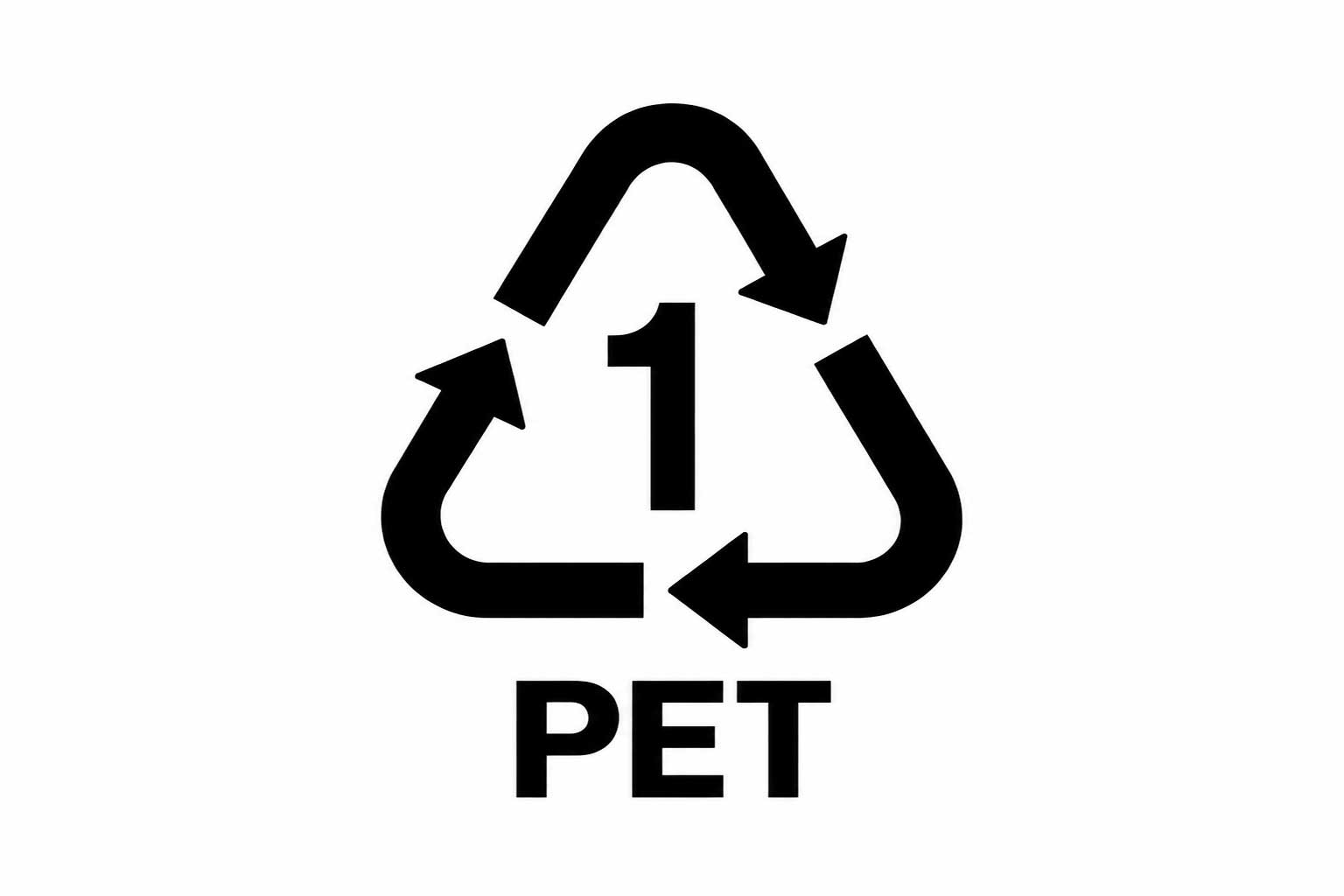
The numbers 1 through 7 found on many plastic products are known as resin identification codes. They identify the type of plastic resin used to make the item, including PET, HDPE, PVC, LDPE, PP, PS, and other plastics grouped under #7.
These plastic codes are among the most commonly misunderstood recycling symbols because the number identifies the resin type rather than guaranteeing that the item will be recycled.
These numbers are often mistaken for recycling ratings, but they do not guarantee that a product can go into your local recycling bin. ASTM International explains that Resin Identification Codes are not “recycle codes” and that the presence of a code does not mean a recycling system exists for that particular item.
For example, a #2 HDPE detergent bottle may be accepted through curbside recycling, while a flexible plastic bag made from a similar resin may require a separate drop-off program.
The resin identification system is based on a coding system introduced by the Society of the Plastics Industry in 1988.
For a complete explanation of all seven plastic types, see our guide to the seven recycling symbols on plastics.
Packaging Recycling Labels: Recycle, Do Not Recycle and Check Locally
Some packaging uses written labels alongside traditional recycling symbols to provide clearer disposal instructions.
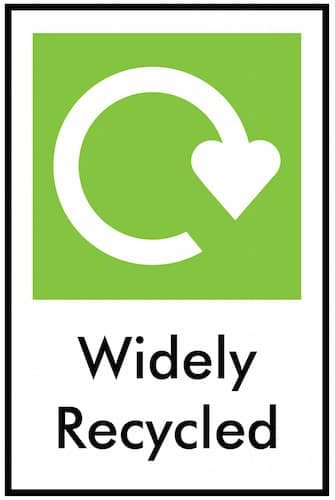
Older products may still display labels such as Widely Recycled, Widely Recycled – Rinse, or Not Yet Recycled. Newer labeling systems generally use simpler instructions such as Recycle, Do Not Recycle, or Check Home Collections.
Recycle
A Recycle label indicates that the packaging is widely collected and can be effectively sorted and processed through the relevant recycling system.
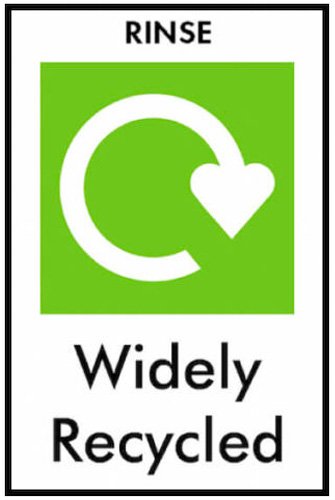
The label may also include instructions such as Rinse, Empty, Flatten, or Keep Cap On. These directions help consumers prepare packaging correctly before collection.
Rinse Before Recycling
A rinse instruction simply means that significant food or liquid residue should be removed before recycling. The container does not need to be spotless; a quick rinse is usually enough to reduce contamination.
Do Not Recycle or Check Home Collections
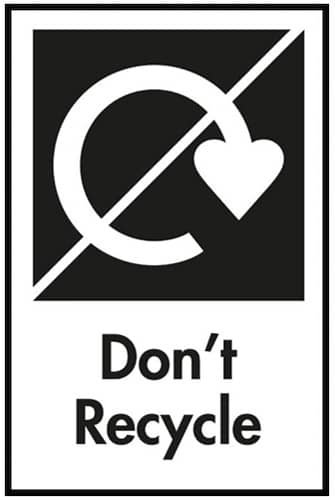
A Do Not Recycle label means the packaging should not normally be placed in household recycling. This does not necessarily mean the material could never be recycled. Collection, sorting, or processing infrastructure may simply not be sufficiently available.
Some packaging may instead say Check Home Collections, meaning acceptance varies between local authorities and you should check your local service before putting the item in the recycling bin.
Older labels such as Not Yet Recycled, Not Currently Recycled, and Widely Recycled may still appear on older packaging or recycling guides. Because recycling infrastructure changes over time, use these older symbols as a guide and check current local instructions when you are unsure.
What Does the Green Dot Symbol Mean?
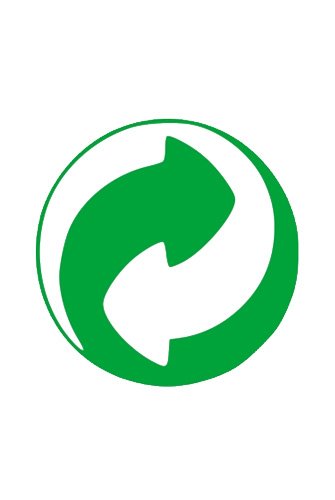
The Green Dot consists of two interlocking arrows and appears on packaging in many European markets. The Green Dot is one of the recycling symbols consumers most often misunderstand because its circular arrows look like a recycling instruction.
Despite its appearance, the Green Dot does not mean that the package is recyclable, made from recycled material, or accepted in your household recycling bin.
Instead, it is a financing symbol for producer responsibility. It generally indicates that a financial contribution has been paid to a packaging recovery organization responsible for helping fund the collection, sorting, and recovery of packaging waste.
PRO Europe explains that the Green Dot is a financing symbol rather than an environmental label.
To determine whether the package itself can be recycled, look for separate recycling instructions, material information, or guidance from your local collection service.
What Does the Glass Recycling Symbol Mean?
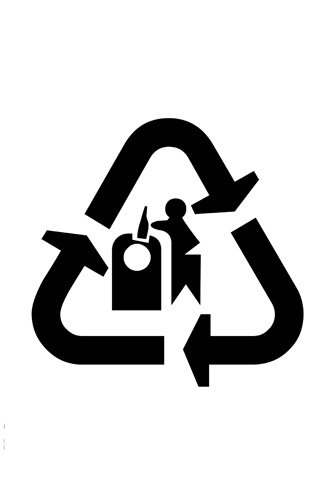
The glass recycling symbol generally indicates that glass packaging should be recycled where suitable collection is available. Like other recycling symbols, the glass logo should be treated as guidance rather than a guarantee that every local program accepts the item.
Glass bottles and jars are widely recyclable because the material can be crushed, melted, and used to manufacture new glass products. However, not every type of glass belongs in the same recycling stream.
Food jars, beverage bottles, sauce jars, and similar container glass are commonly accepted. Drinking glasses, mirrors, window glass, ceramics, crystal, and oven-safe cookware are different because they may have different chemical compositions and melting temperatures.
Containers should usually be emptied before recycling. A light rinse is enough to remove significant food or drink residue, and labels can often remain attached.
Some communities collect glass at the curb, while others require residents to use bottle banks or dedicated drop-off locations. Always follow the system available where you live.
What Does the Aluminum Recycling Symbol Mean?
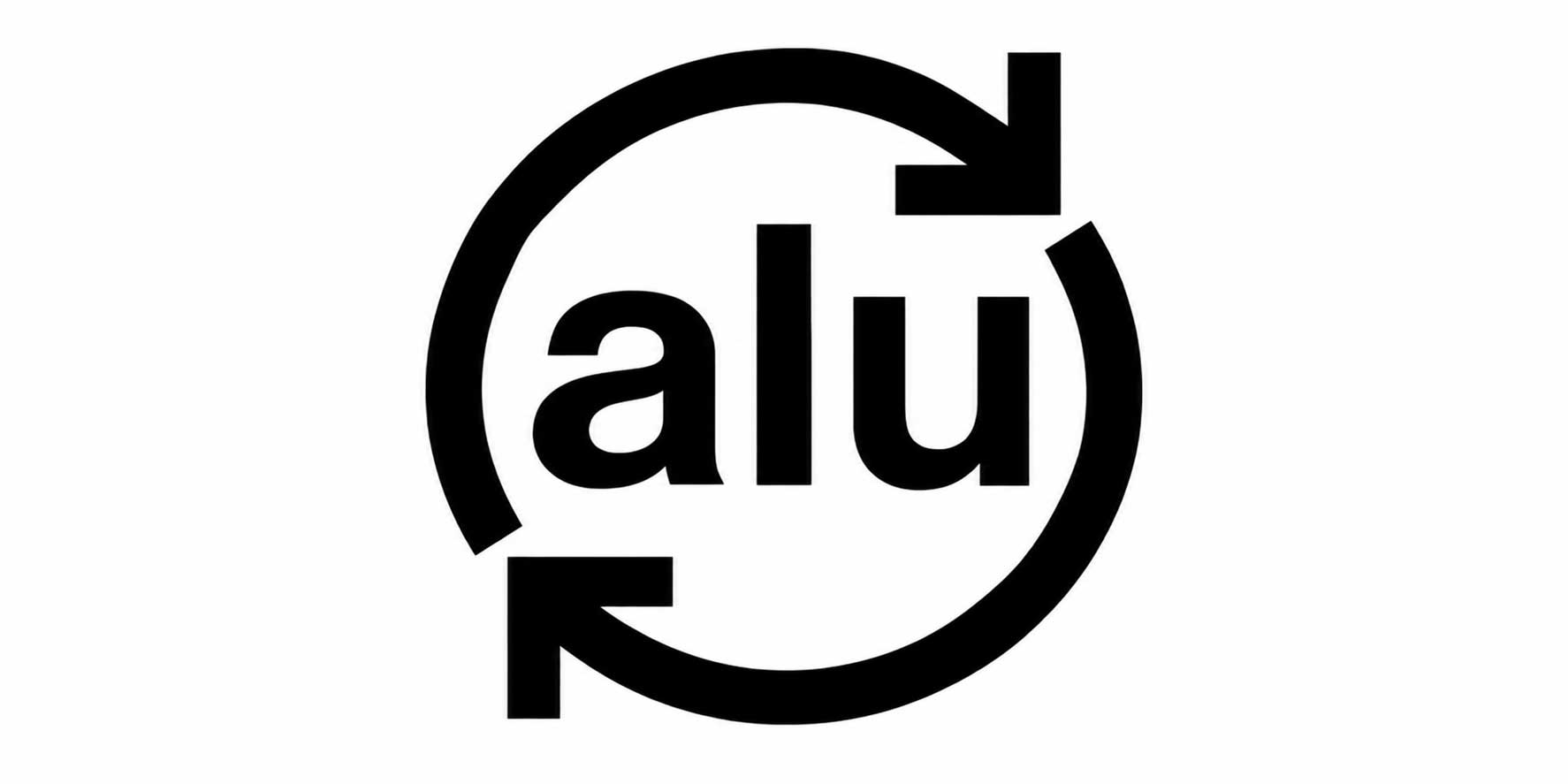
The aluminum recycling symbol indicates that a product or package is made primarily from aluminum and may be recyclable where suitable collection is available. Aluminum recycling symbols are commonly found on cans, foil trays, lids, and other metal packaging.
Aluminum is commonly used for beverage cans, food cans, foil trays, household foil, some aerosol containers, and metal lids.
One of aluminum’s major advantages is that it can be recycled repeatedly. Recovering aluminum also requires substantially less energy than producing new aluminum from raw materials.
Cans and trays should generally be emptied before recycling, and heavily contaminated foil may need to be discarded if it cannot be cleaned reasonably.
Rules for foil, aerosol cans, and small aluminum items vary, so check your local recycling guidance before placing them in your household bin.
What Does the Steel Recycling Symbol Mean?

Among metal recycling symbols, the steel recycling mark indicates that a package contains steel that may be recovered through metal recycling systems.
You may see it on food cans, soup cans, pet food containers, metal lids, tins, and some aerosol cans.
Steel is especially useful in recycling facilities because it can often be separated from mixed materials using magnets. After processing, recovered steel can be used to manufacture new cans, appliances, construction materials, vehicles, and many other products.
Food cans should generally be emptied and lightly rinsed before recycling. Aerosol cans should be completely empty and should never be punctured, crushed, or burned.
Large metal objects, gas cylinders, cookware, and scrap metal usually require a dedicated recycling center rather than a household recycling bin.
What Does the Crossed-Out Wheelie Bin Symbol Mean?
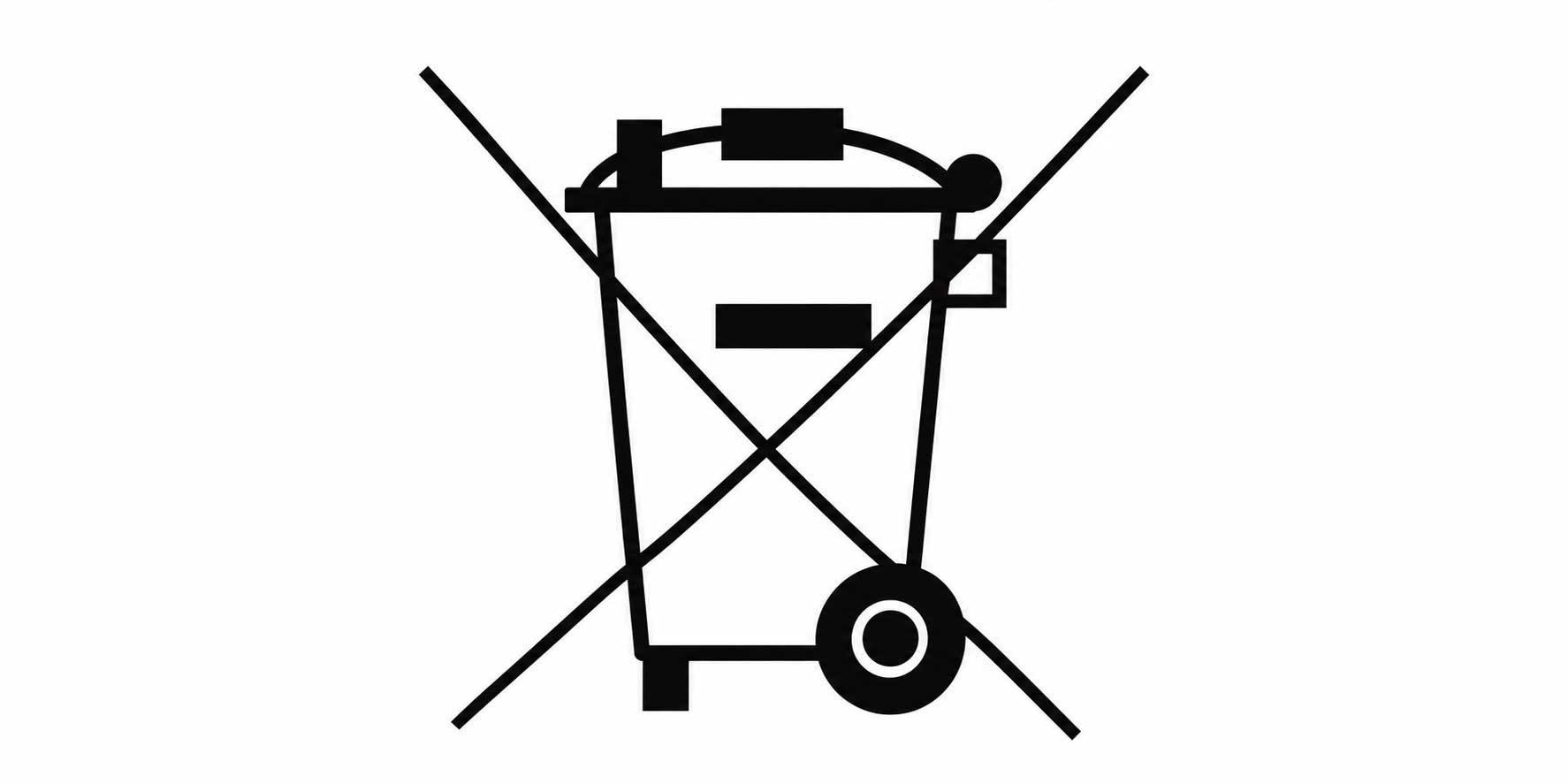
The crossed-out wheelie bin symbol means that an item should not be placed in ordinary household waste. Unlike many familiar recycling symbols, this mark is primarily a disposal warning: the item requires separate collection.
It commonly appears on electrical and electronic products such as phones, computers, chargers, cables, household appliances, batteries, and some light bulbs.
Under European WEEE rules, the crossed-out wheeled bin is the official symbol used to indicate separate collection of electrical and electronic equipment.
These products can contain valuable metals and reusable components, but they may also contain batteries or other materials that require controlled handling.
Instead of putting them into household trash or curbside recycling, use a municipal electronics collection point, retailer take-back program, manufacturer return scheme, or approved e-waste recycler.
You can learn more about the crossed-out wheeled bin and WEEE labeling requirements.
What Does the Compostable Symbol Mean?

A compostable symbol indicates that a product has been designed to break down under specific composting conditions. Compostability logos are often grouped with recycling symbols, but they actually describe a different end-of-life process.
One of the most recognizable examples is the Seedling logo, which is used on products certified for industrial composting under the European EN 13432 standard.
This distinction matters because industrially compostable does not necessarily mean home compostable. Industrial composting facilities maintain controlled temperatures, moisture levels, and processing conditions that are difficult to reproduce in a backyard compost pile.
European Bioplastics explains that the Seedling logo certifies industrial compostability.
Compostable plastics should also generally be kept out of conventional plastic recycling because they have different properties and can interfere with the recycling process.
If a product is labeled home compostable, it is designed to break down under less controlled household composting conditions. Even then, follow the certification and disposal instructions provided with the product.
When no suitable composting collection exists, follow your local waste authority’s guidance rather than assuming that compostable packaging belongs in recycling or a backyard compost pile.
What Does the FSC Symbol Mean?
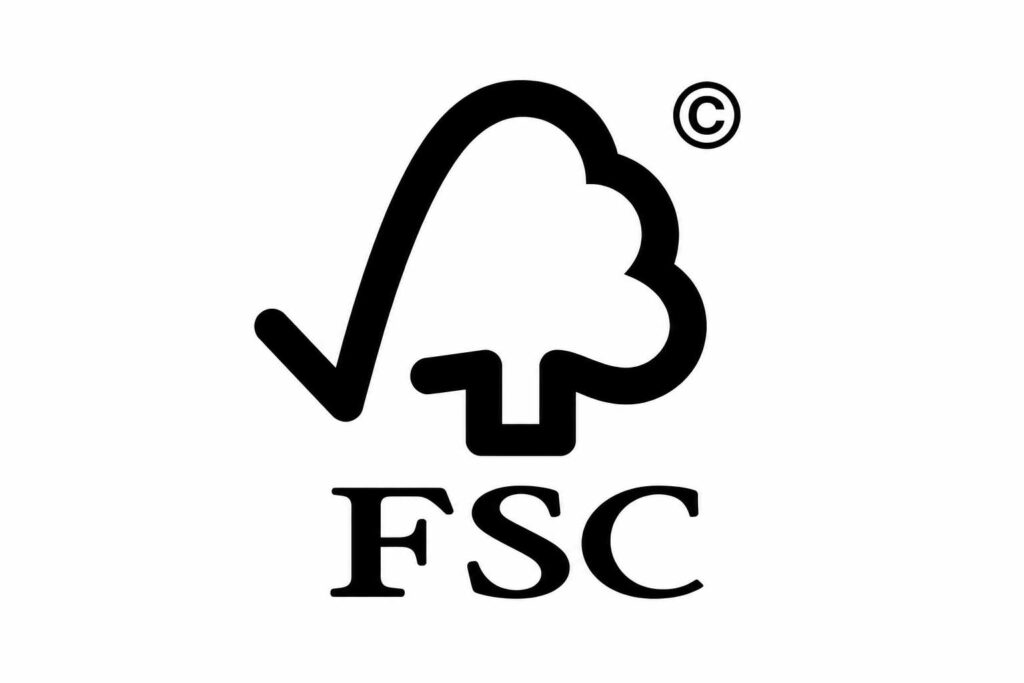
The FSC symbol appears on paper, cardboard, wood, furniture, books, tissues, packaging, and many other products made from forest-based materials.
FSC stands for the Forest Stewardship Council, an international certification system focused on responsible forest management and the traceability of forest-based materials through the supply chain.
Unlike a recycling logo, the FSC symbol does not tell you where to dispose of a product. Instead, it provides information about the source of the wood, paper, or other forest-based material used to make it.
Does the FSC Logo Mean a Product Is Recyclable?
Not necessarily.
An FSC-certified product can still be difficult or impossible to recycle if it contains plastic coatings, foil, wax, strong adhesives, laminated surfaces, mixed materials, or heavy food contamination.
For example, an FSC-certified cardboard package may come from responsibly sourced material but still be unsuitable for curbside recycling if it has a non-removable plastic or foil lining.
The FSC logo is therefore a responsible sourcing certification, not a universal recycling symbol.
What Are the Three Main FSC Labels?
There are three main FSC labels you may see on products: FSC 100%, FSC Recycled, and FSC Mix.
The Forest Stewardship Council explains the differences between FSC 100%, FSC Recycled, and FSC Mix labels.
FSC 100%
The FSC 100% label means that all forest-based material used in the labeled product comes from FSC-certified forests.
These forests are managed according to FSC standards covering environmental, social, and economic aspects of forest management.
FSC Recycled
The FSC Recycled label means that the forest-based material used in the product is 100% recycled material.
Depending on the product, this may include reclaimed paper, cardboard, wood, or fiber that has been recovered and used again rather than sourced from newly harvested trees.
Choosing recycled forest products can help extend the useful life of existing materials and reduce demand for virgin resources.
FSC Mix
FSC Mix products can contain material from FSC-certified forests, recycled sources, and/or FSC-controlled wood. Controlled wood does not necessarily come from an FSC-certified forest, but it is screened to reduce the risk of material coming from unacceptable sources.
This makes FSC Mix different from FSC 100%, which uses material entirely from FSC-certified forests.
Can FSC-Certified Paper and Cardboard Be Recycled?
Often, yes—but FSC certification itself does not determine whether something belongs in the recycling bin.
Ordinary FSC-certified cardboard boxes, paper bags, office paper, envelopes, books, and paper packaging may be recyclable when they are clean, dry, and accepted locally. Problems arise when paper is combined with plastic, foil, wax, heavy coatings, or food residue.
Always check the complete package and your local recycling rules rather than relying on the FSC logo alone.
Is FSC the Same as Recycled Paper?
No. FSC certification describes the sourcing and chain of custody of forest-based materials, while recycled content tells you how much recovered material was used to manufacture a product.
A product can therefore be FSC-certified and made from virgin forest material, FSC-certified and made from recycled material, or made with recycled material without carrying an FSC label.
The FSC Recycled label is more specific: it identifies products made from 100% recycled forest-based material.
Should You Choose FSC-Certified Products?
FSC certification can be a useful factor when choosing paper, cardboard, wood, and other forest-based products, particularly when considered alongside durability and recycled content.
When practical, reduce unnecessary packaging and reuse durable products. When you do need to buy a forest-based product, credible certification and recycled content can help you choose more confidently. At the end of the product’s useful life, recycle or compost it only when the material and your local collection system allow it.
What Does the Tidyman Symbol Mean?
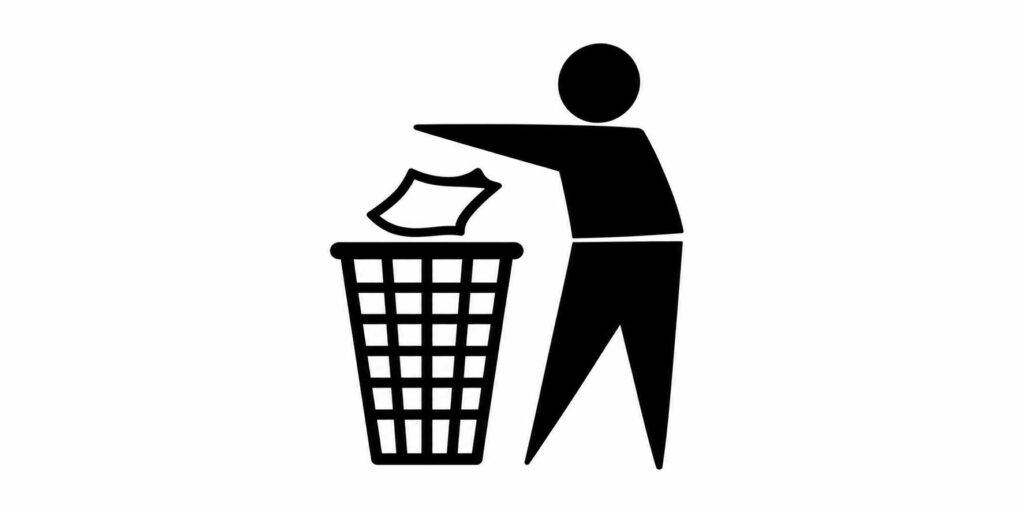
The Tidyman symbol shows a person placing waste into a bin. You may see it on food wrappers, drink containers, tissues, disposable packaging, and many other everyday products.
Its meaning is simple: dispose of the item responsibly and do not litter.
The symbol does not tell you that a product is recyclable, compostable, biodegradable, or made from recycled material. It is an anti-litter reminder rather than a recycling certification or material label.
Is the Tidyman Symbol a Recycling Symbol?
No.
Although the Tidyman symbol often appears near recycling or environmental labels, it does not tell you whether an item belongs in a recycling bin.
A product carrying the Tidyman symbol might be recyclable, compostable, made from mixed materials, intended for general waste, or require a specialist collection program. The symbol itself doesn’t tell you which option applies.
To determine the correct disposal method, look for additional recycling symbols, composting labels, material codes, or written instructions on the packaging.
Why Is the Tidyman Symbol Used?
The symbol encourages people to dispose of waste properly rather than leaving it in streets, parks, beaches, forests, or waterways. Even small items such as bottle caps, candy wrappers, cigarette filters, and plastic film can persist in the environment, enter waterways, or be swallowed by wildlife.
What Should You Do When You See the Tidyman Symbol?
Treat the symbol as a reminder to keep the item until you can dispose of it correctly. Check the packaging for recycling, composting, or material information and use the appropriate local collection system.
If no suitable recycling or recovery option exists, use general waste rather than leaving the item beside a full bin or placing it in recycling simply because you hope it will be accepted.
Does Responsible Disposal Always Mean Recycling?
No. Responsible disposal means using the correct waste stream.
Depending on the product, that might mean curbside recycling, composting, a bottle-return system, a retailer take-back program, an electronics collection point, hazardous-waste disposal, or general waste.
The Tidyman symbol therefore does not mean “recycle this.” It simply means “dispose of this responsibly and do not litter.”
Can You Trust a Recycling Symbol?
Recycling symbols are useful visual shortcuts, but they should not always be treated as a guarantee that an item belongs in your household recycling bin.
Some symbols simply identify the material used to make a product. Others refer to recycled content, responsible sourcing, compostability, producer-funded recovery programs, or special disposal requirements. Even when packaging is technically recyclable, your local collection service may not accept it.
Why Recycling Symbols Can Be Confusing
One of the biggest problems is that recycling systems are not the same everywhere. A package accepted in one city may be rejected in another because facilities use different sorting equipment, processing methods, or collection rules.
Packaging can also contain several materials at once. A cardboard box may include a plastic window, foil lining, adhesive label, or film wrapper, and each part may require a different disposal method.
Size and shape matter too. A material may technically be recyclable but still be rejected because the item is too small for sorting equipment, too contaminated, or difficult to process economically.
This is why a recycling triangle should be treated as a clue rather than a final answer.
What Does Technically Recyclable Mean?
A technically recyclable product is made from material that can be recovered and turned into another product under the right conditions.
That does not mean those conditions exist where you live.
For recycling to work, the item needs to be collected, correctly identified by sorting equipment, processed by an appropriate facility, and turned into material that someone can actually use again. If one part of that chain is missing, the product may not be recycled even though the material itself is recyclable in theory.
Watch for Vague Environmental Claims
Words such as eco-friendly, green, sustainable, earth-friendly, and better for the planet can sound reassuring, but they do not tell you whether a package belongs in the recycling bin.
A product may use less packaging, contain recycled material, include plant-based ingredients, or come from responsibly sourced materials without being recyclable after use.
More useful labels give specific information, such as the exact material, percentage of recycled content, recognized certification, composting requirements, or clear disposal instructions.
Check the Entire Package
A recycling symbol may apply to only one part of a package.
For example, a cardboard box may be recyclable while its plastic window is not. A food container may have a recyclable tray but a film lid that needs to go into general waste. A glass jar may be accepted locally while its decorative sleeve or closure requires separate handling.
Reading the full package is more reliable than looking at one symbol in isolation.
Avoid Wish-Cycling
Wish-cycling means placing something in the recycling bin simply because you hope it can be recycled.
It may feel like the environmentally responsible choice, but it can cause the opposite result. Non-recyclable materials can contaminate otherwise useful loads, interfere with sorting equipment, increase processing costs, and sometimes cause recyclable materials to be discarded along with the contamination.
When you are unsure, checking local guidance is better than guessing.
How to Verify a Recycling Claim
Before placing an unfamiliar item in the recycling bin:
- Read the disposal instructions on the package.
- Identify the material and any separate components.
- Check whether your local recycling program accepts it.
- Look for a retailer, manufacturer, or specialist collection program when curbside recycling is not available.
Recycling symbols are helpful starting points, but local recycling instructions remain the most reliable way to determine what should actually go in your bin.
Why Local Recycling Rules Matter
Recycling rules are not universal. Two neighboring cities can accept different materials even when residents use similar bins and see the same recycling symbols on packaging.
This is one reason the same recycling symbols can lead to different disposal instructions in different communities.
These differences often come down to local infrastructure. One community may have access to modern sorting equipment and several processing facilities, while another may work with a more limited recycling system. Contracts with waste processors, regional markets for recovered materials, transportation distance, contamination levels, and local regulations can all affect what is accepted.
This is why an item that belongs in the recycling bin in one place may need to go somewhere else just a few miles away.
Curbside Recycling Is Not the Same Everywhere
Some municipalities use single-stream recycling, where paper, cardboard, metal, glass, and accepted plastics are collected together in one bin.
Other communities require residents to separate materials or take certain items to dedicated drop-off locations. Glass, plastic film, electronics, textiles, batteries, and hazardous household waste are especially likely to have separate collection rules.
A recycling symbol or plastic number should therefore never override the instructions provided by your local collection service.
The Shape of an Item Can Affect Acceptance
Recycling programs do not look only at what a product is made from. The shape and size of the item can also determine whether sorting equipment can handle it properly.
A facility may accept plastic bottles, jugs, and tubs while rejecting plastic bags, foam packaging, loose lids, utensils, and multilayer pouches. Even when some of these products are made from similar plastics, they behave differently during collection and sorting.
Flexible film can wrap around machinery, while very small items may fall through sorting screens and end up with other residue.
Packaging Color Can Matter Too
Color can also affect how easily some materials are sorted.
Dark or black plastic has historically been harder for certain optical sorting systems to detect. Glass may need to be separated by color in some programs, and heavily dyed or coated paper can be more difficult to recover.
Technology continues to improve, but recycling facilities do not all use the same equipment. What is sortable in one region may still be rejected in another.
Collection Does Not Always Mean the Item Will Be Recycled
Even when a municipality accepts an item, that does not guarantee that every piece collected will become a new product.
Recovered materials usually need to meet quality standards before manufacturers can use them. Excessive food residue, plastic bags mixed into curbside recycling, broken glass where it is not accepted, or large amounts of non-recyclable packaging can reduce the quality of a collected load.
This is why correct sorting matters. Cleaner recycling streams are generally easier to process and more valuable to manufacturers.
How to Find Your Local Recycling Rules
The best source is usually your city, county, municipal waste authority, or local collection provider.
Look for information about:
- Accepted curbside materials
- Glass collection
- Plastic bags and film
- Electronics and batteries
- Composting or food-waste collection
- Hazardous household waste
Official local guidance is more reliable than a general recycling list because it reflects the equipment, contracts, and facilities actually available in your area.
The EPA’s guide to how to recycle common materials is also a useful starting point for paper, cardboard, glass, aluminum, batteries, and other household items, although local rules should always take priority.
Check the Rules After Moving
Recycling habits do not always transfer from one city to another.
If you move, it is worth checking whether glass is collected, whether caps should stay attached, whether containers need to be rinsed, whether cardboard must be flattened, and whether plastic bags require a separate drop-off location.
A few minutes spent reviewing the new rules can prevent contamination and help you avoid putting accepted materials in the wrong bin.
What If the Package Label and Local Rules Disagree?
Follow the local recycling rules.
A package may be technically recyclable somewhere, but your local program may not have the equipment or processing partner needed to handle it.
If curbside recycling is not available, check for a retailer drop-off point, manufacturer take-back program, deposit-return system, municipal recycling center, or another specialist collection option.
When no suitable recycling route exists, use the disposal method recommended by your local authority rather than placing the item in the recycling bin and hoping it will be accepted.
How to Prepare Packaging for Recycling
Preparing packaging correctly can make recycling more effective. It helps reduce contamination, keeps food residue from damaging paper and cardboard, and makes it easier for sorting facilities to recover useful materials.
The exact rules vary by location, but a few basic habits apply to many household recycling programs.
Empty Containers Before Recycling
Bottles, jars, cans, tubs, and other containers should be emptied before they go into the recycling bin.
They do not need to be perfectly clean, but they should not contain large amounts of food, liquid, detergent, sauce, or other residue. Pour out unfinished drinks, scrape leftover food from containers, and empty household product bottles as thoroughly as practical.
Packaging that still contains a significant amount of product can contaminate other recyclable materials during collection and sorting.
A Light Rinse Is Usually Enough
For food and drink containers, a quick rinse is often sufficient.
There is generally no need to scrub packaging with hot water and detergent. The goal is simply to remove enough residue to prevent odors, pests, and contamination.
If a container is especially sticky, using leftover dishwater can clean it without wasting additional water solely for recycling.
Keep Paper and Cardboard Clean and Dry
Paper and cardboard are especially vulnerable to moisture, grease, and food contamination.
Clean cardboard boxes, paper bags, cartons, and packaging sleeves are commonly recyclable, but heavily soiled portions may need to be removed.
A pizza box is a good example. If most of the box is clean but one section is covered in grease or food, the clean cardboard may still be recyclable where local rules allow it. The contaminated portion can be removed and disposed of separately.
Flatten Cardboard, But Not Everything Else
Flattening cardboard boxes can save space in your recycling bin and in collection vehicles.
Before flattening a box, remove obvious non-paper packing materials such as foam blocks, bubble wrap, plastic air pillows, loose film, and fabric handles.
Plastic bottles, cans, and other containers are different. Some sorting systems identify packaging partly by its shape, so crushing or flattening these items may actually make them more difficult to sort.
Unless your local recycling service specifically asks you to crush containers, leaving them in their original shape is usually the safer approach.
Check the Rules for Caps and Lids
Caps and lids are one area where local instructions differ considerably.
Some recycling programs ask residents to leave plastic caps attached to empty bottles because the materials can be separated during processing. Others recommend removing certain lids or handling them separately.
Small loose caps can also fall through sorting equipment, so the best approach is to follow your local guidance rather than assuming one rule applies everywhere.
Separate Packaging Components When Necessary
Many packages are made from more than one material.
A plastic food tub may have a cardboard sleeve and flexible film lid. A cardboard box may contain a plastic window. A glass jar may have a metal closure.
When these parts can be separated easily, your local recycling program may ask you to divide them before disposal. However, there is usually no need to cut apart complicated packaging or force bonded materials apart unless your local guidance specifically recommends it.
Keep Plastic Bags and Film Out of Curbside Recycling
Flexible plastics such as shopping bags, bread bags, bubble wrap, and plastic film often cause problems at recycling facilities because they can wrap around sorting machinery.
For this reason, they are commonly excluded from curbside recycling even when the plastic itself may be recyclable.
Some supermarkets and retailers collect certain clean, dry plastic films separately. If you use one of these programs, check exactly what it accepts before adding bags or wrappers.
Compostable bags, heavily contaminated film, and multilayer snack wrappers should not automatically be mixed with ordinary plastic film recycling.
Put Recyclables in the Bin Loose
In many recycling systems, recyclable items should be placed loose in the bin rather than tied inside plastic bags.
Bagged recyclables can be difficult for sorting equipment to identify, and the plastic bags themselves may become tangled in machinery.
It is also better not to place one type of recyclable inside another. For example, stuffing plastic containers inside a cardboard box can make sorting more difficult because machinery may recognize only the material on the outside.
Keep Hazardous Items Out of Household Recycling
Batteries, electronics, propane cylinders, paint, chemicals, medical sharps, and partially full aerosol cans require special handling.
These materials can cause fires, equipment damage, injuries, or chemical exposure when they enter an ordinary recycling facility.
Use an approved electronics collection point, battery drop-off location, household hazardous-waste program, or other specialist service instead.
Be Careful With Very Small Items
Tiny pieces of metal, plastic, or foil can fall through sorting machinery before they reach the correct recycling stream.
This is one reason loose bottle caps, tiny foil pieces, and other small packaging components may have special local instructions.
Rather than following a universal size rule, check what your local program recommends for small items.
A Simple Recycling Check
Before putting packaging in your recycling bin, ask yourself:
- Is this material accepted locally?
- Is it empty and reasonably clean?
- Do any parts need to be separated?
- Should the cap or lid stay attached?
- Does the item require a special collection point instead?
A few seconds spent checking can reduce contamination and increase the chance that the material is actually recovered and recycled.
Frequently Asked Questions About Recycling Symbols
Does the Recycling Symbol Mean an Item Is Definitely Recyclable?
No. A recycling symbol may identify the material, indicate recycled content, or show that an item is technically recyclable under certain conditions.
It does not guarantee that your local recycling program accepts it. Always check local collection rules before putting an unfamiliar item in the recycling bin.
What Do the Three Arrows in the Recycling Symbol Mean?
The three arrows of the Mobius Loop represent the idea of keeping materials in circulation through collection, recycling, and reuse.
The symbol is widely associated with recycling, but its presence alone does not guarantee curbside acceptance.
What Does a Number Inside the Recycling Triangle Mean?
Numbers 1 through 7 found on plastic products identify the type of plastic resin used to make the item.
They are not recyclability ratings. A plastic marked #1 or #2 may be commonly accepted, while another product made from the same resin could still be rejected because of its size, shape, or construction.
For a deeper explanation of PET, HDPE, PVC, LDPE, PP, PS, and #7 plastics, see our guide to the seven recycling symbols on plastics.
Are Plastic Numbers 1 and 2 Always Recyclable?
No. Plastics #1 and #2 are among the most commonly accepted plastics, especially bottles, jugs, and rigid containers, but local rules still apply.
For example, a #2 detergent bottle may be accepted while a #2 plastic bag may require a separate retailer drop-off program.
Does the Green Dot Mean a Package Is Recyclable?
No. The Green Dot generally indicates participation in a packaging recovery or financing system in certain countries.
It does not mean that the package is recyclable, made from recycled material, or accepted in your household recycling bin.
What Does the Crossed-Out Wheelie Bin Mean?
The crossed-out wheelie bin means the item should not be placed in ordinary household waste.
It commonly appears on electronics, batteries, chargers, cables, and other electrical products that require separate collection or specialist recycling.
Can Compostable Packaging Go in the Recycling Bin?
Usually not. Compostable plastics should generally be kept out of conventional plastic recycling because they are designed to break down differently and can interfere with plastic processing.
Only place compostable packaging in an organics collection if the local program specifically accepts it.
Is Biodegradable the Same as Compostable?
No.
Biodegradable means a material can break down through biological processes, but the label may not specify how long that will take or under what conditions.
Compostable materials are designed to break down under defined composting conditions, often in an industrial composting facility unless they are specifically certified for home composting.
Does the FSC Logo Mean Paper Is Recyclable?
Not necessarily.
The FSC logo relates to responsible sourcing of forest-based materials. Whether the paper or cardboard can be recycled depends on factors such as coatings, food contamination, plastic layers, and local recycling rules.
Should Containers Be Washed Before Recycling?
Containers should usually be emptied and lightly rinsed, but they do not need to be spotless.
Removing significant food or liquid residue helps prevent odors and contamination without wasting excessive amounts of water.
Should Bottle Caps Stay On?
That depends on your local recycling program.
Some programs prefer caps to remain attached to empty bottles, while others provide different instructions. Small loose caps can sometimes be difficult for sorting equipment to recover, so follow your local guidance.
Can Plastic Bags Go in Curbside Recycling?
Usually not.
Plastic bags and flexible films can become tangled around sorting equipment. Many communities instead direct residents to separate retailer or store drop-off programs for eligible clean and dry plastic film.
What Is Wish-Cycling?
Wish-cycling means placing an item in the recycling bin simply because you hope it can be recycled.
This can contaminate recyclable materials and make sorting more difficult. When you are unsure, checking your local recycling guide is better than guessing.
Why Do Recycling Rules Differ by Location?
Communities use different collection systems, sorting equipment, processing facilities, contracts, and recovered-material markets.
That means an item accepted in one city may be rejected in another, even when the exact same recycling symbol appears on the package.
What Should I Do If There Is No Recycling Symbol?
First identify what the item is made from and look for written disposal instructions.
Then check your local recycling program. The absence of a symbol does not automatically mean something cannot be recycled, just as the presence of a recycling symbol does not guarantee that it can.
Is It Better to Reuse or Recycle Packaging?
When an item is safe and designed for repeated use, reuse can often extend its useful life before recycling becomes necessary.
However, disposable packaging should not automatically be reused for food, drinking water, chemicals, or long-term storage when the manufacturer did not design it for that purpose.
Once the item is no longer useful, recycle or dispose of it according to local instructions.
Understanding Recycling Symbols Makes Better Recycling Easier
Recycling symbols can tell you a lot about a product, including what material it is made from, whether it contains recycled content, and whether it requires a special disposal method. What they cannot do is replace the recycling rules where you live.
The Mobius Loop may indicate that a material is recyclable under the right conditions, while plastic numbers identify resin types rather than guaranteeing curbside acceptance. The Green Dot relates to packaging recovery systems, the FSC logo focuses on responsible forest sourcing, and the Tidyman symbol is simply a reminder not to litter. Compostable packaging and electronic-waste symbols require even more attention because these items often need separate collection.
The best approach is to use the symbol as a starting point, then read any additional disposal instructions on the package and compare them with your local recycling guidance. Emptying containers, separating materials when required, and keeping batteries, electronics, chemicals, and other hazardous items out of ordinary recycling can make a significant difference.
Understanding what recycling symbols mean can help reduce contamination and make everyday recycling decisions less confusing. But recycling is only part of reducing waste. Reusing durable products, avoiding unnecessary packaging, repairing items when possible, and choosing products with recycled content can all help keep materials in use for longer.
For more practical ideas, explore our guides on why recycling is important, how recycling and reusing reduce pollution, and ways to reduce your plastic waste.



0 Comments