


Travel gives us the chance to experience different cultures, explore beautiful landscapes, try new foods, and create memories that stay with us for years. But every trip also leaves an environmental footprint. Transportation uses fuel, hotels consume water and energy, and travelers often rely on disposable products along the way.
The good news is that sustainable travel does not mean giving up vacations or avoiding faraway destinations. It is simply about making more thoughtful choices that reduce waste, protect natural places, support local communities, and lessen the impact of your trip.
Even small changes can help. Taking a train instead of a short flight, staying longer in one destination, using public transportation, carrying reusable essentials, eating at local restaurants, and respecting wildlife can all make travel more responsible.
In this guide, you will learn how to be more sustainable when traveling with practical tips for weekend trips, international vacations, road trips, and family holidays. You do not have to do everything perfectly. Choosing even a few better habits can make your travels more environmentally friendly while helping protect the places you came to enjoy. If reducing waste is one of your goals, start with these 10 easy ways to reduce plastic waste.
Quick answer: To travel more sustainably, use lower-emission transportation when practical, pack light, reduce single-use waste, conserve water and electricity, support local businesses, respect wildlife, and consider taking fewer trips while spending more time in each destination.
What Does Sustainable Travel Mean?

Sustainable travel means exploring the world in a way that reduces environmental harm while supporting the people and communities that make each destination unique. You may also hear it described as responsible tourism, eco-friendly travel, green travel, or low-impact travel.
The goal is not to make every trip completely impact-free. That is rarely realistic. Instead, sustainable travel is about making better choices across a few important areas: how you get around, where you stay, what you buy, how much waste you create, and how your visit affects local people and natural places.
For example, a more responsible trip might include taking a train instead of a short flight, staying at a locally owned guesthouse, using a refillable water bottle, eating at independent restaurants, and choosing tours that respect wildlife and local communities.
Environmental protection is a major part of sustainable tourism, but it is only one piece of the picture. Responsible travel also means helping tourism income stay within the local economy and respecting the culture, traditions, and everyday life of the people who live there.
It also looks at the long-term effects of tourism. A destination should not have to sacrifice clean water, wildlife habitat, affordable housing, or quality of life simply because visitor numbers continue to grow.
This becomes especially important in places affected by overtourism. When too many people arrive at the same time, transportation, waste systems, natural attractions, and residential areas can all come under pressure. Traveling during the shoulder season, staying longer, and exploring less crowded places can help spread that pressure more evenly.
At its core, sustainable travel is about being a more thoughtful visitor. It means enjoying a destination while also considering what your presence leaves behind.
Why Is Sustainable Travel Important?

Travel can bring real benefits to a destination. It creates jobs, supports restaurants and hotels, helps fund attractions, and brings customers to local businesses. But when tourism grows too quickly or is poorly managed, it can also put pressure on the environment and on the people who live there.
Transportation Creates a Large Part of Travel Emissions
Transportation is one of the biggest concerns. Flights, rental cars, cruise ships, and private transfers all use energy and contribute to greenhouse gas emissions.
Choosing trains, buses, walking, cycling, or shared transportation when practical can reduce that impact.
Hotels Use Water and Energy
Accommodation matters too. Hotels and resorts use electricity and water for air conditioning, heating, pools, laundry, landscaping, and cleaning.
In destinations already dealing with drought or limited infrastructure, heavy tourism can increase pressure on local resources.
Travel Can Create a Lot of Waste
Travelers often rely on bottled water, takeaway containers, disposable toiletries, plastic bags, and individually wrapped products. Plastic waste from tourism is a particular concern in hotels and heavily visited coastal destinations.
In destinations with limited recycling or waste collection, much of that material may end up in landfills or the surrounding environment.
Tourism Can Affect Wildlife and Natural Areas
Crowded trails, litter, careless photography, animal feeding, and poorly managed attractions can disturb wildlife and damage sensitive habitats.
Responsible travelers can help by staying on marked trails, keeping a safe distance from animals, and choosing ethical wildlife experiences.
Tourism Should Benefit Local Communities
The economic side of travel is just as important. Spending money at local restaurants, markets, guesthouses, and tour companies can help more tourism income remain within the community.
That is an important part of responsible tourism: making sure local residents share in the benefits that tourism creates.
Sustainable Travel Helps Protect Destinations for the Future
Sustainable travel is not about avoiding vacations. It is about making choices that reduce unnecessary harm while helping protect the places we enjoy visiting.
The more thoughtfully we travel today, the better chance future visitors will have to experience the same beaches, forests, cities, wildlife, and cultural traditions.
25 Ways to Be More Sustainable When Traveling

Becoming a more sustainable traveler does not mean changing everything about the way you travel. The biggest difference usually comes from how you get there, where you stay, what you eat and buy, and how much waste you create.
These sustainable travel tips can help you lower your impact without making a trip feel complicated or restrictive.
1. Choose Destinations Closer to Home
You do not always need to travel far to have a memorable trip. Nearby cities, national parks, lakes, historic towns, and rural areas can make excellent getaways while reducing transportation time and emissions.
Regional travel can also make trains, buses, or shared driving more practical and leave more of your budget for local restaurants, attractions, and accommodation.
Long-distance travel is not automatically irresponsible, but mixing occasional big trips with more local adventures can help reduce your overall travel carbon footprint.
2. Travel Less Often but Stay Longer
Taking fewer trips and spending more time in each destination can reduce repeated transportation and make travel feel less rushed.
Longer stays give you more time to use local transportation, explore neighborhoods, support local businesses, and experience places beyond the main tourist attractions.
When possible, combining several short trips into one longer journey can be a simple way to travel more sustainably.
3. Take Trains or Buses When Practical
For short and medium-distance trips, trains and buses can be a more sustainable alternative to flying or driving alone.
Before booking a short flight, compare the total journey time. Airport transfers, security, boarding, and baggage collection can make a one-hour flight much longer than it appears.
Rail and bus travel can also be cheaper, more relaxing, and better connected to city centers. Even using public transportation for part of a trip can help reduce your overall travel footprint.
4. Book Direct Flights Whenever Possible
When flying is necessary, choose a direct flight when practical. Extra connections usually mean additional takeoffs and landings and often a longer overall route, which can increase the impact of the trip.
Direct flights can also save time and lower the risk of missed connections or lost luggage.
They are not automatically the greenest option in every case, since aircraft type and passenger load also matter. But avoiding unnecessary connections is still a smart way to reduce your travel carbon footprint.
If a train can replace a short flight without adding too much time, compare both options before booking.
5. Fly Economy Class
When you need to fly, economy class is generally the more space-efficient option. Premium cabins use more room per passenger, which means fewer people can travel on the same aircraft.
Economy also uses aircraft space more efficiently, so the emissions allocated to each passenger are generally lower than in premium cabins.
If you need extra comfort, consider an aisle seat, extra-legroom economy, or premium economy before moving to business or first class.
6. Pack Light
Packing light makes travel easier and can also reduce the amount of weight being transported, especially on flights and road trips.
Bring versatile clothing, only the toiletries you need, and avoid packing items your accommodation already provides.
A lighter bag can also make it easier to walk, use public transportation, and avoid extra baggage fees. For a more environmentally friendly travel routine, focus on practical items you will actually use rather than packing for every possible situation.
7. Walk, Cycle, or Use Public Transportation
Once you arrive, try to walk, cycle, or use buses, trains, trams, and subways instead of relying on taxis or a rental car for every trip.
These options can lower emissions, save money, and often help you experience a destination more closely. Choosing accommodation near public transportation can make this much easier.
When public transit is limited, combine trips or use shared transportation whenever practical.
8. Rent an Efficient, Hybrid, or Electric Vehicle
If you need a rental car, choose the smallest vehicle that comfortably fits your group and luggage. Compact cars, hybrids, and EVs generally use less energy than larger SUVs.
For electric vehicles, check charging availability before booking. In remote areas, a hybrid may be more practical.
You can also reduce fuel use by combining errands, avoiding unnecessary idling, and returning the car when you no longer need it.
9. Choose Genuinely Sustainable Accommodation
Look beyond labels such as “eco” or “green.” Check whether a hotel actually reduces energy and water use, limits waste, uses refillable toiletries, sources food locally, or holds a recognized sustainability certification.
Location matters too. Staying near public transportation, restaurants, and attractions can reduce the need for taxis or a rental car.
Locally owned guesthouses and small hotels can also help keep more tourism income within the community.
10. Skip Unnecessary Daily Linen and Towel Changes
Hotels use water, energy, and detergent every time towels and bed linens are washed.
If your towels and sheets are still clean, reuse them for several days and skip housekeeping when you do not need it.
It is a small change that can reduce water, energy, and detergent use without affecting your comfort.
11. Conserve Water and Electricity
Use hotel water and energy as carefully as you would at home. Take shorter showers, turn off lights, and avoid leaving heating or air conditioning running when you are out.
You can also close curtains to keep rooms cooler and report leaking faucets or toilets.
These small habits are especially important in destinations facing drought, high energy demand, or limited local infrastructure. Many of the same habits also apply at home. See our guide to 10 easy ways to reuse water for more water-saving ideas.
12. Carry a Reusable Water Bottle
A reusable water bottle can help reduce the number of single-use plastic bottles you buy while traveling.
Refill it at airports, hotels, restaurants, or public fountains when the local water is safe to drink. If local guidance says the tap water is not safe to drink, use trusted filtered refill stations or buy a larger container rather than several small bottles.
A reusable bottle is also one of the simplest items to include in a sustainable travel kit.
13. Bring Reusable Bags, Utensils, and Containers
A small reusable kit can help you avoid disposable shopping bags, takeaway utensils, cups, and food containers.
You do not need to buy a special zero-waste travel set. A foldable bag, reusable cup, container, and utensils you already own are usually enough.
These habits can also help you reduce plastic waste long after your trip is over.
14. Avoid Disposable Travel-Size Toiletries
Mini shampoo, conditioner, lotion, and body wash bottles create a surprising amount of packaging waste.
Use refillable travel containers or solid toiletries instead, and check what your accommodation already provides before packing duplicates.
15. Choose Reef-Safer Sun Protection
If you are swimming near coral reefs or sensitive marine areas, pay attention to local sunscreen guidance.
Look beyond vague labels such as “reef-friendly,” check the ingredient list, and follow any local restrictions or guidance. Wearing a rash guard, hat, and other sun-protective clothing can also reduce how much sunscreen you need.
Never skip sun protection entirely. The goal is to protect your skin while reducing unnecessary impact on marine ecosystems.
Plastic and other forms of pollution create additional problems for ocean wildlife, as explained in our guide to how plastic pollution affects marine life.
16. Eat Locally Produced and Seasonal Food
Choose local restaurants, markets, bakeries, and regional dishes when you can. This helps support the local economy and can reduce reliance on heavily imported food.
Eating more plant-based meals during your trip can also lower the environmental impact of your diet.
17. Reduce Food Waste
Travelers often waste food by overordering, taking too much at buffets, or buying groceries they never finish.
Start with smaller portions, save leftovers when practical, and avoid taking more food than you are likely to eat.
18. Support Locally Owned Businesses
Spend part of your travel budget with locally owned hotels, restaurants, shops, guides, and tour operators.
That gives local businesses a greater share of your travel spending and helps support jobs within the community.
19. Respect Local Cultures and Customs
Learn basic local customs before you arrive, including appropriate dress, photography etiquette, tipping, and behavior at religious or cultural sites.
Ask permission before photographing people, respect residential areas, and remember that the destination is someone else’s home—not just a place for visitors.
20. Avoid Exploitative Wildlife Attractions
Be cautious with attractions that allow visitors to hold wild animals, ride them, pose for photos, or watch unnatural performances.
Choose experiences that observe animals from a respectful distance and prioritize conservation, habitat protection, and animal welfare.
21. Stay on Marked Trails
Leaving designated paths can damage plants, increase erosion, and disturb wildlife.
Stay on marked trails, respect closures, and avoid stepping into fragile areas just to get a better photo. The National Park Service’s Leave No Trace principles provide additional guidance for minimizing your impact in natural areas.
22. Never Leave Litter Behind
Carry out everything you bring into natural areas, including food scraps, tissues, wrappers, and cigarette waste.
Even biodegradable items such as fruit peels can attract wildlife or take a long time to break down.
If you are unsure how packaging should be disposed of, our guide to what recycling symbols mean explains the most common labels.
23. Do Not Remove Natural Souvenirs
Avoid taking shells, coral, stones, flowers, sand, feathers, or other natural objects from beaches, forests, parks, or protected areas.
Take photos instead and leave the landscape as you found it so others can enjoy it too.
24. Travel Outside the Peak Season
Visiting during the shoulder season can reduce pressure on crowded destinations while often giving you lower prices, shorter lines, and a more relaxed experience.
It also helps spread tourism income across more months of the year instead of concentrating everything into a short peak season.
Carbon offsets can support climate projects, but they should not replace efforts to reduce emissions in the first place.
Focus first on fewer flights, direct routes, public transportation, and longer stays. If you still want to offset remaining emissions, choose programs with clear verification, transparent project details, and measurable benefits.
Think of offsets as a final step after you have already reduced the emissions you reasonably can.
How to Choose Sustainable Hotels and Tour Operators
Not every hotel or tour company that uses words like “eco,” “green,” or “responsible” is truly sustainable. Look for specific practices instead of relying on marketing language.
Look Beyond the “Eco” Label
Good signs include energy-efficient systems, water-saving fixtures, refillable toiletries, recycling programs, local food sourcing, reduced food waste, and support for local workers and businesses.
Independent certification can also be useful when it includes clear standards and regular audits. The Global Sustainable Tourism Council Hotel Standard covers areas such as sustainable management, community benefits, cultural heritage, and environmental impacts. Check what the certification actually measures rather than trusting the logo alone.
Consider Who Benefits
Responsible tourism should benefit local communities. Look for businesses that employ local staff, use local guides, purchase from nearby suppliers, and keep more tourism income within the destination.
Check Wildlife Policies
Tour operators should not encourage touching, feeding, riding, chasing, or posing with wild animals. Responsible operators keep a safe distance, limit disturbance, and follow local conservation rules.
Watch for Greenwashing
Be cautious when a company makes broad environmental claims but provides few details. A towel-reuse sign alone does not make a hotel sustainable.
Reviews can help reveal whether sustainability policies are actually followed. If something is unclear, ask how the business manages energy, water, waste, wildlife, and community impact before booking.
The goal is not to find a perfect company. It is to choose businesses that are transparent and show that sustainability is part of how they operate.
Is Flying Ever Sustainable?
Flying is rarely the lowest-impact way to travel, but sometimes it is the only practical option, especially for long-distance trips, islands, or remote destinations.
For shorter routes, compare flights with trains or buses. Once airport transfers, security, boarding, and baggage collection are included, rail travel may be almost as fast.
How to Make Flying More Responsible
When you do fly, you can reduce the impact by choosing direct routes, flying economy, packing light, and staying longer at your destination instead of taking several short trips.
You can also use trains or public transportation once you arrive rather than adding more short flights.
Sustainable aviation fuels and carbon offsets may help reduce some impacts, but they do not make flying completely sustainable. The most effective approach is still to avoid unnecessary flights and make each trip count.
Sustainable Travel Packing Checklist

Packing sustainably is less about buying new eco-friendly gear and more about bringing practical items you will actually use.
Consider packing:
- A reusable water bottle
- A foldable shopping bag
- A reusable food container
- A travel mug
- Reusable utensils
- Refillable toiletry bottles
- Solid shampoo or bar soap
- Versatile, lightweight clothing
- A universal adapter
- A power bank
- Sunscreen and sun protection
- Necessary medications or medical supplies
Check what your accommodation already provides before packing duplicates.
The goal is to travel comfortably with fewer unnecessary items, not to buy an entirely new set of “sustainable” travel products.
Common Sustainable Travel Mistakes
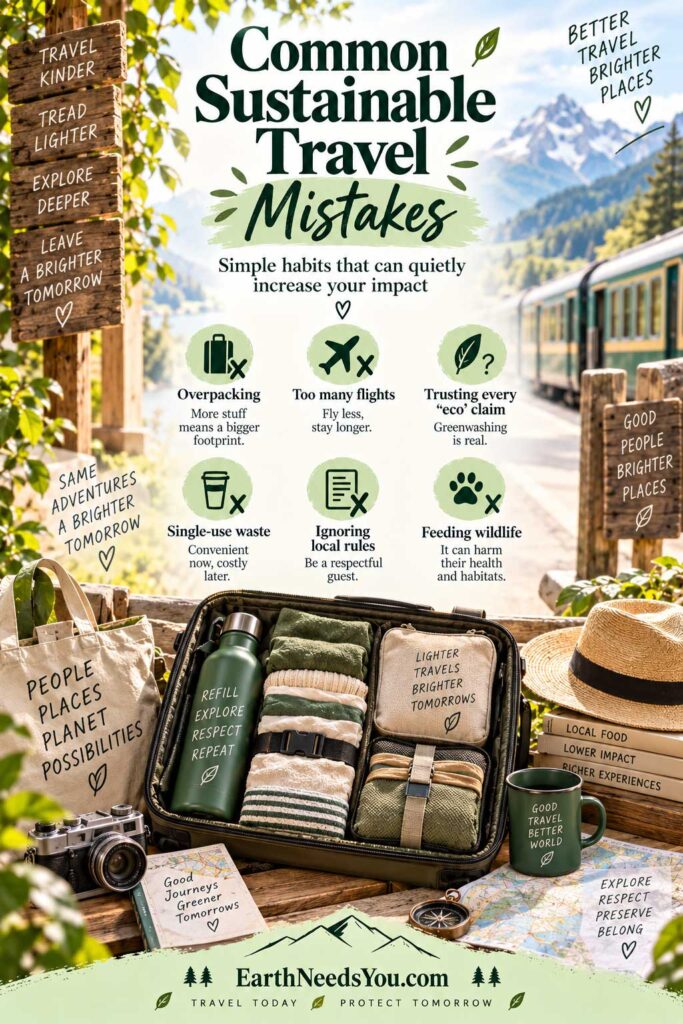
Trying to travel more responsibly is a good goal, but some choices sound more sustainable than they really are.
Buying Too Many New Eco Products
You do not need a brand-new zero-waste travel kit. Using the bottle, bag, containers, and toiletries you already own is usually the better option.
Focusing Only on Small Changes
Reusable straws and bags help, but transportation and accommodation often have a much larger impact. Focus first on flights, local transportation, energy use, and where you stay.
Trusting Every “Eco-Friendly” Claim
A hotel or tour company may use green marketing without making meaningful changes. Look for specific practices, measurable goals, and credible certification.
Treating Carbon Offsets as a Free Pass
Offsets should come after reducing avoidable emissions, not instead of it. Fewer flights, longer stays, and lower-impact transportation remain more important.
Assuming Local Always Means Sustainable
A local product, restaurant, or attraction can still have environmental or animal-welfare problems. Ask questions and look beyond the label.
Ignoring Local Recycling Rules
Recycling systems vary widely. Check local instructions rather than assuming an item can be recycled the same way it is at home.
Feeding Wildlife
Feeding wild animals can damage their health, alter natural behavior, and make them accustomed to people. Observe them from a safe distance instead.
Trying to Be Perfect
No trip is completely impact-free. Sustainable travel is about making better choices where practical, not making travel stressful or unrealistic.
FAQs About How to Be More Sustainable When Traveling
What Is the Most Sustainable Way to Travel?
Walking and cycling have the lowest direct impact for short distances. For longer trips, trains and buses are often more sustainable than flying or driving alone.
How Can Tourists Reduce Their Environmental Impact?
Use lower-emission transportation, stay longer, pack light, reduce single-use waste, conserve water and energy, and support local businesses.
Is Train Travel More Sustainable Than Flying?
Usually, yes—especially on short and medium-distance routes. The exact difference depends on the route, energy source, aircraft, and passenger load.
Are Eco-Friendly Hotels Actually Sustainable?
Some are, but the label alone does not tell you much. Look for specific practices involving energy, water, waste, food sourcing, local employment, and credible certification.
How Can I Travel Sustainably on a Budget?
Walk more, use public transportation, refill a water bottle, pack light, eat at local markets, and travel outside peak season. Many sustainable choices also save money.
What Should I Pack for Sustainable Travel?
Useful items include a reusable water bottle, shopping bag, refillable toiletries, versatile clothing, and a small food container. Bring only what you will actually use.
Does Carbon Offsetting Make Travel Sustainable?
No. Offsetting can support climate projects, but it does not erase travel emissions. Reducing unnecessary flights and choosing lower-impact transportation should come first.
Is Sustainable Travel More Expensive?
Not always. Public transportation, lighter packing, local food, longer stays, and off-season travel can all reduce costs.
Can Families Travel Sustainably?
Yes. Families can use reusable bottles and snacks, choose direct routes, stay longer, reduce hotel laundry, and pick responsible attractions.
What Is the Difference Between Sustainable Travel and Ecotourism?
Sustainable travel applies to almost any type of trip. Ecotourism is more specifically focused on responsible travel to natural areas, conservation, and local communities.
Final Thoughts: How to Be More Sustainable When Traveling
Learning how to be more sustainable when traveling does not mean giving up the places you want to see. It means making more thoughtful choices before and during each trip.
Start with the biggest areas of impact. Choose lower-emission transportation when practical, stay longer, pack light, reduce waste, conserve water and energy, and support local businesses.
Responsible tourism also means respecting wildlife, following local rules, protecting natural areas, and remembering that every destination is someone’s home.
You do not need to follow every sustainable travel tip perfectly. Even a few better choices can reduce your impact and make your trip more meaningful.
The goal is simple: enjoy the world while helping protect the places, communities, and ecosystems that make travel worth doing.
Continue Your Sustainable Journey
Want to make more environmentally responsible choices at home and while traveling? These guides can help:
- Sustainable Travel Products You Can Use — practical reusable products that can help reduce waste on your next trip.
- 10 Easy Ways to Reduce Plastic Waste in Everyday Life — simple ways to cut down on disposable plastic both at home and away.
- How Plastic Pollution Affects Marine Life — learn why reducing plastic waste matters for oceans and wildlife.
- 10 Easy Ways to Reuse Water and Reduce Waste — practical ideas for conserving water and making everyday habits more sustainable.



0 Comments