


Have you ever looked at the small triangle with a number printed on a plastic bottle or food container and wondered what it actually means? Many people assume that any plastic displaying a recycling symbol can simply be tossed into the recycling bin. In reality, those numbers primarily identify the type of plastic the item is made from—they do not automatically mean the item is recyclable in your local program.
Learning how to read the 7 recycling symbols on plastics can help you recycle more accurately and avoid common mistakes. Some plastics, such as PET (#1) and HDPE (#2), are widely accepted by recycling programs, while others are much harder to process or may require specialized collection or drop-off locations. Knowing the difference can help reduce contamination in recycling streams and increase the chances that recyclable materials are actually recovered and made into new products.
If you’d like to understand the bigger picture behind sorting materials correctly, our guide to why recycling is important explains how recycling fits into broader efforts to conserve resources and reduce waste.
In this updated 2026 guide to plastic recycling symbols, you’ll learn what each number from 1 through 7 means, where you’re likely to find each type of plastic, which plastics are commonly accepted for recycling, and which ones require extra attention. You’ll also learn why the recycling symbol doesn’t necessarily mean “recyclable,” plus practical ways to sort plastic waste more responsibly at home.
By the end, you’ll be able to look at the number on a plastic container, understand what it identifies, and know what to check before deciding whether it belongs in your recycling bin.
What Are Plastic Recycling Symbols?
Plastic recycling symbols are commonly associated with the Resin Identification Code (RIC) system, which uses numbers from 1 to 7 to identify the type of plastic resin used to make a product. The system was introduced in 1988 by the Society of the Plastics Industry to make it easier to identify and sort different types of plastic.
The most important thing to understand is that a plastic number is not a guarantee that an item can be recycled. The code tells you what type of plastic you’re looking at. Whether your local recycling program can actually process that item depends on the material, the product itself, local collection rules, and the recycling facilities available in your area.
You may still see the numbers surrounded by the familiar chasing-arrows recycling symbol on older products. However, ASTM International revised the Resin Identification Code standard in 2013, replacing the chasing arrows with a solid equilateral triangle because the arrows could give consumers the mistaken impression that every numbered plastic was recyclable.
What Do the Numbers 1–7 Mean?
Each number represents a plastic resin category:
- #1 PET or PETE – Polyethylene Terephthalate
- #2 HDPE – High-Density Polyethylene
- #3 PVC or V – Polyvinyl Chloride
- #4 LDPE – Low-Density Polyethylene
- #5 PP – Polypropylene
- #6 PS – Polystyrene
- #7 Other – Plastics that don’t fall into categories #1–#6, including several different resin types and some multi-resin materials
For example, #1 PET is commonly used for water and soft drink bottles, while #2 HDPE is often found in milk jugs and detergent bottles. Plastics labeled #3, #6, or #7 may have fewer conventional recycling options, although acceptance varies considerably by community and by the form of the product.
Understanding Recycling Symbols on Plastics starts with the Resin Identification Code (RIC) system, which uses numbers from 1 to 7 to identify the type of plastic resin used to make a product. Before putting a plastic item in your recycling bin, check your local program’s instructions to see whether that type of container or packaging is accepted.
Using recycled materials can reduce the need to extract and process virgin resources, although the energy savings vary depending on the material and recycling process.
Plastic Recycling Symbols Chart
Before looking at each plastic type in detail, this chart makes Recycling Symbols on Plastics easier to compare by showing the numbers 1 through 7, their resin types, common products, and general recycling availability. The number identifies the plastic resin category—it does not guarantee that the item belongs in your recycling bin.
Recycling programs vary considerably by location, and acceptance can also depend on the shape and form of the item, not just its resin number. Always check your local recycling program before disposing of a plastic you’re unsure about.
| Recycling Code | Plastic Type | Common Products | Typical Recycling Availability |
|---|---|---|---|
| #1 PET or PETE | Polyethylene Terephthalate | Water and soda bottles, food jars, some food trays | Widely accepted for bottles and containers |
| #2 HDPE | High-Density Polyethylene | Milk jugs, detergent bottles, shampoo bottles, cleaner bottles | Widely accepted for bottles and jugs |
| #3 PVC or V | Polyvinyl Chloride | Pipes, vinyl products, some packaging | Limited |
| #4 LDPE | Low-Density Polyethylene | Bags, film, bread bags, squeeze bottles | Varies; film often requires separate collection |
| #5 PP | Polypropylene | Yogurt tubs, food containers, medicine bottles, some caps | Accepted by many programs, but varies locally |
| #6 PS | Polystyrene | Foam packaging, some cups, trays, rigid containers | Limited, especially for foam |
| #7 Other | Other resins and certain multi-resin materials | Some reusable bottles, polycarbonate products, bioplastics and specialty plastics | Highly variable; often requires special handling |
Understanding the Plastic Recycling Numbers
The easiest way to read the chart is to think of the number as an identification code rather than a recycling instruction.
#1 PET and #2 HDPE bottles and containers are among the plastic items most commonly accepted by U.S. recycling programs. However, even within these categories, an item may not be accepted simply because it carries a #1 or #2 code. Its size, shape, color, contamination level, and the capabilities of the local recycling facility can all matter.
#5 polypropylene is also accepted by many recycling programs, particularly when it comes in the form of tubs, cups, and containers. Local rules still determine whether it belongs in your curbside bin.
#4 LDPE is a good example of why the number alone doesn’t tell the whole story. A rigid #4 container may be handled differently from a #4 plastic grocery bag or film. Flexible plastic films can interfere with equipment at some material recovery facilities and therefore may require a separate collection program where one is available.
Recycling options for #3 PVC, #6 polystyrene, and many #7 plastics tend to be more limited. Specialized programs may accept certain products even when regular curbside collection does not.
Quick Rule to Remember
When reading plastic recycling symbols, use this simple process:
Identify the number → identify the type of item → check your local recycling rules.
Don’t rely on the number alone. Following your local program’s accepted-material list is the most reliable way to determine whether a particular plastic should go into your recycling bin.
Now that you know how Recycling Symbols on Plastics work, let’s look more closely at what each number from #1 through #7 identifies.
Plastic #1 (PET or PETE): Polyethylene Terephthalate
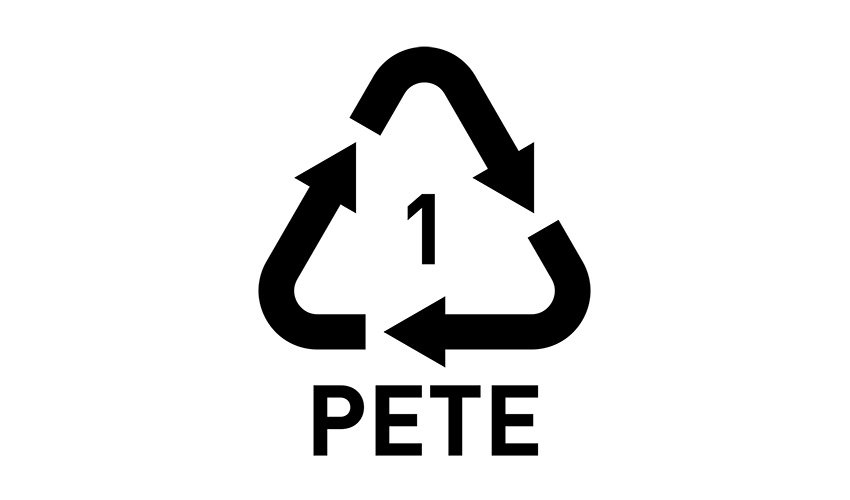
Photo: Bhutajata/Wikipedia
Plastic #1, known as PET (Polyethylene Terephthalate) or PETE, is a lightweight, strong plastic widely used for food and beverage packaging. Its clarity, durability, and ability to protect contents from moisture and gases make it particularly useful for bottles, jars, trays, and other packaging.
When you see the #1 plastic recycling symbol, you’re looking at a product made primarily from PET. PET bottles and containers are among the plastic items commonly accepted by recycling programs in the United States, but the #1 symbol alone does not guarantee that every PET product is accepted where you live.
Common Uses of PET Plastic
You’ll frequently find #1 PET plastic in products such as:
- Water bottles
- Soft drink bottles
- Juice bottles
- Cooking oil bottles
- Salad dressing bottles
- Peanut butter and other food jars
- Some produce containers
- Some food trays and clear packaging
Not every product that looks like clear PET packaging is handled the same way by recycling facilities. Bottles and jars may be accepted while certain trays, clamshells, or other packaging shapes are not, depending on the local program.
Is Plastic #1 Recyclable?
Yes, PET can be recycled, and PET bottles and containers are widely collected by recycling programs. However, whether a specific #1 item belongs in your recycling bin depends on your community’s accepted-material guidelines.
At recycling facilities, collected PET can be sorted, cleaned, processed into flakes, and prepared for use as recycled material. Depending on the quality and processing method, recycled PET may be used to manufacture products such as:
- New bottles and containers
- Polyester fiber
- Clothing and fleece
- Carpeting
- Fiberfill
- Packaging
- Industrial strapping
Some new PET bottles and packaging are also manufactured with recycled PET (rPET), helping keep previously used plastic in circulation.
It’s important to remember, however, that recyclable does not mean every PET item actually gets recycled. Collection, sorting, contamination, local processing capacity, and demand for recycled material all influence what ultimately happens after an item enters the recycling system.
How to Recycle Plastic #1 Correctly
If your local recycling program accepts PET bottles and containers:
- Empty bottles and containers before placing them in the recycling bin.
- Remove significant food or liquid residue according to local instructions.
- Keep recyclables loose rather than putting them inside plastic bags, unless your program specifically says otherwise.
- Follow local instructions about caps and lids.
- Don’t assume that every #1 item is accepted simply because PET bottles are recyclable.
- Check local rules for trays, clamshells, cups, and other PET packaging separately if necessary.
Avoid crushing or flattening bottles unless your recycling provider recommends doing so. Some sorting systems identify containers partly by their shape, so preparation instructions can vary between facilities.
Environmental Considerations
Recycling PET can reduce demand for virgin plastic and keep useful material in circulation, but recycling is only one part of reducing plastic waste. Manufacturing, transporting, collecting, sorting, and reprocessing plastic all require resources and energy.
Whenever practical, reducing unnecessary single-use plastic, choosing reusable alternatives, and using products for as long as appropriate can prevent waste before recycling is necessary.
When PET packaging is unavoidable, correctly identifying plastic #1, following your local recycling instructions, and keeping accepted containers free from significant contamination gives the material a better chance of successfully moving through the recycling system.
Plastic #2 (HDPE): High-Density Polyethylene
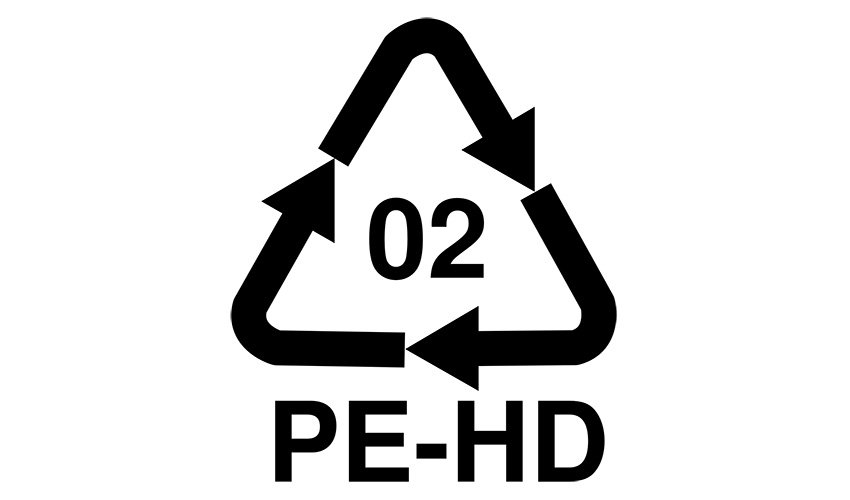
Photo: Tomia/Wikipedia
Plastic #2, known as HDPE (High-Density Polyethylene), is a strong, durable plastic widely used for bottles, jugs, household products, and industrial applications. Its resistance to moisture and many chemicals makes it particularly useful for packaging products such as milk, laundry detergent, shampoo, and household cleaners.
When you see the #2 plastic recycling symbol, the product is made primarily from HDPE. Like PET (#1), HDPE bottles and jugs are among the plastic items commonly accepted by recycling programs in the United States. However, acceptance still depends on the type of product and your local recycling rules.
Common Uses of HDPE Plastic
You’ll commonly find #2 HDPE plastic in products such as:
- Milk jugs
- Laundry detergent bottles
- Shampoo and conditioner bottles
- Household cleaner bottles
- Bleach bottles
- Some juice containers
- Personal-care product bottles
- Some food containers
- Buckets and crates
- Recycling and trash bins
- Some pipes and other durable products
HDPE can be manufactured in different shapes, thicknesses, and colors, which means not every #2 product is necessarily handled the same way by recycling facilities.
Is Plastic #2 Recyclable?
Yes, HDPE can be recycled. Bottles and jugs made from #2 HDPE are widely collected through recycling programs, although you should still check your local guidelines before putting a particular item in your recycling bin.
After collection, HDPE can be sorted, cleaned, shredded, and processed into recycled plastic that may be used to manufacture products such as:
- New bottles and containers
- Plastic lumber
- Outdoor furniture
- Recycling and trash bins
- Drainage pipes
- Flower pots
- Storage products
- Crates and pallets
- Other durable plastic products
Recycled HDPE can substitute for some virgin plastic in new products, helping keep existing material in use for longer.
As with PET, however, being technically recyclable doesn’t guarantee that every HDPE item will actually be recycled. Collection systems, contamination, sorting technology, product design, local processing capacity, and demand for recycled material can all affect the outcome.
How to Recycle Plastic #2 Correctly
If your local program accepts HDPE bottles and containers:
- Empty containers before recycling them.
- Remove significant food, soap, or product residue according to local instructions.
- Keep recyclable containers loose in the recycling bin unless your program says otherwise.
- Leave labels attached unless your recycling provider specifically asks you to remove them.
- Follow local instructions for caps, lids, spray tops, and pumps, which may be made from different materials.
- Check separately before recycling unusual #2 items such as buckets, toys, pipes, or other bulky products.
The resin number alone doesn’t determine whether an item belongs in curbside recycling. A #2 milk jug may be accepted while a large #2 plastic object may not be, even though both are made from HDPE.
Environmental Considerations
Recycling HDPE can help reduce demand for virgin plastic and keep existing material circulating through the economy. Using recycled HDPE in suitable applications can also reduce some of the resource and energy demands associated with producing new plastic from fossil-based raw materials.
However, recycling should not be viewed as a reason to consume more plastic. Reducing unnecessary packaging, choosing reusable products when practical, and reusing durable items can prevent waste before recycling becomes necessary.
When an HDPE product reaches the end of its useful life, identifying the #2 recycling symbol and following your local recycling program’s instructions gives accepted material the best chance of being recovered and used again.
Plastic #3 (PVC): Polyvinyl Chloride
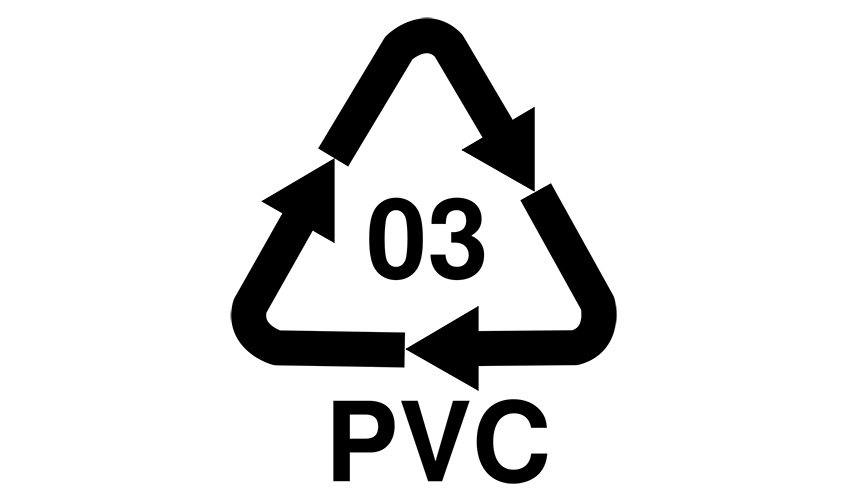
Photo: Tomia/Wikipedia
Plastic #3, known as PVC (Polyvinyl Chloride) or vinyl, is a durable and versatile plastic used extensively in construction, healthcare, electrical products, packaging, and consumer goods. PVC can be manufactured as a rigid material for products such as pipes and window frames or made flexible for applications such as cable insulation and certain types of tubing.
When you see the #3 plastic recycling symbol, the product is made primarily from PVC. Unlike PET (#1) and HDPE (#2) bottles and containers, PVC products generally have more limited recycling options, particularly through household curbside programs.
Common Uses of PVC Plastic
You’ll find #3 PVC plastic in products such as:
- Plumbing pipes and fittings
- Vinyl siding
- Window and door frames
- Vinyl flooring
- Electrical wire and cable insulation
- Garden hoses
- Some shower curtains
- Credit and membership cards
- Medical tubing and some medical products
- Blister packaging
- Some construction materials and consumer products
PVC is especially common in construction because it is durable, resistant to moisture and corrosion, and can remain in service for many years.
Is Plastic #3 Recyclable?
PVC can be recycled, but recycling options are limited compared with some other plastics.
Many curbside recycling programs do not accept #3 PVC products. However, certain specialized recycling systems can recover PVC from sources such as pipes, window profiles, flooring, roofing materials, and other construction products.
One challenge is that PVC products can have very different formulations. Depending on their intended use, manufacturers may incorporate plasticizers, stabilizers, pigments, fillers, and other additives. These differences can make it more difficult to combine different PVC waste streams into consistent recycled material.
PVC also contains a substantial proportion of chlorine by weight, which distinguishes it chemically from common packaging plastics such as PET, HDPE, and polypropylene. Proper identification and separation are therefore important during plastic sorting and processing.
How to Recycle Plastic #3 Correctly
If you have a product marked with the #3 recycling code:
- Don’t automatically place it in your curbside recycling bin.
- Check whether your local recycling program specifically accepts PVC.
- Look for specialized recycling programs for PVC construction materials where available.
- Ask about recycling options when replacing products such as pipes, siding, windows, or flooring.
- Reuse durable PVC products when appropriate rather than discarding usable items.
- Follow local disposal requirements when recycling is unavailable.
Large PVC products such as pipes, flooring, and building materials generally should not be placed in a household recycling bin unless your recycling provider specifically instructs you to do so.
Why Is PVC More Difficult to Recycle?
PVC presents recycling challenges because #3 is not one uniform product. Rigid PVC pipe, flexible vinyl flooring, electrical insulation, and medical tubing can contain different formulations and additives designed for very different purposes.
Recycling facilities therefore need appropriate systems to identify, separate, and process compatible PVC materials. In some applications, relatively clean and consistent PVC waste streams can be recycled more effectively than mixed post-consumer PVC collected from many different products.
This is another reason the plastic recycling number should be treated as an identification code rather than a recycling instruction.
Environmental Considerations
PVC’s environmental impact is more complicated than simply labeling the material “good” or “bad.” Its durability can be advantageous in long-life applications such as pipes and building components because products may remain useful for decades. At the same time, PVC production, additives used in particular formulations, waste management, and end-of-life treatment can raise environmental concerns that need to be considered across the product’s entire life cycle.
Extending the useful life of durable PVC products, avoiding unnecessary single-use products, and using established collection and recycling systems where available can help reduce waste.
If a PVC product reaches the end of its useful life, check for an appropriate recycling or disposal option rather than assuming that the #3 symbol means it belongs in your household recycling bin.
Plastic #4 (LDPE): Low-Density Polyethylene
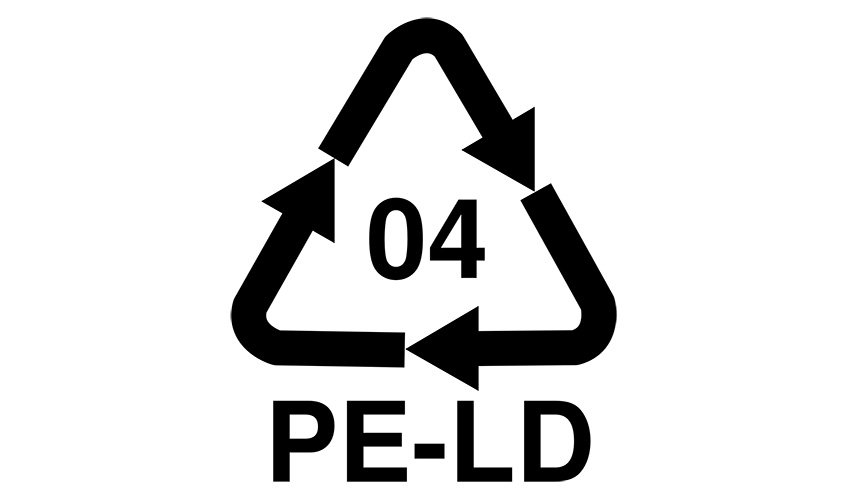
Photo: Tomia/Wikipedia
Plastic #4, known as LDPE (Low-Density Polyethylene), is a lightweight and flexible plastic commonly used for bags, films, wraps, squeeze bottles, and other types of packaging. Its flexibility, moisture resistance, and toughness make it useful for products that need to bend or stretch without breaking easily.
When you see the #4 plastic recycling symbol, the product is made primarily from LDPE. However, knowing the resin number is only part of the story. With LDPE in particular, the form of the plastic—such as a rigid container versus flexible film—can strongly influence how it should be recycled.
Common Uses of LDPE Plastic
You’ll commonly encounter #4 LDPE plastic in products such as:
- Some grocery and shopping bags
- Bread bags
- Produce bags
- Some frozen-food bags
- Some dry-cleaning bags
- Certain plastic films and wraps
- Some bubble wrap and shipping film
- Squeeze bottles
- Flexible packaging
- Liners and protective films
Not every flexible plastic bag or wrapper is necessarily made from LDPE, and some packages combine multiple materials. Look for the resin code or recycling instructions on the product when available.
Is Plastic #4 Recyclable?
LDPE can be recycled, but acceptance varies significantly by product and location.
Rigid #4 containers may be accepted by some curbside recycling programs. Plastic bags and flexible film are different. Many curbside programs specifically instruct residents not to place loose plastic bags or film in household recycling bins because these materials can become wrapped around sorting equipment at material recovery facilities.
Some communities and retailers provide separate collection programs for eligible plastic film, but these programs have their own rules about what they accept.
This means a #4 squeeze bottle and a #4 plastic bag may need to be handled differently even though both carry the same resin identification number.
What Plastic Film May Be Accepted at Drop-Off Locations?
Where a dedicated film-recycling program is available, it may accept certain clean and dry polyethylene films, such as:
- Shopping bags
- Produce bags
- Bread bags
- Newspaper bags
- Some shipping pillows
- Some product overwrap
- Certain clean polyethylene shipping films
However, don’t assume that every flexible package belongs in a store collection bin. Food pouches, chip bags, candy wrappers, compostable bags, and multi-layer packaging may be made from different materials and may not be accepted.
Always follow the instructions printed on the collection bin or provided by the recycling program.
How to Recycle Plastic #4 Correctly
Before recycling an LDPE product:
- Check whether it is a rigid #4 container or flexible plastic film.
- Follow your local recycling program’s instructions for rigid containers.
- Keep plastic bags and film out of curbside recycling unless your program specifically accepts them.
- Use a dedicated film collection program only for materials listed as acceptable.
- Keep eligible film clean and dry when required by the collection program.
- Remove receipts and other non-plastic materials from bags.
- Don’t place questionable flexible packaging in a collection bin simply because it looks like plastic film.
When you’re unsure, checking the recycling provider’s accepted-material list is better than wishcycling an item that may interfere with sorting or contaminate the collected material.
Why Are Plastic Bags and Film Difficult to Recycle Curbside?
Flexible plastic behaves differently from rigid bottles and containers at recycling facilities. Bags and films can become caught around conveyor components and other sorting equipment, potentially requiring workers to stop equipment and remove the tangled material.
That’s why a material can be technically recyclable but inappropriate for a particular collection system. Separate film collection programs can create a cleaner stream of compatible material for facilities designed to process it.
Environmental Considerations
Lightweight plastic bags and films can become litter when they are not properly contained or disposed of. Because these materials are thin and easily carried by wind and water, preventing them from escaping into the environment is particularly important.
Reducing unnecessary disposable bags and packaging, reusing suitable bags, and choosing durable reusable alternatives can help prevent waste before recycling is needed.
When #4 LDPE reaches the end of its useful life, identify the type of product first and then follow the appropriate local collection instructions. For LDPE, the question isn’t simply “Is #4 recyclable?” but also “Is this particular #4 product accepted by the recycling system available to me?”
Plastic #5 (PP): Polypropylene

Photo: Tomia/Wikipedia
Plastic #5, known as PP (Polypropylene), is a lightweight, durable plastic widely used in food packaging, household products, automotive components, and many other applications. It resists moisture and many chemicals and can tolerate relatively high temperatures compared with several common packaging plastics.
When you see the #5 plastic recycling symbol, the product is made primarily from polypropylene. PP is commonly found in tubs, containers, caps, and other rigid packaging, and many recycling programs accept at least some forms of it. However, acceptance still varies by community and by the type, size, and shape of the product.
Common Uses of Polypropylene
You’ll commonly find #5 polypropylene plastic in products such as:
- Yogurt containers
- Butter and margarine tubs
- Some takeout containers
- Some food storage containers
- Medicine and prescription bottles
- Bottle caps and closures
- Drinking straws
- Some disposable cups
- Reusable household products
- Automotive components
- Garden and outdoor products
- Storage containers
Polypropylene is also known for its resistance to repeated bending, which is why it is often used for living hinges—the thin flexible sections found on some flip-top lids and containers.
Although PP can tolerate relatively high temperatures, a #5 symbol by itself does not mean that a container is microwave-safe. Always follow the manufacturer’s instructions and look for specific microwave-safe labeling before heating food in any plastic container.
Is Plastic #5 Recyclable?
Yes, polypropylene can be recycled, and many recycling programs accept certain #5 containers. However, you should not assume that every item marked #5 belongs in your curbside recycling bin.
Acceptance may depend on the product’s form. A polypropylene yogurt tub, for example, may be accepted by a program that does not accept polypropylene straws, utensils, small caps, or bulky household products.
When recovered and properly processed, recycled polypropylene may be used in products such as:
- Storage bins and containers
- Automotive components
- Brooms and brushes
- Plastic pallets and crates
- Garden products
- Household goods
- Industrial products
- Certain types of packaging
As with the other resin codes, technically recyclable does not mean that every polypropylene product is actually recycled. Collection, sorting, contamination, local processing capacity, product design, and demand for recycled PP all influence what happens to the material after disposal.
How to Recycle Plastic #5 Correctly
If your local recycling program accepts polypropylene:
- Empty containers before placing them in the recycling bin.
- Remove significant food residue according to local instructions.
- Keep accepted containers loose rather than placing them inside plastic bags.
- Check local rules for caps, lids, and closures.
- Don’t assume that small PP items such as straws or utensils are accepted simply because they carry a #5 code.
- Check separately before recycling large or unusual polypropylene products.
The shape and size of an item can matter just as much as its recycling number. Sorting equipment is generally designed around specific categories of packaging, so an accepted #5 tub doesn’t necessarily mean every #5 object can enter the same recycling stream.
Why Isn’t Every #5 Plastic Item Accepted?
Polypropylene appears in many different products, from thin food packaging and bottle caps to automotive parts and large storage containers. Recycling programs are designed to collect and sort particular material streams, and some PP products may be too small, too large, contaminated, or otherwise unsuitable for a local system.
Markets for recovered polypropylene and the equipment available to sort and process it can also differ between regions.
This is why checking your local accepted-material list is more reliable than deciding what to recycle based solely on the #5 recycling symbol.
Environmental Considerations
Polypropylene’s durability can be useful when it allows a product to remain in service for a long time or be reused repeatedly. However, durability alone does not make a plastic product environmentally sustainable, particularly when PP is used for disposable items intended to be used only once.
Reducing unnecessary single-use products, reusing suitable containers, and choosing durable alternatives where practical can prevent waste before recycling becomes necessary.
When a polypropylene product reaches the end of its useful life, correctly identifying plastic #5 and following your local recycling instructions can help keep accepted PP materials in circulation rather than contaminating the recycling stream.
Plastic #6 (PS): Polystyrene

Photo: Tomia/Wikipedia
Plastic #6, known as PS (Polystyrene), is a plastic used in both rigid and foam forms. Its low weight, insulating properties, and ability to be molded into many shapes have made it common in food-service products, protective packaging, building materials, and consumer goods.
One familiar form is expanded polystyrene (EPS), the lightweight foam used in some protective packaging, coolers, and food-service products. Although EPS is often casually called “Styrofoam,” Styrofoam® is actually a trademarked brand name and is not the generic name for all polystyrene foam.
When you see the #6 plastic recycling symbol, the product is made primarily from polystyrene. Recycling options for #6 plastics are generally more limited than for commonly collected PET (#1) and HDPE (#2) bottles and containers.
Common Uses of Polystyrene
You’ll find #6 polystyrene plastic in products such as:
- Some foam cups
- Foam plates and bowls
- Some takeout food containers
- Foam egg cartons and food trays
- Protective packaging for appliances and electronics
- Some packing materials
- Rigid disposable cups
- Some disposable utensils
- Rigid food containers
- CD and DVD cases
- Laboratory products
- Insulation and construction materials
Not every foam product is made from polystyrene, so appearance alone isn’t always enough to identify the material. Check for a resin code or product information when available.
Is Plastic #6 Recyclable?
Polystyrene can be recycled, but collection options are limited in many communities.
Many curbside recycling programs do not accept polystyrene foam, and some also exclude rigid #6 products. Specialized facilities and collection programs may accept particular types of clean polystyrene.
Foam presents a particular challenge because it contains a large amount of air relative to its weight. That makes loose foam bulky to collect, store, and transport. Some recycling operations use densification equipment to compress foam before transportation and further processing.
Recovered polystyrene can potentially be processed into material for products such as:
- Picture frames
- Building and construction products
- Decorative molding
- Office and household products
- Certain plastic components
- Other applications suitable for recycled polystyrene
As with every resin category in this guide, the fact that #6 plastic can technically be recycled does not mean that a particular #6 product is accepted or will ultimately be recycled.
How to Recycle Plastic #6 Correctly
Before disposing of a polystyrene product:
- Check whether your local recycling program accepts rigid PS, polystyrene foam, or neither.
- Don’t place foam packaging in curbside recycling unless your program specifically allows it.
- Look for specialized foam collection programs where available.
- Keep accepted material clean and dry according to the recycler’s instructions.
- Reuse clean protective packaging when practical.
- Check with shipping or packaging businesses about reuse options for suitable packing materials.
- Follow local disposal instructions when no recycling or reuse option is available.
Food residue can make some food-service polystyrene unsuitable for particular recycling programs, so always follow the collection program’s preparation requirements.
Why Is Polystyrene Foam Difficult to Recycle?
One of the biggest challenges with expanded polystyrene is economics and logistics rather than simply whether the polymer can be recycled.
Foam is extremely lightweight relative to the space it occupies. Large volumes may therefore need to be collected and transported to recover a relatively small mass of plastic. Unless the material can be efficiently collected and densified, transportation and processing can be impractical.
Food contamination, limited local collection infrastructure, and demand for recovered material can create additional challenges.
Rigid polystyrene does not have exactly the same collection and transportation issues as foam, but it may still be excluded from local programs because sorting and end-market options vary.
Environmental Considerations
Polystyrene waste can become an environmental problem when it escapes waste-management systems. Foam products are particularly lightweight and can break into smaller pieces that are easily dispersed by wind or water. Once littered, these fragments can be difficult to recover from the environment.
For disposable food-service products, reducing unnecessary single-use items and choosing reusable alternatives where practical can prevent waste before recycling becomes an issue. Clean protective packaging can sometimes also be reused before disposal.
When you encounter the #6 recycling symbol, don’t automatically put the item in your recycling bin. First identify whether it is rigid or foam polystyrene, then check whether your local recycling or specialized collection program accepts that particular product.
Plastic #7 (Other): Other and Specialty Plastics
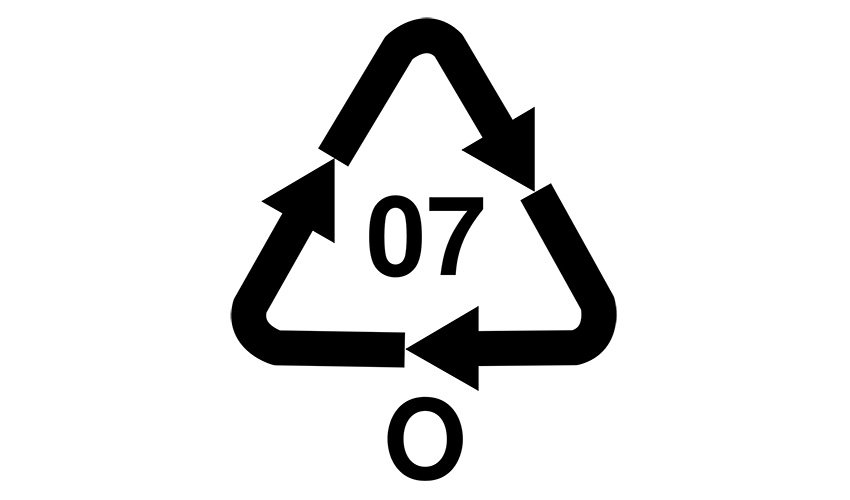
Photo: Tomia/Wikipedia
Plastic #7, labeled “Other,” is different from recycling codes #1 through #6. Rather than identifying one specific polymer, #7 serves as a category for plastic resins that don’t fit into the first six Resin Identification Code categories and certain products made from combinations of resins.
That means two products carrying the #7 plastic recycling symbol can be made from completely different materials and have very different properties, uses, and recycling options.
Depending on the product, the #7 category can include plastics such as polycarbonate (PC), acrylic (PMMA), nylon (polyamide), PLA and other specialty resins, as well as certain multi-resin combinations.
Because #7 represents such a diverse group of materials, you generally cannot determine how to recycle an item from the number alone.
Common Uses of #7 Plastics
Depending on the specific resin, #7 plastics may appear in products such as:
- Some reusable water bottles
- Some large water containers
- Certain food storage products
- Some reusable household products
- Eyewear and optical products
- Electronic components
- Automotive components
- Acrylic products
- Nylon products
- Certain durable consumer goods
- Some PLA and other bioplastic products
- Certain multi-resin plastic products
These examples are not universal. A reusable bottle, food container, or electronic component may be made from #7 plastic, but it could also be manufactured from another resin.
For that reason, the product itself should not be used to guess its recycling code. Look for the resin identification marking or manufacturer’s material information when available.
Is Plastic #7 Recyclable?
There isn’t a single yes-or-no answer.
Some #7 plastics can be recycled through appropriate systems, while others have few practical recycling options. Because the category contains multiple unrelated materials, many conventional recycling programs either exclude #7 products or accept only specific items.
For example, a facility capable of processing one type of #7 resin may not be able to process another. Products containing combinations of materials can present additional sorting and processing challenges.
Before putting a #7 item into your household recycling:
- Check whether your local program specifically accepts it.
- Identify the particular material when possible.
- Look for manufacturer or retailer collection programs for specialized products.
- Follow local disposal instructions when no recycling option exists.
The #7 symbol by itself is not enough information to determine recyclability.
Does Plastic #7 Mean It Contains BPA?
No. A #7 recycling code does not automatically mean that a product contains BPA.
This misconception comes partly from the fact that some polycarbonate plastics, which can fall within the #7 category, have historically been manufactured using bisphenol A (BPA).
But #7 includes many other materials that are not polycarbonate. Therefore, seeing a #7 symbol does not tell you whether BPA is present.
Likewise, a product labeled “BPA-free” tells you something about BPA but does not, by itself, tell you whether the product is recyclable.
If BPA content matters for a particular product, consult the manufacturer’s information rather than relying on the recycling number.
What About #7 Bioplastics and Compostable Plastics?
Some bioplastics, including certain products made from PLA (polylactic acid), may fall within the #7 category. This does not mean they should automatically go into either your recycling bin or your home compost.
Terms such as biobased, biodegradable, and compostable do not all mean the same thing.
A product labeled compostable may require the controlled conditions of a commercial or industrial composting facility, and not every composting program accepts compostable plastics. These materials can also be inappropriate for conventional plastic recycling streams.
Always follow the disposal certification and the instructions of your local recycling or composting program.
How to Handle Plastic #7 Correctly
Because #7 covers such a broad range of materials, take a product-specific approach:
- Don’t assume every #7 product belongs in the trash or recycling bin.
- Check your local recycling program’s accepted-material list.
- Identify the specific resin when additional markings are provided.
- Look for manufacturer take-back programs for specialty products.
- Reuse durable products for as long as they remain suitable for their intended purpose.
- Keep compostable plastics out of conventional recycling unless explicitly accepted.
- Send certified compostable products to an appropriate composting program only when that program accepts them.
Why Is Plastic #7 So Confusing?
With plastics #1 through #6, the number points to a defined resin category. #7 essentially means “other”, so it provides much less information about the material’s recycling pathway.
A polycarbonate product, a PLA container, an acrylic component, and a nylon product can have very different chemical properties yet fall outside the first six categories.
That’s why #7 is perhaps the clearest example of an important rule from this guide:
A plastic recycling number identifies a material category—it does not tell you whether an item can go into your local recycling bin.
Environmental Considerations
Because #7 contains such a diverse collection of plastics, there is no single environmental profile that applies to every product in the category. Durability, manufacturing processes, recycled content, product lifespan, reuse potential, and available end-of-life systems all affect a product’s overall environmental impact.
For durable #7 products, extending their useful life can help prevent unnecessary waste. For disposable products, reducing unnecessary consumption and choosing reusable alternatives where practical can reduce the amount of material requiring end-of-life management.
When a #7 plastic reaches the end of its useful life, identify the material as precisely as possible and check for an appropriate local recycling, take-back, composting, or disposal option rather than relying on the #7 symbol alone.
Recycling correctly is important, but recycling alone cannot solve the broader plastic-waste problem. Our guide Can Plastic Pollution Be Stopped? looks at the larger challenges—and the solutions being explored beyond the recycling bin.
One of the biggest misconceptions about Recycling Symbols on Plastics is that seeing a numbered triangle automatically means the product can go into a recycling bin.
Does the Recycling Symbol Mean an Item Is Recyclable?
No. A number from 1 to 7 on a plastic product does not automatically mean that the item is recyclable or that it belongs in your recycling bin.
This is one of the most important things to understand when learning how to read recycling symbols on plastics.
The numbers are part of the Resin Identification Code (RIC) system. Their primary purpose is to identify the type of plastic resin used in a product—not to guarantee that the product can be collected, sorted, processed, or recycled in your community.
Older products may display the resin number inside the familiar chasing-arrows triangle, which can easily be interpreted as a recycling claim. However, ASTM International revised the RIC standard in 2013 to use a solid equilateral triangle around the number rather than the chasing-arrows recycling symbol, helping distinguish resin identification from recyclability.
What Actually Determines Whether a Plastic Is Recyclable?
Whether a particular plastic item can go into your recycling bin depends on more than its number. Factors can include:
- Plastic resin type – PET, HDPE, PVC, LDPE, PP, PS, or another resin
- Product form – bottle, jug, tub, tray, film, bag, foam, or another shape
- Size – very small items may not be captured effectively by sorting equipment
- Material combinations – labels, liners, coatings, closures, and multiple materials can affect processing
- Contamination – significant food, grease, liquid, or other residue may make an item unacceptable
- Local collection rules – programs decide which products residents should place in their recycling bins
- Sorting and processing infrastructure – facilities differ in the materials they are equipped to handle
- Available end markets – recovered material needs an appropriate pathway for further processing and use
This explains why two products carrying the same plastic recycling number may have different disposal instructions.
For example, a recycling program may accept a #1 PET beverage bottle but not necessarily every tray, cup, or package made from #1 PET. Similarly, a program might accept a rigid #4 LDPE container while specifically telling residents to keep flexible plastic bags out of curbside recycling.
Why Local Recycling Rules Matter
Recycling programs are not identical. Collection methods, sorting equipment, processing facilities, contracts, and accepted materials can differ between communities.
That’s why a simple rule such as “Recycle #1, #2, and #5” can be misleading. The resin number is useful for identifying the material, but your local program’s accepted-material list should determine what actually goes into your recycling bin.
When you’re unsure about an item, check:
- Your city or county recycling website
- Your local recycling or waste provider
- Instructions printed on your recycling cart or collection guide
- Special collection or drop-off programs available in your area
Don’t Rely on the Chasing-Arrows Symbol Alone
A chasing-arrows symbol can appear in different contexts, and its presence should not replace local recycling instructions.
Likewise, seeing #1 through #7 on a plastic product tells you something about its resin composition but not necessarily what will happen to that item after you discard it.
A better way to think about plastic recycling is:
Identify the material → identify the type of product → check whether your local program accepts it.
Best Practices for Recycling Plastics
To reduce common recycling mistakes:
- Empty accepted bottles and containers before recycling them.
- Follow local instructions about rinsing and food residue.
- Keep recyclables loose unless your program specifically requests otherwise.
- Keep plastic bags and film out of curbside bins when they aren’t accepted.
- Follow local instructions for caps, lids, pumps, and other components.
- Don’t assume that an item is recyclable just because another product with the same resin number is accepted.
- When you’re unsure, check the local guidelines instead of wishcycling.
Understanding the difference between a plastic resin identification code and an actual recycling instruction can help you sort waste more accurately and reduce contamination in the recycling stream.
When you’re unsure about an item, check your local recycling program first. The U.S. Environmental Protection Agency’s recycling guidance also provides general information about recycling common household materials, but your local program’s instructions should determine what goes into your bin.
Which Plastic Numbers Are Usually Recyclable?
When comparing Recycling Symbols on Plastics, #1 PET and #2 HDPE bottles, jugs, and certain containers are among the plastics most commonly accepted by U.S. recycling programs. #5 polypropylene containers are also accepted by many programs. Recycling options for #3, #4, #6, and #7 vary considerably depending on the product and location.
But there’s an important catch: you cannot determine whether a plastic item belongs in your recycling bin from its number alone.
The resin number identifies the material. Your local recycling program determines which products it accepts.
#1 PET: Commonly Accepted for Bottles and Containers
#1 PET (Polyethylene Terephthalate) is commonly used for:
- Water bottles
- Soft drink bottles
- Juice bottles
- Food jars
- Some trays and clear packaging
PET bottles and certain containers are widely collected, but don’t assume that every #1 item is accepted. A PET bottle, tray, cup, and clamshell package may be treated differently by the same recycling program.
#2 HDPE: Commonly Accepted for Bottles and Jugs
#2 HDPE (High-Density Polyethylene) is another commonly collected household plastic, particularly when it comes in familiar packaging forms such as:
- Milk jugs
- Detergent bottles
- Shampoo bottles
- Household cleaner bottles
- Some food and beverage containers
Large #2 objects such as buckets, toys, pipes, or household products may not belong in curbside recycling even when #2 bottles are accepted.
#5 PP: Accepted by Many Programs
#5 PP (Polypropylene) is used in products such as:
- Yogurt containers
- Butter and margarine tubs
- Some takeout containers
- Medicine bottles
- Caps and closures
Many recycling programs accept certain polypropylene tubs, cups, and containers. However, small items such as straws, utensils, caps, or other #5 products may have different rules.
#4 LDPE: It Depends Heavily on the Product
#4 LDPE (Low-Density Polyethylene) demonstrates why recycling numbers can be misleading when used alone.
Rigid #4 containers may be accepted by some curbside programs, while flexible polyethylene bags and film often require a separate collection system where one is available.
Common #4 products include:
- Some shopping bags
- Bread and produce bags
- Certain films and wraps
- Squeeze bottles
- Flexible packaging
Never assume that a plastic bag belongs in a store drop-off bin simply because it carries a #4 code. Follow the collection program’s specific list of accepted materials.
#3 PVC: Limited Household Recycling Options
#3 PVC (Polyvinyl Chloride) generally has fewer curbside recycling options.
PVC is common in:
- Pipes and fittings
- Vinyl siding and flooring
- Window components
- Electrical insulation
- Some packaging
Certain PVC construction materials can be recycled through specialized programs, but that doesn’t mean they belong in household curbside recycling.
#6 PS: Limited, Especially for Foam
#6 PS (Polystyrene) can appear as rigid plastic or foam.
Common examples include:
- Some disposable cups
- Food-service containers
- Foam packaging
- Protective shipping materials
- Some rigid containers
Polystyrene foam is particularly challenging for conventional recycling systems because it is lightweight and bulky. Specialized collection programs may accept certain clean polystyrene products.
#7 Other: No Single Recycling Rule
#7 Other cannot accurately be described as simply recyclable or non-recyclable because it includes many different materials.
The category may include:
- Polycarbonate
- Acrylic
- Nylon
- PLA and certain other bioplastics
- Other specialty resins
- Certain combinations of resins
Some #7 products may have specialized recycling, take-back, or composting pathways, while others may have no practical recovery option in a particular community.
Quick Reference: Which Plastic Numbers Can You Recycle?
| Plastic Code | General U.S. Recycling Guidance |
|---|---|
| #1 PET | Commonly accepted for bottles and certain containers |
| #2 HDPE | Commonly accepted for bottles and jugs |
| #3 PVC | Limited curbside acceptance; specialized recycling may exist |
| #4 LDPE | Varies greatly; flexible film may require separate collection |
| #5 PP | Many programs accept certain tubs, cups, and containers |
| #6 PS | Limited acceptance, particularly for foam |
| #7 Other | Depends on the specific resin and product |
These are general guidelines, not universal recycling rules. Even two products carrying the same number may receive different recycling instructions because their size, shape, color, additives, contamination, or material combinations differ.
The Simplest Rule to Follow
Instead of memorizing “#1 and #2 are recyclable” or “#6 and #7 aren’t recyclable,” use this three-step approach:
1. Check the plastic number.
Identify the resin category.
2. Look at the type of product.
A bottle, tub, bag, film, foam tray, or large plastic object may be handled differently.
3. Check your local recycling program.
Its accepted-material list—not the number printed on the plastic—is the final authority on what belongs in your recycling bin.
That approach is more accurate than relying on the recycling number alone and can help prevent wishcycling and contamination in household recycling.
Common Plastic Recycling Mistakes
Even after learning what the Recycling Symbols on Plastics mean, it’s easy to make mistakes. An item’s resin number, size, shape, condition, and local collection system can all affect whether it belongs in a recycling bin.
Avoiding these common plastic recycling mistakes can help reduce contamination, prevent problems at sorting facilities, and improve the quality of collected recyclable materials.
1. Assuming Every Numbered Plastic Is Recyclable
One of the biggest recycling mistakes is assuming that a plastic item belongs in the recycling bin simply because it has a number from 1 to 7.
The number is a Resin Identification Code (RIC). It identifies the plastic resin category but does not guarantee that the item is accepted by your local recycling program.
Better approach: Use the number to identify the material, then check whether your local program accepts that particular type of product.
2. Recycling Containers with Too Much Food or Liquid Left Inside
Food, liquids, and other residues can reduce the quality of collected recyclables and create problems during sorting and processing.
You don’t necessarily need to make every container spotless. Preparation requirements vary between recycling programs.
Examples of items that may need attention include:
- Peanut butter and other food jars
- Yogurt and dairy containers
- Takeout containers with food remaining
- Bottles containing significant amounts of liquid
Better approach: Empty containers and follow your local program’s instructions about rinsing or cleaning them.
3. Putting Plastic Bags and Film in Curbside Recycling
Plastic bags and flexible film are a major source of confusion because some of these materials can be recycled through appropriate collection systems but often don’t belong in curbside recycling.
Loose bags and film can wrap around equipment used at some material recovery facilities, interfering with sorting operations.
Better approach: Keep bags and film out of your curbside bin when your program prohibits them. If a separate film collection program is available, follow its specific list of accepted materials.
4. Putting Polystyrene Foam in the Bin Without Checking
Expanded polystyrene (EPS) foam is not routinely accepted by many curbside recycling systems.
Its low weight and large volume can make collection and transportation challenging, although specialized recycling programs may accept certain clean foam products.
And remember: Styrofoam® is a trademarked product name, not the generic name for all polystyrene foam.
Better approach: Check for a local foam-recycling program before putting #6 foam into a recycling bin.
5. Wishcycling
Wishcycling means putting an item into the recycling bin because you hope or assume it can be recycled, even though you’re unsure whether the local program accepts it.
Common examples can include:
- Garden hoses
- Plastic toys
- Coffee pods
- Disposable utensils
- Toothbrushes
- Multi-material packaging
- Unusual plastic household products
These items can create sorting problems or be removed from the recycling stream when they aren’t compatible with the facility.
Better approach: When you’re unsure, check your local accepted-material list instead of guessing.
6. Assuming All Items with the Same Plastic Number Are Treated the Same
This is one of the most important lessons in this guide.
A recycling program might accept a #1 PET beverage bottle but not every #1 PET tray or package. It might accept a #5 polypropylene tub but not a #5 straw or utensil.
Why?
Because recycling facilities don’t sort materials based solely on the resin number. The item’s size, shape, rigidity, color, design, and compatibility with sorting equipment can also matter.
Better approach: Think about both the plastic number and the type of product.
7. Putting Very Small Plastic Items in the Recycling Bin
Small plastic objects can be difficult for sorting systems to capture correctly. Depending on the facility, they may fall through screens or become mixed with other materials.
Examples can include:
- Loose caps and lids
- Plastic utensils
- Straws
- Small cosmetic components
- Tiny plastic pieces
However, don’t automatically remove bottle caps if your recycling program tells you to leave them attached.
Better approach: Follow local instructions for small items, caps, and lids.
8. Putting Tanglers in the Recycling Bin
Some plastic products can become wrapped around sorting equipment and are sometimes referred to as tanglers.
Examples may include:
- Garden hoses
- Plastic cords
- Ropes
- Strapping
- Certain flexible plastic materials
These products may be made from recyclable materials in theory but still be unsuitable for a curbside recycling system.
Better approach: Keep tanglers out unless your recycling provider specifically accepts them.
9. Assuming “Compostable” Plastic Belongs in Recycling
Compostable and biodegradable plastics are another common source of confusion.
Some compostable plastics require specific conditions at commercial or industrial composting facilities. They generally should not be mixed into conventional plastic recycling unless a local program specifically instructs residents to do so.
They also shouldn’t automatically be placed in a backyard compost pile.
Better approach: Follow the product’s certification and your local composting program’s acceptance rules.
10. Treating Recycling as the First Option
Recycling plays a role in managing plastic waste, but preventing unnecessary waste in the first place can reduce the amount of material that needs to be collected and processed.
Where practical, consider:
- Carrying reusable shopping bags
- Using a refillable water bottle
- Choosing reusable food containers
- Reusing durable products
- Avoiding unnecessary single-use items
- Choosing products with less packaging
The familiar hierarchy Reduce → Reuse → Recycle is useful because recycling occurs only after a product has already been manufactured, transported, used, and discarded.
Recycling is only part of the solution. These 10 easy ways to reduce plastic waste can help you cut down on disposable plastic before it ever reaches the recycling bin.
Why Correct Plastic Recycling Matters
Correct sorting helps recycling systems receive cleaner, more compatible material and reduces the number of unsuitable items entering processing facilities. But putting an item into a recycling bin does not guarantee that it will ultimately become a new product.
Collection, sorting, contamination, processing capacity, economics, and demand for recovered material all influence what happens afterward.
The best rule is simple: don’t recycle based on appearance, assumptions, or the plastic number alone. Check what your local recycling program actually accepts.
Tips for Recycling Plastic Correctly
Knowing how to interpret Recycling Symbols on Plastics is useful, but recycling correctly involves more than finding a number on the bottom of a container. The most reliable approach is to identify the material, consider the type of product, and then follow the instructions provided by your local recycling program.
Use these practical steps to reduce common recycling mistakes and give accepted plastics the best chance of moving successfully through the collection and sorting system.
1. Check What Your Local Program Actually Accepts
Start with your city, county, municipality, or recycling provider’s accepted-material list.
Don’t look only for statements such as “#1 and #2 plastics accepted.” More useful guidance identifies specific products, such as:
- Plastic bottles
- Jugs
- Tubs
- Cups
- Trays
- Clamshell containers
- Caps and lids
- Plastic bags and film
A program may accept one product made from a particular resin while excluding another product made from the same material.
Remember: the plastic number identifies the resin; the local recycling program determines what belongs in your bin.
2. Empty Containers Before Recycling
Remove liquids, food, and other remaining contents before placing accepted containers in recycling.
Containers generally don’t need to look brand new, but significant amounts of food, grease, or liquid can interfere with collection and processing.
Follow your local instructions about whether containers should be rinsed. Requirements can vary depending on the recycling system.
3. Keep Recyclables Loose
Many curbside recycling programs want accepted materials placed loose in the recycling cart rather than tied inside plastic bags.
Bagged recyclables can create problems because sorting facilities may not be designed to open or process the bags.
If your program gives different instructions, follow those instead.
4. Treat Plastic Bags and Film Separately
Don’t assume that plastic bags belong in curbside recycling simply because they are made from recyclable polyethylene.
Flexible films can behave very differently from rigid containers at sorting facilities and may become wrapped around machinery.
If a separate plastic-film collection program is available:
- Check exactly which films it accepts.
- Keep accepted film clean and dry if required.
- Remove receipts and other non-accepted materials.
- Don’t add chip bags, pouches, compostable bags, or other flexible packaging unless the program specifically lists them.
5. Follow the Rules for Caps and Lids
Advice about plastic caps has changed over time, which is why you’ll find conflicting instructions online.
Instead of automatically removing or replacing every cap, follow your local recycling provider’s current instructions.
Caps, lids, pumps, and closures may differ from the main container in material, size, and how they behave during sorting.
6. Pay Attention to Size and Shape
The shape of a plastic product can matter almost as much as its resin number.
A recycling facility designed to process bottles, jugs, and tubs may not be able to handle:
- Plastic toys
- Garden hoses
- Straws
- Disposable utensils
- Large storage products
- Tiny plastic pieces
- Bulky plastic objects
Don’t assume an unusual plastic object belongs in curbside recycling simply because you find a #1–#7 code on it.
7. Keep Electronics and Hazardous Items Out
Some products require completely different collection systems and should not be placed in ordinary household recycling.
Examples may include:
- Electronics
- Batteries
- Medical sharps
- Containers holding hazardous substances
- Certain automotive products
These items may require household hazardous-waste collection, electronics recycling, pharmacy or medical collection, or another specialized program.
8. Don’t Wishcycle
If you’re uncertain whether something is accepted, resist the temptation to put it in the recycling bin “just in case.”
Instead:
Check first → recycle second.
Your local recycling provider’s website, collection guide, or waste-search tool can usually give you a more reliable answer than the recycling number alone.
9. Reuse Products When It Makes Sense
Before recycling a durable product, consider whether it still has a useful life.
Depending on the item, you might:
- Reuse sturdy containers for organization
- Reuse shipping and packing materials
- Donate usable household products
- Choose refillable containers
- Use durable shopping bags repeatedly
Reuse should still be appropriate for the product. Don’t repurpose packaging for food, heating, chemicals, or other applications for which it wasn’t designed.
10. Reduce Unnecessary Single-Use Plastic
Recycling happens at the end of a product’s useful life. Reducing unnecessary consumption can prevent waste from being created in the first place.
Practical options include:
- Carrying reusable shopping bags
- Using a refillable water bottle
- Bringing a reusable coffee cup where accepted
- Choosing durable food storage containers
- Selecting products with less unnecessary packaging
- Refilling products when practical
- Using items you already own before buying replacements
You don’t need to eliminate every piece of plastic from your life. The goal is to reduce unnecessary disposable products where practical and handle the plastic you do use responsibly.
11. Check the Rules Again Occasionally
Recycling instructions can change as collection contracts, equipment, processing options, and accepted-material lists change.
If you haven’t checked your local recycling guidelines recently—or you’re unsure about a particular item—look up the current instructions rather than relying on rules you learned years ago.
A Simple Plastic Recycling Checklist
Before putting a plastic item into your recycling bin, ask:
1. Does my local program accept this type of product?
2. Is the container empty and prepared according to local instructions?
3. Is it the right size and shape for curbside recycling?
4. Does it contain multiple materials that need special handling?
5. Am I recycling it because I know it’s accepted—or because I hope it is?
If you’re unsure, check your local program before putting the item in the bin.
Recycling works best when people send the system the materials it is actually designed to collect and process. Combine that with reducing unnecessary single-use plastics and reusing durable products where practical, and you’ll have a much more effective approach than relying on the recycling symbol alone.
Frequently Asked Questions About Recycling Symbols on Plastics
Still have questions about Recycling Symbols on Plastics? These quick answers cover some of the most common questions about plastic numbers, recyclability, BPA, compostable plastics, bottle caps, and local recycling rules.
What do the numbers inside plastic recycling symbols mean?
The numbers 1 through 7 are part of the Resin Identification Code (RIC) system. They identify the category of plastic resin used to make a product.
For example, #1 identifies PET, #2 identifies HDPE, and #5 identifies polypropylene. The number helps identify the material but does not automatically mean the product is recyclable or accepted by your local recycling program.
Does the chasing-arrows symbol mean a plastic is recyclable?
No. A resin number surrounded by chasing arrows should not be interpreted as a guarantee that the product can go into your recycling bin.
The numbered code identifies the plastic resin category. Actual recyclability depends on the product, its size and shape, local collection rules, available processing infrastructure, and other factors.
ASTM International revised the Resin Identification Code standard in 2013 to replace the chasing-arrows design with a solid equilateral triangle, helping distinguish resin identification from a recycling claim.
Which plastic numbers are most commonly accepted for recycling?
In the United States, #1 PET and #2 HDPE bottles, jugs, and certain containers are among the plastic products most commonly accepted by recycling programs.
Many programs also accept certain #5 polypropylene tubs, cups, and containers.
However, you shouldn’t determine recyclability from the number alone. A program may accept a #1 bottle but not every #1 tray, cup, or package.
Which plastic numbers have more limited recycling options?
Products made from #3 PVC, #6 polystyrene, and many #7 Other plastics often have more limited curbside recycling options than commonly collected #1 and #2 bottles and containers.
However, that doesn’t mean these materials can never be recycled. Specialized programs may accept particular PVC products, polystyrene, or specialty plastics.
The specific product and available recycling system matter more than the number alone.
Is plastic #5 recyclable?
Yes, polypropylene (#5) can be recycled, and many recycling programs accept certain #5 containers.
Common #5 products include:
- Yogurt containers
- Butter and margarine tubs
- Some takeout containers
- Medicine bottles
- Some caps and closures
Not every polypropylene product belongs in curbside recycling. Straws, utensils, small plastic pieces, and unusual #5 products may be handled differently.
Why is polystyrene foam difficult to recycle?
Expanded polystyrene (EPS) is extremely lightweight relative to the amount of space it occupies. That can make loose foam inefficient to collect, store, and transport.
Food contamination and limited access to suitable collection and processing systems can create additional challenges.
Specialized recycling facilities may use equipment to densify or compact foam, making transportation and further processing more practical.
Although people often use “Styrofoam” as a general name for white foam products, Styrofoam® is a trademark and is not the generic name for all expanded polystyrene foam.
Should I remove bottle caps before recycling?
It depends on your local recycling program.
Some programs instruct residents to replace caps on empty bottles, while others may provide different directions for caps, lids, pumps, and closures.
Rather than following a universal rule, check your local recycling provider’s current instructions.
Do plastic containers need to be washed before recycling?
Not necessarily.
Containers should generally be empty, but preparation requirements vary between recycling programs. Some recommend a quick rinse to remove significant food residue, while others may provide different instructions.
There’s usually no reason to use large amounts of water trying to make recyclable containers spotless. Follow your local program’s preparation requirements.
Can plastic bags go in the curbside recycling bin?
Often, no. Many curbside recycling programs tell residents to keep plastic bags and flexible film out of their recycling carts because these materials can become tangled around sorting equipment.
Where separate plastic-film collection programs exist, they may accept certain clean and dry polyethylene bags and films.
Don’t assume that every flexible plastic belongs in a store drop-off bin. Pouches, chip bags, candy wrappers, compostable bags, and multi-layer packaging may not be accepted.
What does BPA-free mean?
BPA-free means that a product is marketed or identified as being made without bisphenol A (BPA).
The term does not tell you whether the product is recyclable, compostable, or accepted by your local recycling program.
Follow the manufacturer’s instructions for using the product and your local recycling guidelines when disposing of it.
Does plastic #7 mean it contains BPA?
No. A #7 recycling code does not automatically mean that a plastic contains BPA.
Some polycarbonate plastics that fall within the #7 category have historically been associated with BPA, but #7 also includes many other resins.
Because #7 means “Other,” the recycling number alone cannot tell you whether BPA is present.
Is biodegradable plastic the same as compostable plastic?
No. The terms biobased, biodegradable, and compostable describe different characteristics and should not be treated as interchangeable.
A compostable plastic may be designed to break down under specific controlled composting conditions. That doesn’t necessarily mean it will break down effectively in a backyard compost pile or in the natural environment.
Look for appropriate certification and follow the disposal instructions for the specific product.
Are biodegradable or compostable plastics recyclable?
Generally, they should not be placed in conventional plastic recycling unless your local program specifically accepts them.
Some compostable plastics require commercial or industrial composting conditions, and not every composting facility accepts compostable plastic products.
Always check both the product’s certification and the rules of the collection or composting program available to you.
What should I do if I don’t know whether a plastic item is recyclable?
Use this simple process:
Check the number → identify the type of product → check your local recycling guidelines.
Don’t put an item into the recycling bin simply because it looks recyclable or has a numbered plastic code.
If your local program doesn’t list the item, look for a specialized collection or manufacturer take-back program where appropriate.
What’s the best way to reduce plastic waste?
A useful approach is to follow the familiar Reduce → Reuse → Recycle hierarchy:
- Reduce unnecessary single-use plastics and excessive packaging.
- Reuse durable products when it’s practical and appropriate.
- Recycle accepted materials according to your local program’s instructions.
Recycling is valuable, but it happens only after a product has already been manufactured and used. Preventing unnecessary waste and extending the useful life of products can reduce the amount of material that eventually requires recycling or disposal.
The most important rule to remember is simple: a plastic recycling number identifies the material—it does not guarantee that the product belongs in your recycling bin.
The Bottom Line on Plastic Recycling Symbols
Understanding Recycling Symbols on Plastics—and what the seven different numbers actually identify—makes it much easier to sort plastic waste correctly. But if there’s one thing to remember from this guide, it’s this:
The number identifies the plastic resin—it does not guarantee that the item is recyclable.
Plastic #1 PET and #2 HDPE bottles, jugs, and certain containers are among the products commonly accepted by U.S. recycling programs, while many programs also accept particular #5 polypropylene containers. Recycling options for #3 PVC, #4 LDPE, #6 polystyrene, and #7 Other depend heavily on the product and the recycling systems available in your area.
Even the same plastic number can have different recycling instructions. A #1 beverage bottle may be accepted while another #1 package is not. A rigid #4 container may have a different recycling pathway from a #4 plastic bag. And #7 represents numerous different materials rather than one specific type of plastic.
That’s why the most useful rule isn’t simply memorizing which plastic numbers are “good” or “bad.”
Instead, remember:
Identify the number → identify the product → check your local recycling rules.
Following that process can help you avoid wishcycling and keep unsuitable materials out of recycling streams.
Recycling is also only one part of managing plastic waste. Where practical, reduce unnecessary single-use products, reuse durable items, choose products with less unnecessary packaging, and recycle materials your local system actually accepts.
Once you understand Recycling Symbols on Plastics, the numbers 1–7 become useful identification tools rather than confusing recycling instructions.
You don’t need to memorize every plastic resin or know every recycling rule. Understanding what the plastic recycling symbols and numbers 1–7 actually mean—and checking local guidelines when you’re unsure—is already a much better approach than assuming every numbered plastic belongs in the recycling bin.
Want to Learn More About Plastic Pollution?
Recycling symbols explain what different plastics are made from, but they are only one part of the much larger plastic-waste problem. The documentary A Plastic Ocean explores how plastic waste reaches marine environments and examines its effects on oceans and wildlife.
Related Articles
Continue exploring practical ways to reduce waste and make more informed environmental choices:
- How to Reduce Plastic Waste at Home
- Why Recycling Is Important
- Can Plastic Pollution Be Stopped?
- How Recycling Helps Fight Climate Change
- Simple Eco-Friendly Habits Anyone Can Start Today
- Beginner’s Guide to Composting at Home
- Sustainable Living Tips for Everyday Life
The next time you turn over a plastic bottle, tub, tray, or container and see a number stamped on the bottom, you’ll know exactly what to do: use the number to identify the plastic, then use your local recycling rules to decide where it belongs.



0 Comments