

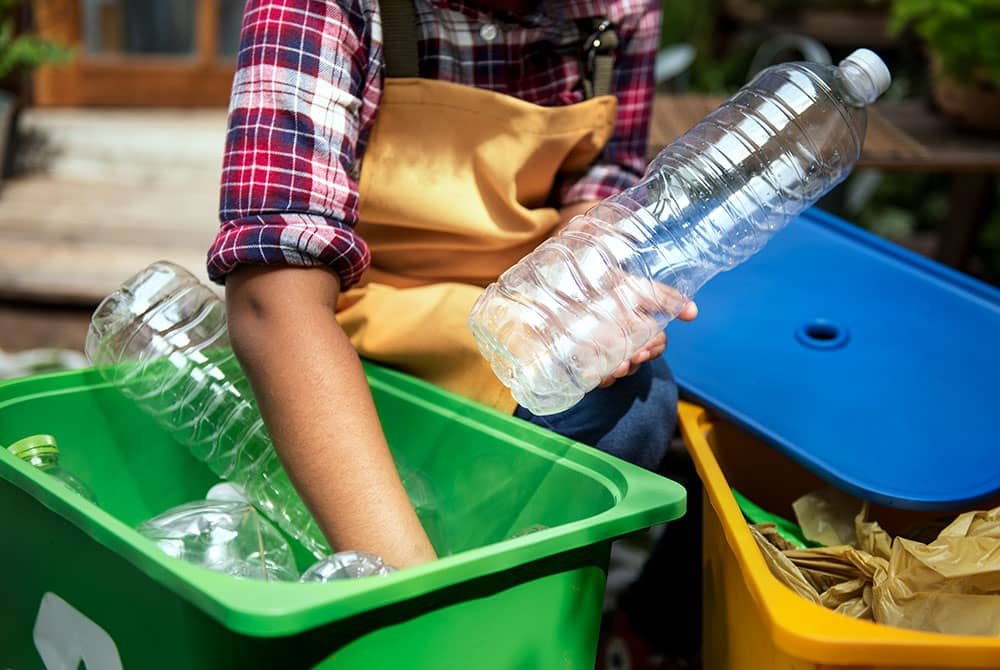
Recycling is one of the easiest ways to keep useful materials out of the trash and give them another life. Bottles, cardboard boxes, aluminum cans, paper, and other everyday items can often be collected and turned into new products instead of being sent straight to a landfill.
And the benefits go beyond simply having less garbage.
Recycling can conserve natural resources, reduce the energy needed to manufacture certain products, cut some forms of pollution, and reduce the amount of waste that communities need to dispose of. It also plays an important role in a circular economy, where materials stay in use for longer instead of constantly being replaced with newly extracted resources.
Of course, recycling isn’t a complete solution to our environmental problems. Reducing unnecessary consumption and reusing what we already have are just as important. But when recycling is done correctly, it remains a practical part of reducing our environmental footprint.
So, why is recycling important?
Recycling is important because it helps conserve natural resources, reduce landfill waste, save energy, lower greenhouse gas emissions, protect ecosystems, and keep valuable materials in circulation.
In this guide, we’ll look at the importance of recycling, its biggest environmental and economic benefits, what can actually be recycled, and some of the common mistakes that can make recycling less effective.
What Is Recycling?
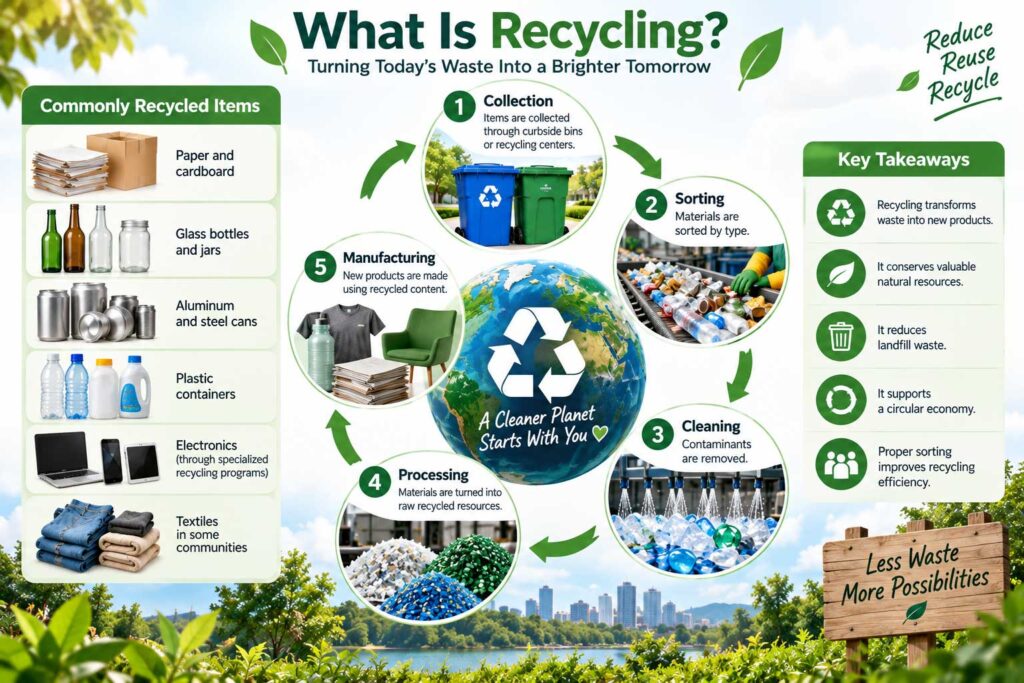
Recycling is the process of collecting used materials and turning them into materials that can be used to make new products. Instead of automatically treating an empty can, cardboard box, or glass bottle as trash, recycling gives that material another chance to be useful.
Many familiar household items can be recycled, depending on the rules and facilities available in your community. These often include:
- Paper and cardboard
- Glass bottles and jars
- Aluminum and steel cans
- Certain plastic bottles and containers
- Electronics through specialized recycling programs
- Some clothing and textiles through dedicated collection programs
Not everything with a recycling symbol belongs in your curbside bin, however. What can actually be recycled varies from one community to another, especially when it comes to plastics.
How Does the Recycling Process Work?
The exact process depends on the material, but recycling generally begins when recyclable items are collected from homes, businesses, drop-off locations, or dedicated recycling centers.
From there, materials typically move through several stages:
- Collection: Recyclable materials are picked up or taken to a collection point.
- Sorting: Paper, plastics, metals, glass, and other materials are separated.
- Preparation: Materials may be cleaned, crushed, shredded, or otherwise prepared for processing.
- Processing: Recovered materials are converted into forms manufacturers can use, such as metal, glass cullet, paper pulp, or plastic flakes and pellets.
- Manufacturing: Those recovered materials are used to make new products.
The journey doesn’t necessarily end there. Some materials can go through the recycling process repeatedly, although how many times they can be recycled depends on the material and how it is processed.
Recycling and the Circular Economy
Recycling is also an important part of the circular economy.
The traditional economy often follows a fairly simple path: extract resources, manufacture a product, use it, and throw it away. A circular approach tries to keep products and materials useful for longer through strategies such as reducing waste, repairing, reusing, refurbishing, and recycling.
Recycling comes into play when an item can no longer be reused in its current form. Instead of losing the material as waste, it can potentially become a resource for another product.
That doesn’t mean every material placed in a recycling bin will automatically become something new. Recycling depends on local collection rules, available processing facilities, contamination levels, and whether there is a practical market for the recovered material.
What About Plastic Recycling?
Plastic can be particularly confusing because the number printed inside the familiar triangle does not necessarily mean that an item can be recycled in your local program. The number identifies the type of plastic resin used to make the product.
That’s why checking your local recycling rules is important before putting plastic into the recycling bin.
If those little numbers have ever left you wondering what goes where, see our guide to the 7 recycling symbols on plastics.
Why Recycling Is Important for the Environment
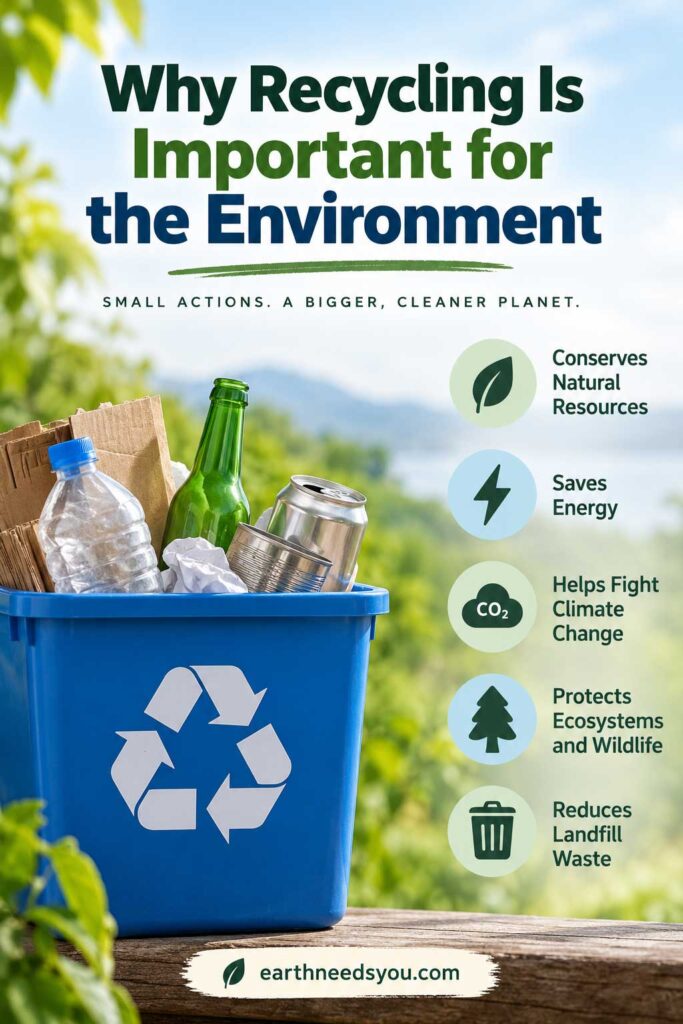
One of the biggest environmental benefits of recycling is that it allows us to get more use out of materials we’ve already extracted and produced. Instead of constantly relying on new timber, metals, minerals, and other raw materials, recycling puts some of those resources back into circulation.
The benefits can be felt at several points along a product’s life cycle. Recycling can reduce the amount of waste sent for disposal, lower demand for newly extracted resources, and, for many materials, reduce the energy needed to manufacture new products.
Conserves Natural Resources
Almost everything we use begins with natural resources. Paper relies on wood fiber, metals come from mined ores, glass is made from materials such as sand, and most conventional plastics begin with fossil-fuel feedstocks.
Recycling doesn’t eliminate the need for these resources, but it can reduce demand for newly extracted materials. Recovered paper can replace some virgin wood fiber, recycled aluminum can reduce the need for newly mined and processed bauxite, and recycled steel can replace part of the virgin material needed for steel production. Glass can also be crushed and returned to the manufacturing process rather than starting entirely with new raw materials.
In other words, recycling helps us get more value from resources that have already been taken from the environment.
Reduces the Amount of Waste Sent to Landfills
Throwing something away doesn’t make it disappear. Waste still has to be collected, transported, processed, burned, buried, or handled in some other way.
Recycling gives materials such as paper, cardboard, metals, glass, and certain plastics another destination. Instead of immediately becoming waste, they may be recovered and used as inputs for new products. This can reduce the volume of material requiring disposal and help extend the useful life of existing landfills.
Landfills are also connected to climate change, although not because every type of trash produces methane. Methane is generated mainly when organic materials such as food, yard waste, and paper break down under the low-oxygen conditions found inside landfills.
Recycling paper and cardboard can divert some biodegradable material from disposal, while preventing food waste and composting organic material where appropriate can address another major source of landfill waste.
Saves Energy
Another reason why recycling is important is that making products from recycled materials can require less energy than producing them entirely from virgin resources.
Think about everything that happens before a product reaches a store. Raw materials have to be extracted, transported, processed, and turned into something usable. Each of those stages can require energy.
Recycling can shorten part of that journey. When manufacturers can use recovered aluminum, steel, paper, glass, or other materials, they may be able to avoid some of the energy-intensive steps involved in starting with virgin resources.
Energy savings can also occur when recycling steel, paper, glass, and some plastics, although the exact savings depend on the material, manufacturing process, transportation distances, and recycling system involved.
This matters beyond the electricity or fuel saved at a factory. When manufacturing requires less fossil-fuel energy, the greenhouse gas emissions associated with production can also fall.
Reduces Greenhouse Gas Emissions
The climate benefits of recycling begin long before an item reaches a landfill.
Extracting raw materials, transporting them to processing facilities, refining them, and manufacturing finished products all require energy. Using recovered materials can avoid some of those steps or make them less energy intensive.
That doesn’t make recycling a standalone solution to climate change. Its impact is much greater when it works alongside cleaner energy, more efficient manufacturing, longer-lasting products, reuse, repair, composting, and efforts to reduce unnecessary consumption.
Still, keeping useful materials in circulation rather than repeatedly extracting replacements can help reduce the overall environmental footprint of the products we use.
Protects Wildlife and Ecosystems
Poorly managed waste doesn’t always stay where it was discarded. Lightweight plastics and other debris can be carried by wind and rain into storm drains, streams, rivers, wetlands, and eventually the ocean.
Once there, waste can become a direct threat to wildlife. Animals may swallow plastic after mistaking it for food, become tangled in discarded fishing line or packaging, or encounter debris that damages their habitat.
Recycling and better waste-management systems can help keep recoverable materials within managed systems. But preventing environmental pollution requires more than recycling. Reducing unnecessary disposable products, improving waste collection, and stopping litter before it reaches waterways are equally important.
You can see how serious this problem becomes once waste reaches the ocean in our guide to How Plastic Pollution Affects Marine Life.
Quick Fact: Recycling works best as part of a bigger approach: reduce what you don’t need, reuse what you can, and recycle what remains. Preventing waste in the first place is often better than trying to manage it after it has already been created.
15 Benefits of Recycling
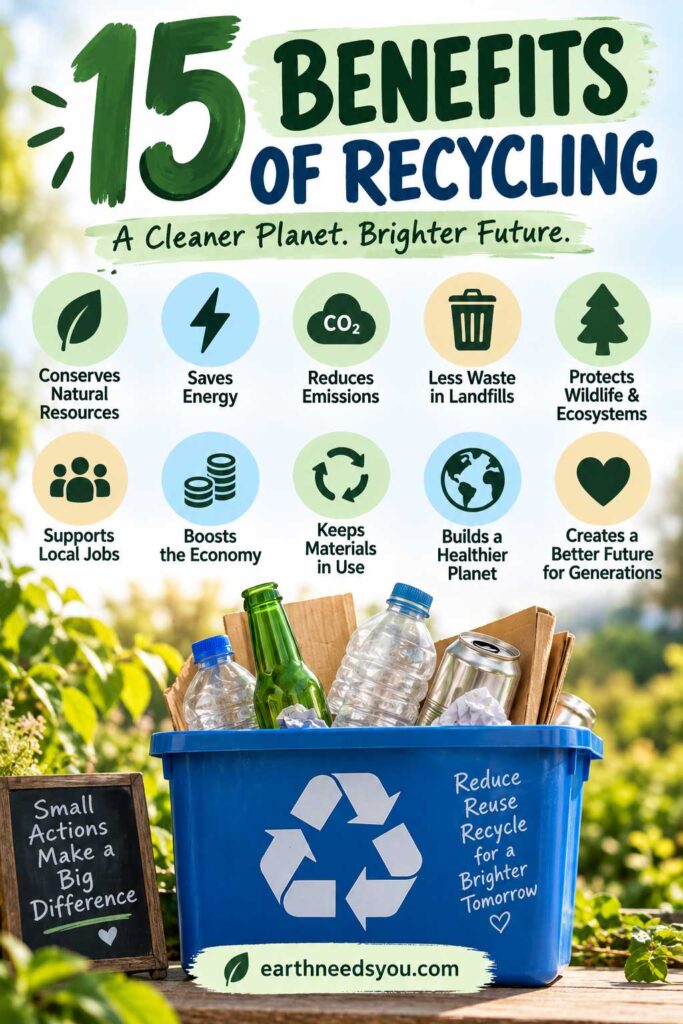
The benefits of recycling reach beyond simply reducing the amount of trash in your garbage bin. Recycling affects how resources are used, how products are manufactured, how communities manage waste, and how much material is lost after just one use.
Here are 15 reasons recycling continues to matter.
1. Keeps Useful Materials in Circulation
A used aluminum can, cardboard box, or glass bottle still contains valuable material. Recycling gives those materials an opportunity to become part of another product instead of immediately being discarded.
2. Conserves Natural Resources
Using recovered materials can reduce demand for virgin timber, ores, minerals, and fossil-fuel feedstocks. It doesn’t eliminate resource extraction, but it can reduce how much new material needs to enter the production system.
3. Reduces the Amount of Trash We Throw Away
Homes and businesses generate enormous amounts of waste. Recycling separates materials that still have value from those that truly need to be disposed of.
Over time, that can mean less material being buried, burned, or otherwise treated as waste.
4. Can Save a Significant Amount of Energy
For some materials, producing goods from recycled content takes considerably less energy than starting with virgin resources.
Aluminum is an especially good example, but energy savings are also possible when recycling other materials, including steel, paper, and glass.
5. Can Lower Greenhouse Gas Emissions
Energy use, raw-material extraction, transportation, and manufacturing all contribute to greenhouse gas emissions.
When recycled materials replace some virgin resources and reduce manufacturing energy requirements, the climate footprint of producing certain goods can also decrease.
6. Reduces Pressure on Landfills
Landfills have limited capacity. Sending recyclable materials there uses space that could otherwise be reserved for waste that cannot reasonably be recovered.
Recycling can help communities extend the useful life of existing disposal facilities rather than continually expanding them.
7. Supports a Circular Economy
The traditional model of production is often described as take, make, use, and dispose.
A circular economy tries to keep products and materials useful for longer through durability, repair, reuse, refurbishment, and recycling. Recycling is especially important near the end of that cycle, when a product can no longer serve its original purpose but its materials may still have value.
8. Creates Jobs
Recyclable materials don’t sort and process themselves. Collection, transportation, sorting facilities, equipment maintenance, material recovery, manufacturing, and recycling technology all require workers.
That makes recycling an environmental issue, but also an economic activity.
9. Provides Materials for New Products
Recycled materials appear in far more products than many people realize.
Recovered paper can become new paper and cardboard. Recycled metals can return to manufacturing. Glass can be processed into new glass products, while recovered plastics may find their way into packaging, construction materials, textiles, and other goods.
10. Can Reduce Some Forms of Pollution
Extracting and processing virgin materials can affect air, water, soil, and surrounding ecosystems.
Using recycled materials can avoid some of those impacts by reducing the amount of new material that must be extracted and processed. The environmental savings vary considerably by material, but they can be substantial in certain industries.
11. Helps Protect Habitats
Mining, logging, drilling, and quarrying can disturb natural landscapes and wildlife habitats.
Reducing demand for virgin resources doesn’t automatically protect a particular forest or ecosystem, but using materials more efficiently can reduce some of the broader pressure associated with continual resource extraction.
12. Helps Keep Waste Out of Nature
Recycling isn’t a substitute for good waste collection or litter prevention, but effective recycling systems give people another way to properly manage materials that might otherwise be discarded.
This is particularly important for plastic, which can persist in the environment for long periods and eventually break into smaller pieces.
13. Encourages More Thoughtful Consumption
Once you start paying attention to what goes into your recycling bin, you may also notice how much unnecessary packaging and disposable material comes into your home.
That awareness can make it easier to choose reusable products, avoid excessive packaging, and simply buy fewer disposable items. In many cases, preventing the waste is better than figuring out how to recycle it later.
Reducing waste before it is created is usually preferable to dealing with it afterward.
14. Gives Materials More Than One Life
Some materials have impressive recycling potential. Metals and glass can often be recycled repeatedly when they are properly collected and processed, while paper fibers can typically be recycled several times before becoming too short for further papermaking.
Instead of treating materials as disposable, recycling recognizes that much of what we call “waste” still has value.
15. Makes Individual Actions Part of a Larger System
One bottle in a recycling bin isn’t going to solve the world’s waste problem.
But recycling was never meant to depend on one bottle or one person. It works at scale, when households, businesses, manufacturers, waste-management companies, and local governments participate in the same system.
That’s an important distinction when asking why we should recycle. Individual recycling habits matter most when they support larger systems designed to recover materials efficiently and put them back into productive use.
Ultimately, the importance of recycling comes down to using resources more intelligently. The longer useful materials remain in circulation, the less quickly they become waste—and the less often we need to start again with newly extracted resources.
How Recycling Helps Fight Climate Change
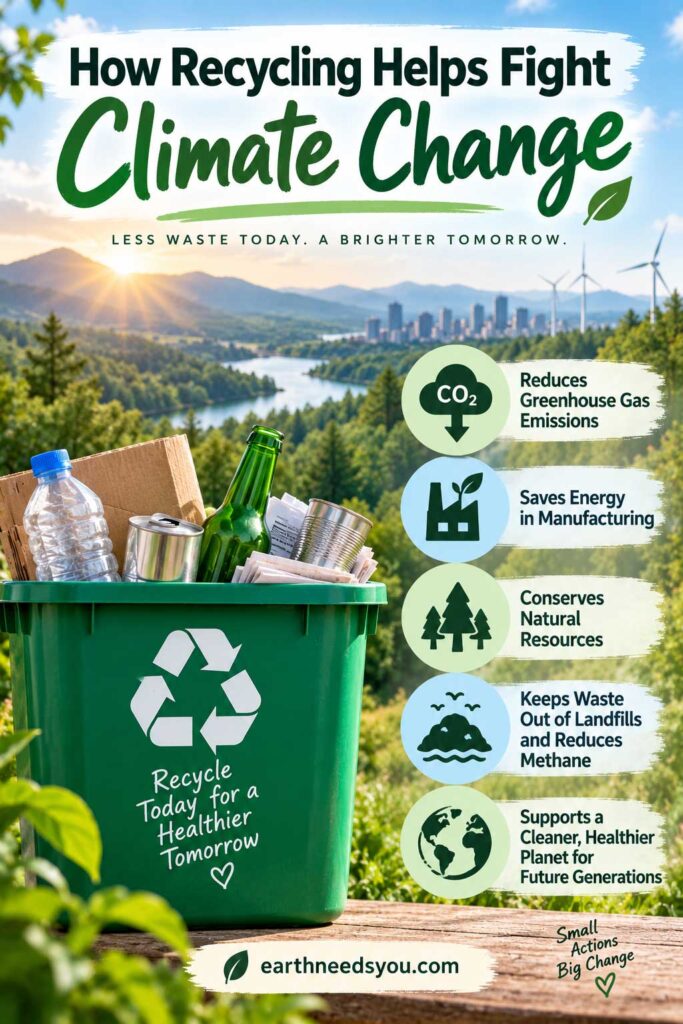
Recycling isn’t usually the first thing people think about when they hear “climate action.” Renewable energy, electric vehicles, and energy-efficient buildings tend to get more attention.
But the products we buy also have a carbon footprint. Materials have to be extracted, transported, processed, manufactured, and eventually disposed of—and energy is used throughout that journey.
Recycling can reduce part of that footprint by keeping existing materials in use.
The Climate Impact Starts Before We Throw Something Away
Consider an aluminum can.
Before a new can can be manufactured from virgin material, bauxite has to be mined and processed into aluminum. Those steps require significant amounts of energy.
When aluminum is recovered and recycled, much of that initial processing doesn’t have to happen again. That’s why recycled aluminum can require up to 95% less energy than producing primary aluminum from ore.
The same principle applies, to varying degrees, to steel, paper, glass, and some plastics. The exact climate benefit depends on the material and how it is collected, transported, processed, and manufactured.
Recycling Can Reduce Manufacturing Emissions
Manufacturing is responsible for a significant share of global energy use and greenhouse gas emissions. Some of those emissions come from the electricity and fuels used by factories, while others are produced directly by industrial processes.
Recycled materials can sometimes require fewer energy-intensive processing steps than virgin resources.
That doesn’t make every recycled product automatically low-carbon. Transportation distances, processing methods, electricity sources, contamination, and the type of material all influence the final environmental footprint.
But when recycling replaces energy-intensive virgin production, the emissions savings can be meaningful.
What About Landfills and Methane?
Landfills are another part of the climate equation.
Methane is produced when biodegradable materials such as food scraps, yard waste, and paper break down without oxygen. Methane is particularly important because it traps considerably more heat than carbon dioxide over shorter time periods.
Recycling paper and cardboard can keep some biodegradable material out of landfills. However, recycling isn’t the main solution for all organic waste. Preventing food waste and composting appropriate organic materials are also important strategies.
Plastic, metal, and glass do not produce landfill methane in the same way, but keeping recyclable versions of these materials out of landfills prevents potentially useful resources from being permanently lost.
Recycling Is Only One Piece of the Climate Puzzle
It’s easy to overstate recycling’s role in fighting climate change.
Recycling cannot replace the transition to clean energy, improvements in industrial efficiency, cleaner transportation, forest protection, or reductions in fossil-fuel use.
It works best as one part of a much larger system.
And in many situations, there is an even better option than recycling: not creating the waste in the first place.
Keeping a reusable water bottle for years, repairing an appliance instead of replacing it, or avoiding unnecessary packaging can eliminate the need to manufacture and recycle additional products altogether.
That’s why the familiar phrase reduce, reuse, recycle is actually in a useful order. Reduction comes first, reuse comes next, and recycling helps recover materials when an item has reached the end of its useful life.
From a Throwaway Economy to a Circular One
Perhaps recycling’s biggest long-term climate benefit comes from a larger shift in how we think about materials.
In a throwaway economy, resources are extracted, turned into products, used briefly, and discarded. Then the entire process begins again with new resources.
A more circular system tries to break that pattern.
Products can be designed to last longer, repaired when they break, reused by someone else, refurbished when possible, and eventually recycled so that at least some of their materials remain in circulation.
Recycling is the final part of that loop—not the entire solution, but an important way to prevent useful materials from reaching a dead end.
The more efficiently we use the resources we’ve already extracted, the less energy and material we may need to produce the things we use every day.
What Can Be Recycled?
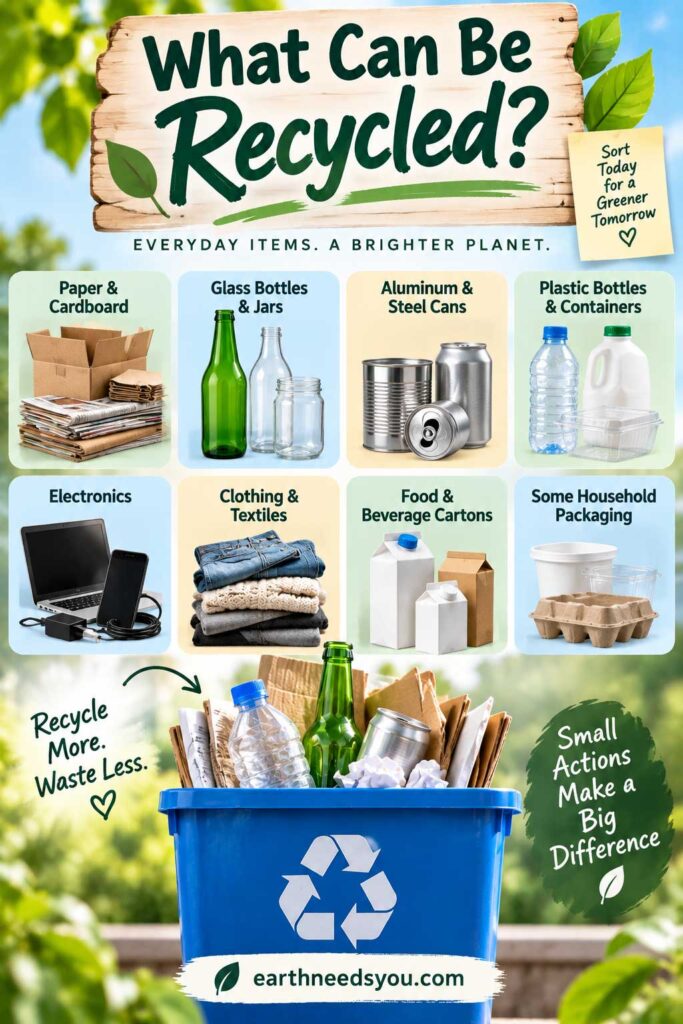
One of the most confusing things about recycling is that there isn’t one universal set of rules. An item accepted in one city may not be accepted in another because recycling facilities, collection systems, and markets for recovered materials vary by location.
That’s why the best rule is simple: check what your local recycling program actually accepts rather than assuming an item is recyclable.
That said, several materials are commonly collected.
Paper and Cardboard
Cardboard boxes, newspapers, magazines, office paper, paper bags, and many types of paper packaging are widely recyclable.
The condition of the material matters. Paper and cardboard should generally be clean and dry. A cardboard box can usually be flattened and recycled, but paper heavily contaminated with grease, food, or other substances may not be suitable for recycling.
Before throwing away an entire pizza box because of a greasy section, check your local rules. In some programs, you may be able to remove the contaminated portion and recycle the clean cardboard.
Glass Bottles and Jars
Glass beverage bottles and food jars are commonly accepted where communities offer glass recycling.
But not every type of glass belongs in the same recycling stream. Drinking glasses, mirrors, windows, ceramics, and heat-resistant cookware can have different compositions and melting temperatures from container glass.
A broken drinking glass, for example, shouldn’t automatically go into the recycling bin just because it’s made of glass.
Aluminum and Steel
Aluminum beverage cans and steel food cans are among the most familiar recyclable household items.
Metals are especially valuable in recycling because recovered material can be returned to manufacturing and used again. Aluminum, in particular, can be recycled repeatedly without the same kind of fiber degradation experienced by materials such as paper.
Foil, trays, aerosol containers, and other metal products may also be accepted, but local rules vary.
Plastic Is More Complicated
Plastic is where recycling gets confusing.
You may see a number from 1 to 7 inside the familiar triangular symbol on plastic packaging. Those numbers identify the resin used to manufacture the plastic; they do not guarantee that your local recycling program accepts the item.
Some communities primarily collect common bottles, jugs, and containers, while other plastic products may require specialized programs or may not be recyclable locally at all.
Instead of relying only on the number, check both the type of item and your local collection rules.
We’ve explained what each number means in our guide to the 7 recycling symbols on plastics.
Electronics, Batteries, and Other Special Items
Some products are recyclable but should not be placed in a regular curbside recycling bin.
Electronics are a good example. Phones, computers, televisions, and other devices can contain metals and other materials worth recovering, but they generally need to go through dedicated e-waste programs.
Batteries also require special attention. Certain batteries can create fire risks when they are placed in household trash or conventional recycling systems. Many communities and retailers provide separate battery collection options.
The same principle applies to products such as paint, motor oil, fluorescent lamps, and household hazardous waste. They may have recycling or recovery options, but they need to go to the appropriate collection facility.
Clothing and Textiles
Old clothing doesn’t automatically belong in the trash—or the recycling bin.
If clothing is still wearable, extending its life through reuse, donation, resale, or repair is often preferable to recycling it.
Worn-out textiles may be accepted through specialized collection programs, where materials can sometimes be recovered for applications such as insulation, industrial wiping cloths, or recycled fibers. Availability varies considerably by location.
Don’t “Wish-Cycle”
One of the easiest recycling mistakes is wish-cycling: putting something in the recycling bin because you hope it can be recycled.
A garden hose, plastic toy, coffee cup, old pan, battery, or plastic bag might contain recyclable material, but that doesn’t mean it belongs in your curbside bin.
Incorrect items can contaminate recyclable materials, damage sorting equipment, create safety hazards, or simply end up being removed and thrown away later.
When you’re unsure, check your local recycling program before tossing something into the bin.
A few seconds spent checking can be much more useful than recycling something incorrectly.
Common Recycling Mistakes to Avoid
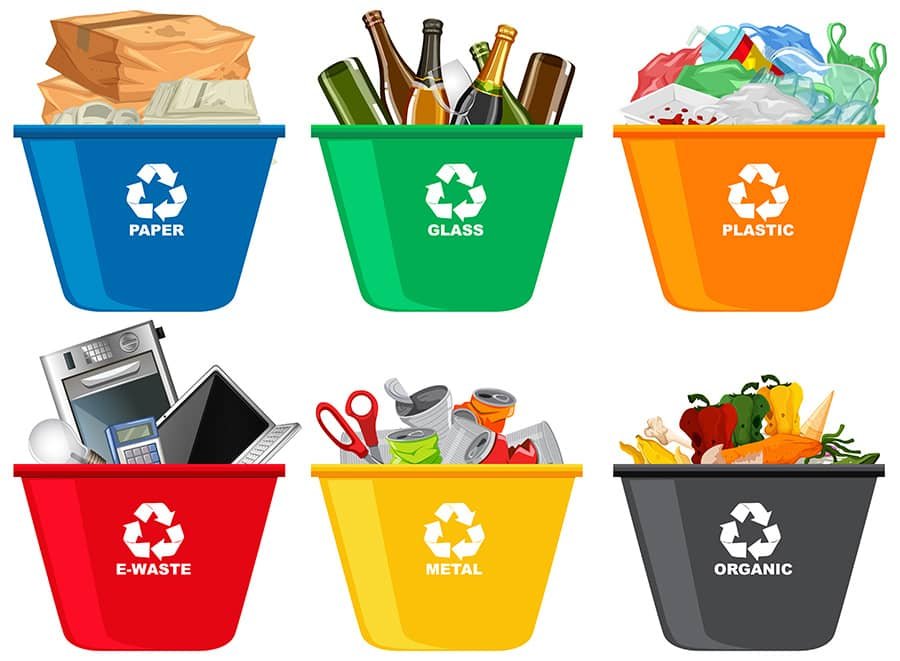
Putting something in a recycling bin doesn’t guarantee that it will be recycled. What happens next depends partly on whether the material is accepted, clean enough to process, and compatible with the local recycling system.
A few simple mistakes can make that process harder.
Assuming the Recycling Symbol Means “Recyclable”
This is especially common with plastic.
The numbered symbol found on many plastic products identifies the type of resin used to make the item. It does not necessarily mean your curbside program can recycle it.
A container marked #5, for example, might be accepted in one community but not another.
Instead of relying on the symbol alone, check your local recycling guidelines. If you’re confused by the numbers, our guide to the 7 recycling symbols on plastics explains what they actually mean.
Putting Dirty Containers in the Bin
You usually don’t need to scrub a jar until it looks brand new, but recyclable containers should generally be emptied of food and liquids.
A quick rinse is often enough.
Leaving half a jar of pasta sauce or food inside a container adds contamination and makes the material more difficult to handle. Paper and cardboard are particularly vulnerable because grease and moisture can damage the fibers.
Putting Plastic Bags in Curbside Recycling
Plastic bags and flexible films are a frequent source of problems at recycling facilities.
Unlike rigid containers, thin plastic film can become wrapped around sorting equipment, forcing workers to stop machinery and remove it.
Some supermarkets and retailers provide separate collection bins for eligible plastic bags and films. If those programs aren’t available, follow your local waste authority’s instructions rather than putting bags into curbside recycling.
Better yet, reuse bags when practical and reduce how many disposable bags you bring home in the first place.
Putting Recyclables Inside Plastic Bags
It can seem helpful to collect bottles and cans in a plastic garbage bag and place the entire bag in the recycling bin.
In many curbside programs, however, recyclables are supposed to be loose in the bin.
Bagged material can be difficult for sorting facilities to identify and process, and the bag itself may cause problems with machinery.
Local rules differ, so follow the instructions provided by your collection service.
Recycling Things That Require Special Handling
Batteries, electronics, paint, chemicals, fluorescent lamps, and similar products shouldn’t automatically go into household recycling.
Some of these items contain valuable recoverable materials, but they need dedicated collection systems.
Batteries deserve particular attention because certain types can cause fires when damaged in collection trucks or recycling facilities.
Look for local drop-off locations or specialized recycling programs instead.
Forgetting About Reuse
Sometimes we’re so focused on recycling that we skip an even easier option.
A glass jar might become a storage container. A cardboard shipping box could be used for another package. Clothing can be repaired, donated, or resold. Furniture and electronics may still be useful to someone else.
Recycling requires collection, transportation, processing, and manufacturing. If an item can safely continue serving its original purpose—or be reused for another one—you may be able to extend its life before recycling becomes necessary.
Recycling Something When You’re Not Sure
When people aren’t sure whether an item is recyclable, they sometimes put it in the bin and assume the recycling facility will sort it out.
Unfortunately, more material in the recycling bin doesn’t necessarily mean more recycling.
The better habit is simple: when in doubt, check.
Your city, county, or waste collection company should have guidance explaining exactly what belongs in your recycling bin. Following those local rules is one of the easiest ways to make your recycling efforts actually count.
Frequently Asked Questions About Recycling
Why is recycling important?
Recycling is important because it keeps useful materials in circulation instead of immediately treating them as waste. It can conserve natural resources, reduce the amount of material sent to landfills, save energy in manufacturing, and lower some greenhouse gas emissions.
How does recycling help the environment?
Recycling can reduce demand for newly extracted materials and the environmental impacts associated with mining, logging, processing, and manufacturing. It also helps keep recoverable materials out of landfills and supports a more circular use of resources.
What are the main benefits of recycling?
The main benefits of recycling include conserving natural resources, reducing waste, saving energy for certain materials, supporting recycling and manufacturing jobs, lowering some emissions, and providing recovered materials that can be used to make new products.
What materials can be recycled?
Paper, cardboard, aluminum, steel, glass bottles and jars, and certain plastic containers are commonly recycled. Electronics, batteries, textiles, and other materials may also have specialized recycling programs.
However, what is accepted varies by location. Always check your local recycling rules before putting an unfamiliar item in the bin.
Can all plastic be recycled?
No. Some plastics are easier and more economical to recycle than others, and local facilities don’t accept every type.
The number inside the triangular symbol on a plastic item identifies its resin type; it doesn’t guarantee that the product is recyclable where you live.
Our guide to the 7 recycling symbols on plastics explains the differences.
Does recycling save energy?
For many materials, yes. Manufacturing products from recovered materials can require less energy than making the same products entirely from virgin resources.
The size of the energy savings depends on the material. Aluminum provides one of the clearest examples, with recycled aluminum requiring substantially less energy than primary aluminum produced from ore.
Does recycling help fight climate change?
Recycling can help reduce greenhouse gas emissions when using recovered materials requires less energy than producing materials from virgin resources. It can also reduce demand for resource extraction and keep some recyclable materials from being unnecessarily discarded.
However, recycling is only one part of climate action. Clean energy, energy efficiency, reducing fossil-fuel use, protecting ecosystems, reducing unnecessary consumption, and preventing waste are also essential.
Is recycling better than reusing?
Not necessarily. If a product can safely continue to be used, reuse is often preferable to recycling because recycling itself requires collection, transportation, processing, and manufacturing.
That’s why the familiar hierarchy puts the actions in this order: reduce, reuse, then recycle.
Why should we recycle if some materials still end up in landfills?
Recycling systems aren’t perfect, and not everything placed in a recycling bin successfully becomes a new product. Contamination, incorrect sorting, limited processing capacity, and weak markets for certain recovered materials can all affect what ultimately gets recycled.
That doesn’t make recycling pointless. It makes recycling correctly more important. Following local rules and buying products that use recycled materials can help strengthen the system from both ends.
What is the easiest way to recycle better?
Start with your local recycling rules.
Learn which materials your collection program accepts, keep recyclables reasonably clean and dry, don’t put questionable items in the bin “just in case,” and use specialized collection programs for batteries, electronics, and hazardous materials.
And before you recycle something, ask whether you could avoid buying it, refill it, repair it, or reuse it first.
Final Thoughts: Why Recycling Is Important
Recycling isn’t a perfect system, and it isn’t a solution to every environmental problem. But that doesn’t make it unimportant.
At its best, recycling helps us get more value from resources we’ve already extracted. Paper fibers can become new paper products, metals can return to manufacturing, glass can be processed again, and some plastics can be recovered rather than immediately becoming waste.
The environmental benefits become even stronger when recycling is combined with reducing and reusing. Buying fewer disposable products, choosing items designed to last, repairing what we already own, and reusing products before replacing them can prevent waste before recycling is even necessary.
And when something finally reaches the end of its useful life, recycling gives its materials another opportunity to remain in circulation.
Perhaps the most useful change we can make is to stop thinking of recycling as simply putting things into a blue bin. Successful recycling depends on knowing what your community accepts, sorting materials correctly, avoiding contamination, and supporting products made with recycled content.
Small actions won’t solve global waste problems on their own. But millions of households, businesses, manufacturers, and communities making better use of materials can reduce the amount of valuable resources that are unnecessarily thrown away.
That’s ultimately why recycling is important: it helps us move away from treating everything as disposable and toward a system where resources are used more carefully, for longer, and with less waste.
Learn More About Recycling and Reducing Waste
Want to learn more about recycling, plastic waste, and reducing your environmental impact? Continue with these EarthNeedsYou guides:
What Do Recycling Symbols Mean?
Learn what common recycling symbols actually mean and how they can help you make better decisions about packaging and waste.
How to Read the 7 Recycling Symbols on Plastics
Understand plastic resin codes #1 through #7, which plastics are commonly recycled, and why a recycling symbol doesn’t always mean an item belongs in your recycling bin.
10 Ways to Reduce Your Plastic Waste
Discover simple ways to reduce disposable plastic at home and prevent waste before recycling is even necessary.
Can Plastic Pollution Be Stopped?
Explore the solutions that could make the biggest difference, from reusable packaging and better waste systems to corporate responsibility and new technology.
How Plastic Pollution Affects Marine Life
See how plastic waste affects sea turtles, fish, seabirds, marine mammals, coral reefs, and the wider ocean ecosystem.
Sources & References
The following organizations provide additional data and guidance on recycling, waste management, resource conservation, and the environmental impacts discussed in this article.
U.S. Environmental Protection Agency (EPA) — Recycling Basics and Benefits
Information about how recycling works, the benefits of recycling, and its role in conserving resources and reducing waste.
https://www.epa.gov/recycle/recycling-basics-and-benefits
U.S. Environmental Protection Agency (EPA) — Sustainable Materials Management
Research and guidance on reducing waste, managing materials throughout their life cycle, and moving toward more sustainable resource use.
https://www.epa.gov/smm
U.S. Environmental Protection Agency (EPA) — Landfill Methane Outreach Program
Information about how methane is generated when organic waste decomposes under anaerobic conditions in landfills.
https://www.epa.gov/lmop
U.S. Environmental Protection Agency (EPA) — WARM Model
The Waste Reduction Model provides estimates of greenhouse gas and energy impacts associated with recycling, landfilling, composting, combustion, and other waste-management practices.
https://www.epa.gov/warm
International Aluminium Institute — Recycling
Information about aluminum recycling, circularity, and the major energy savings associated with producing aluminum from recycled material rather than primary raw materials.
https://international-aluminium.org/work-areas/recycling/
United Nations Environment Programme (UNEP) — Resource Efficiency and Circularity
Information about more efficient resource use, circularity, sustainable consumption, and reducing the environmental impacts associated with material production and waste.
https://www.unep.org/explore-topics/resource-efficiency
Ellen MacArthur Foundation — Circular Economy Introduction
An overview of the circular economy and how keeping products and materials in circulation can reduce waste and reliance on virgin resources.
https://www.ellenmacarthurfoundation.org/topics/circular-economy-introduction/overview



0 Comments