

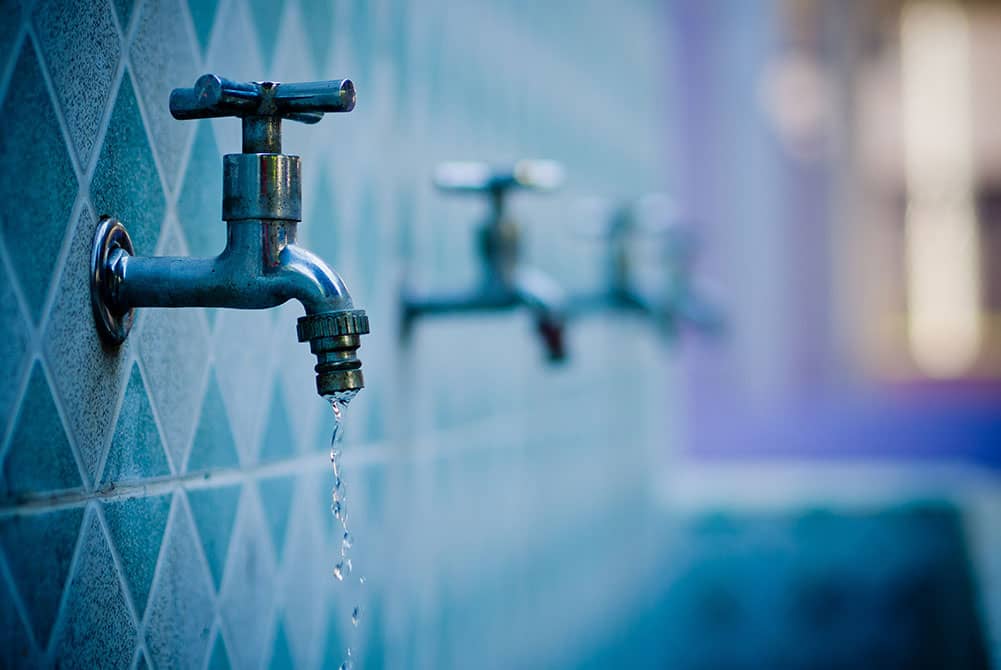
Freshwater is one of Earth’s most valuable resources, but growing populations, climate change, pollution, and increasing demand are placing more pressure on water supplies around the world. According to the United Nations Water (UN-Water), freshwater resources are under increasing pressure from rising demand, climate change, and pollution. Every drop saved can help protect rivers, lakes, groundwater, and natural ecosystems while also reducing household water costs.
The good news is that protecting water does not require major lifestyle changes. Simple actions like repairing leaks, installing water-efficient fixtures, collecting rainwater, improving irrigation, and reusing greywater can significantly reduce daily water waste.
In this guide, you will discover 10 effective water preservation techniques that anyone can use. We will explore how each method works and share practical ways to conserve water at home, in your garden, and within your community.
1. Fix Water Leaks Immediately
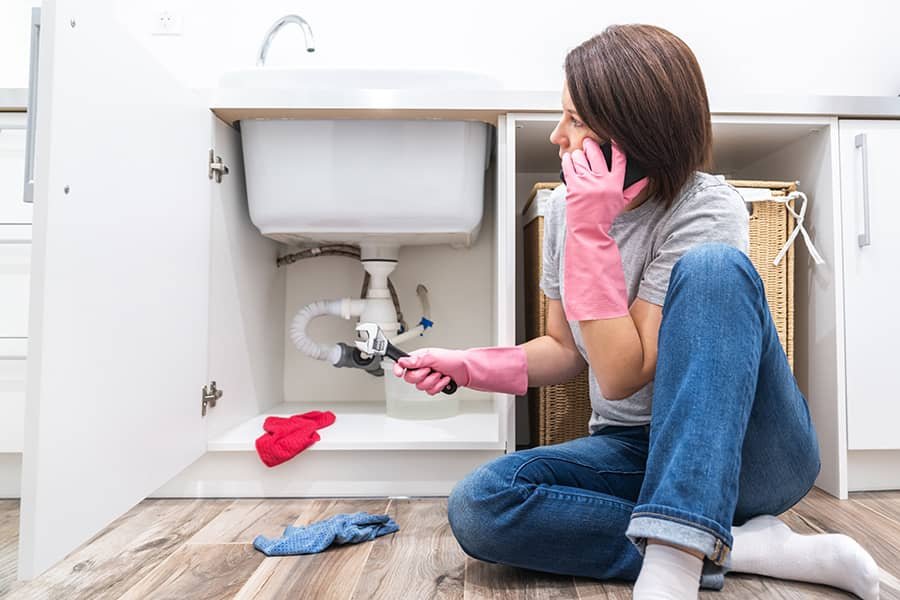
Even small leaks can waste surprising amounts of water over time. A dripping faucet, leaking toilet, or damaged irrigation pipe may seem like a minor problem, but these issues can contribute to millions of gallons of wasted freshwater every year. Fixing leaks is one of the easiest and most cost-effective water preservation techniques because it delivers immediate water savings without requiring major lifestyle changes.
A faucet that drips once every second can waste more than 3,000 gallons (over 11,000 liters) of water each year. Hidden toilet leaks and underground irrigation problems can waste even more while increasing household water bills.
Regular inspections and simple maintenance can help homeowners identify water waste before small problems become expensive repairs.
Common Sources of Water Leaks
Leaks can happen throughout a home, both indoors and outdoors. Common problem areas include dripping kitchen and bathroom faucets, running toilets, leaking showerheads, washing machine hoses, dishwasher connections, outdoor faucets, sprinkler systems, irrigation pipes, water heaters, and pipe joints beneath sinks.
Regularly checking these areas can help identify problems before they become expensive repairs or cause serious water damage.
How to Detect Hidden Leaks
Some leaks are difficult to notice because they occur behind walls, underground, or inside plumbing fixtures. Paying attention to warning signs can help catch them early.
Common indicators of hidden leaks include an unexpected increase in your water bill, damp spots on walls or floors, mold or mildew growth, low water pressure, the sound of running water when no fixtures are being used, or unexplained wet areas in your yard.
One simple way to check for hidden leaks is to read your water meter before going to bed. Make sure no water is used overnight, then check the meter again in the morning. If the reading has changed, there may be a leak somewhere in your plumbing system.
Why Repairing Leaks Matters
Repairing leaks helps conserve freshwater, lower monthly water costs, prevent property damage, and reduce unnecessary energy use associated with treating and heating water. It also helps extend the life of plumbing systems and supports broader water conservation efforts.
Even small repairs, such as replacing a worn faucet washer, tightening a loose connection, or fixing a leaking toilet valve, can make a meaningful difference over time.
Preventing water waste is one of the first steps toward creating a more sustainable home. For more ideas, see our guide on How Can We Do Water Conservation? and learn more about practical ways households can protect freshwater resources.
Quick Tip: Inspect faucets, toilets, and outdoor plumbing at least twice a year. Regular maintenance helps catch small leaks before they become costly problems.
2. Install Water-Efficient Fixtures
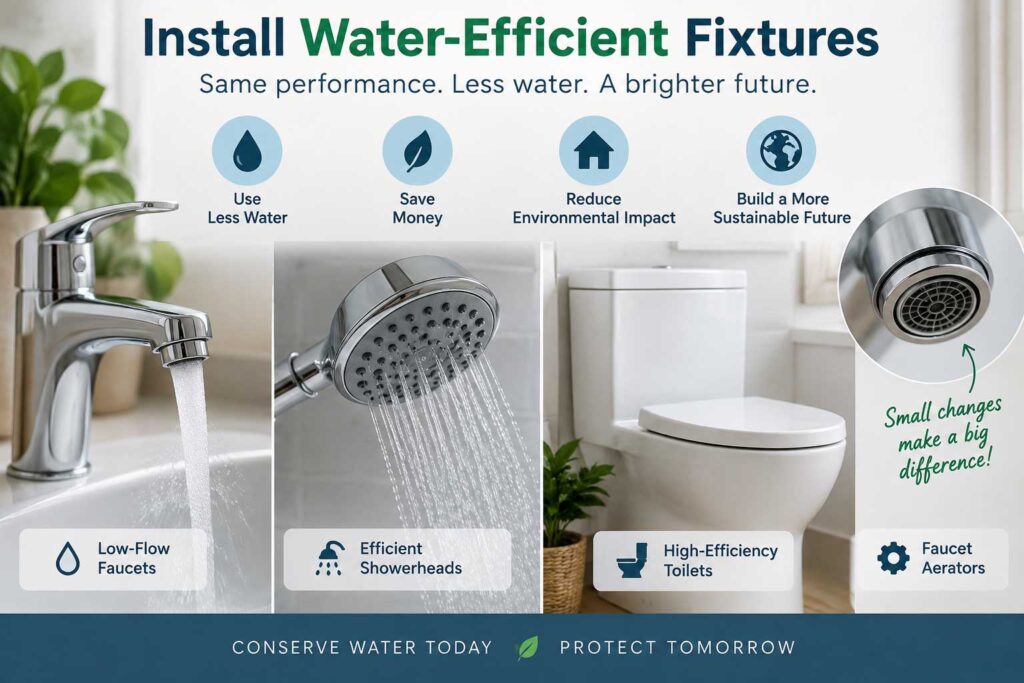
Upgrading to water-efficient fixtures is one of the most effective water preservation techniques for reducing household water use without sacrificing comfort or performance. Modern plumbing fixtures are designed to maintain good water pressure while using significantly less water than older models.
The U.S. Environmental Protection Agency WaterSense Program labels products that meet water-efficiency and performance standards, helping consumers choose more efficient fixtures.
Many homes still rely on outdated faucets, showerheads, toilets, and appliances that consume much more water than necessary. Replacing these fixtures can lower water bills, reduce energy costs associated with heating water, and help conserve thousands of gallons of freshwater every year.
Choose Efficient Showerheads, Faucets, and Toilets
Low-flow showerheads are one of the easiest upgrades homeowners can make. Older showerheads may use more than 2.5 gallons (9.5 liters) of water per minute, while high-efficiency models provide a comfortable shower experience while using much less water.
Water-saving faucets with aerators are another simple improvement. These small devices mix air into the water stream, maintaining strong pressure while reducing the amount of water flowing from the tap. They are inexpensive, easy to install, and can make an immediate difference in daily water consumption.
Replacing older toilets with high-efficiency models can also create significant savings. Traditional toilets may use several times more water per flush than modern designs. Dual-flush toilets allow users to choose between a lower-volume flush for liquid waste and a stronger flush when needed, helping households reduce unnecessary water use.
Upgrade Water-Efficient Appliances
Water preservation is not only about plumbing fixtures. Household appliances also play an important role in reducing water consumption. Modern ENERGY STAR® certified washing machines and dishwashers are designed to clean effectively while using less water and energy than older models.
Efficient washing machines often include sensors that automatically adjust water levels based on the size of each load. Newer dishwashers can also use less water than washing dishes by hand, especially when operated with full loads and eco-friendly settings.
Why These Upgrades Matter
Replacing outdated fixtures and appliances provides long-term environmental and financial benefits. These improvements can reduce household water consumption, lower utility costs, decrease the energy needed to heat water, reduce pressure on local water supplies, and support a more sustainable home.
Although some upgrades require an initial investment, many homeowners recover the cost over time through lower water and energy bills.
Quick Tip: Start with affordable upgrades like faucet aerators and low-flow showerheads before replacing larger appliances. Small improvements can create meaningful water savings over time.
For more practical ideas on reducing water use, explore our guide on How Can We Do Water Conservation? and learn how everyday habits can help protect freshwater resources. You can also read Why Water Preservation Is Important to understand why efficient water use matters for the future of our planet.
3. Collect Rainwater
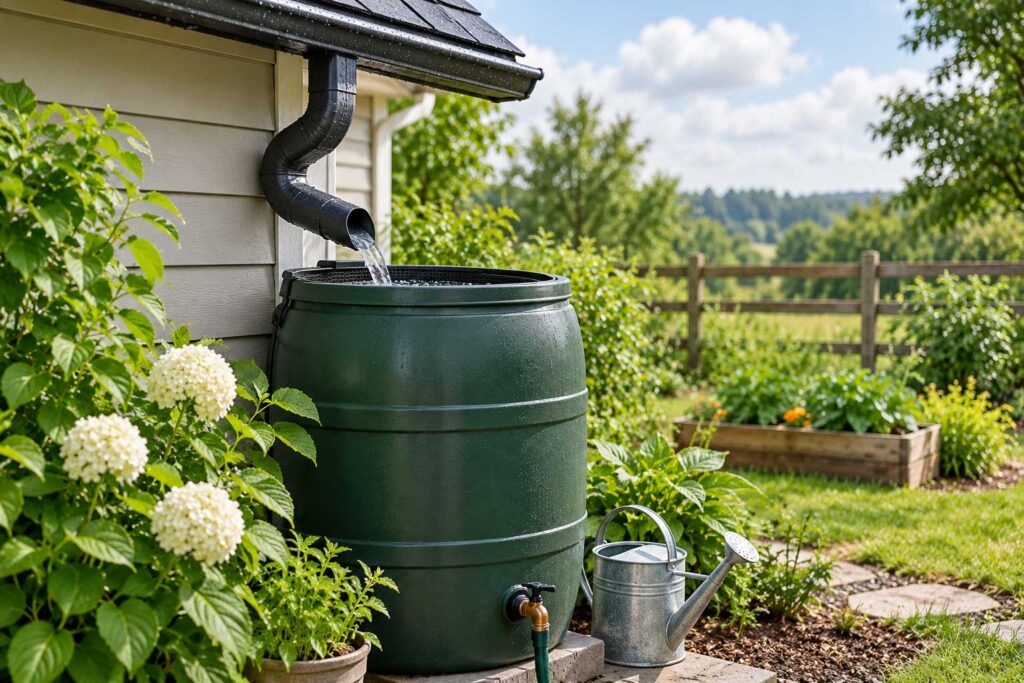
Rainwater harvesting is one of the oldest and most effective water preservation techniques. Instead of allowing rainfall to flow into storm drains and become runoff, homeowners can capture and store rainwater for later use around their property. This simple practice helps reduce dependence on treated municipal water supplies while lowering outdoor water costs.
Depending on the climate, roof size, and rainfall patterns, even a small home can collect hundreds or thousands of gallons of rainwater each year. While collected rainwater is generally not suitable for drinking without proper filtration and treatment, it is an excellent resource for many outdoor and household uses.
Benefits of Rainwater Harvesting
Collecting rainwater provides several environmental and practical benefits. It reduces reliance on treated drinking water for tasks that do not require it, helps conserve freshwater resources, lowers outdoor water expenses, and can reduce stormwater runoff during heavy rainfall.
Rainwater harvesting can also help protect landscapes by reducing soil erosion and providing a backup water source during dry periods when gardens and plants need additional moisture.
How Rainwater Harvesting Works
A basic rainwater collection system is relatively simple. Rain flows from the roof into gutters and downspouts, where it is directed into storage containers such as rain barrels or larger tanks. Screens can be added to keep out leaves and debris, while overflow systems help manage excess water during heavy storms.
Larger systems may include pumps, filtration systems, and underground storage tanks for homeowners who need greater capacity or want to use collected water for more applications.
How Rainwater Can Be Used
Stored rainwater is ideal for many everyday activities, especially outdoor tasks. It can be used to water gardens and flower beds, irrigate lawns, clean patios and outdoor furniture, wash vehicles, or maintain decorative water features.
Using collected rainwater for these purposes reduces the amount of treated water needed from municipal supplies and supports more sustainable household water management.
For more ideas on making better use of household water, explore our guide on 10 Ways to Reuse Water, which explains additional methods for reducing water waste.
Keeping Rainwater Systems Safe and Effective
Proper maintenance is important to keep rainwater collection systems working efficiently. Cleaning gutters regularly, covering storage containers, removing debris, checking for leaks, and preventing contamination help maintain water quality.
Before installing a larger rainwater harvesting system, it is also important to check local regulations, as rules regarding rainwater collection vary depending on location.
The U.S. Environmental Protection Agency (EPA) highlights rainwater management practices that help reduce runoff and protect water quality.
Quick Tip: Place rain barrels beneath the largest roof downspouts to capture the maximum amount of water during rainfall events.
Rainwater harvesting is a practical step toward more sustainable living and is an important part of responsible water conservation. Learn more about protecting freshwater resources in our article How Can We Do Water Conservation? and discover why protecting water supplies is essential in Why Water Preservation Is Important.
4. Reuse Greywater Safely
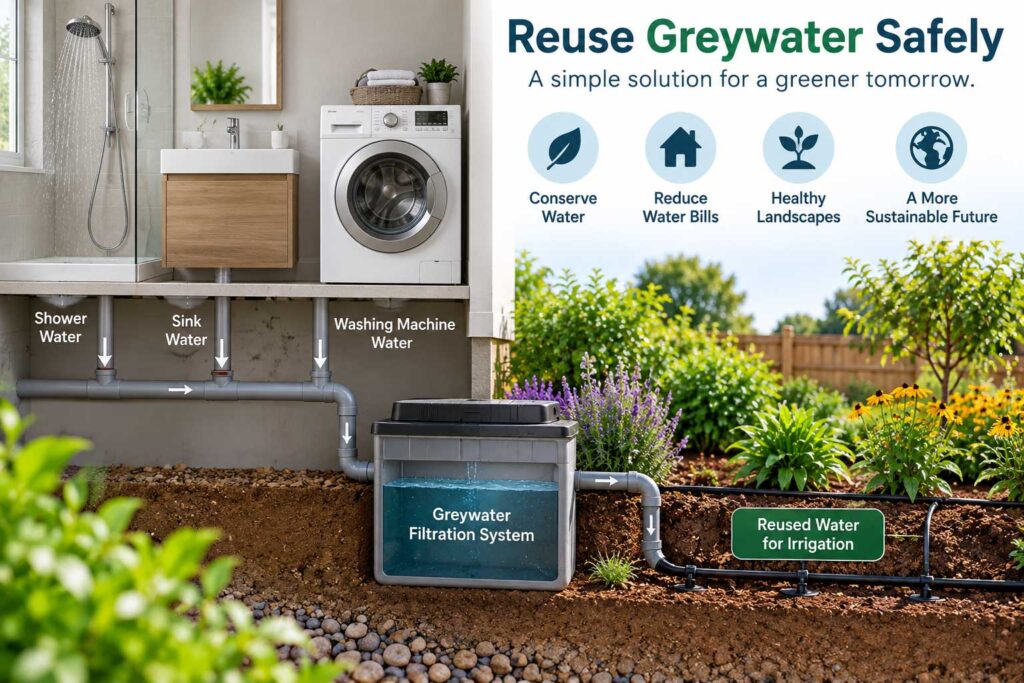
Reusing greywater is one of the most practical water conservation methods for reducing household water consumption. Greywater is gently used water collected from sources such as showers, bathtubs, bathroom sinks, and washing machines. Instead of sending this water directly into the sewer system, it can often be reused for irrigation and other non-drinking purposes.
Greywater should not be confused with blackwater, which comes from toilets and contains contaminants that require specialized treatment before disposal or reuse.
How Greywater Can Be Used
When managed properly, greywater can provide a valuable water source for many outdoor applications. It can be used for watering ornamental plants, irrigating trees and shrubs, maintaining landscapes, and supporting gardens where local regulations allow.
Using greywater reduces the demand for treated freshwater while helping plants receive additional moisture during dry periods.
Safe Sources of Greywater
The most common household sources of greywater include bathroom sinks, showers, bathtubs, and washing machines when environmentally friendly detergents are used.
However, not all household wastewater is suitable for reuse. Water containing grease, bleach, harsh chemicals, solvents, or large amounts of food waste should not be used for irrigation because it can harm soil, plants, and local ecosystems.
Best Practices for Greywater Reuse
A successful greywater system requires proper planning and maintenance. Using biodegradable soaps, directing water into soil rather than spraying it onto plants, and avoiding long-term storage of untreated greywater can help maintain a safer system.
It is also important to rotate irrigation areas to prevent mineral buildup and regularly inspect pipes, filters, and connections for leaks or blockages. Organizations such as Greywater Action provide guidance on designing safer greywater systems and using recycled household water responsibly.
Benefits of Greywater Recycling
Greywater reuse provides several environmental and household benefits. It reduces freshwater consumption, lowers water bills, decreases the amount of wastewater sent to treatment facilities, and provides an additional water source for landscaping.
For homeowners interested in practical ways to reuse everyday water, our guide 10 Ways to Reuse Water explores additional methods for reducing household water waste.
As water resources become increasingly valuable, greywater systems offer a simple way to make homes more efficient while supporting more sustainable water management.
Quick Tip: Before installing a permanent greywater system, check local building codes and environmental regulations, as requirements vary by location.
Guidance from Greywater Action explains how greywater systems can be designed and used safely while protecting soil, plants, and water resources.
5. Upgrade to Water-Efficient Appliances
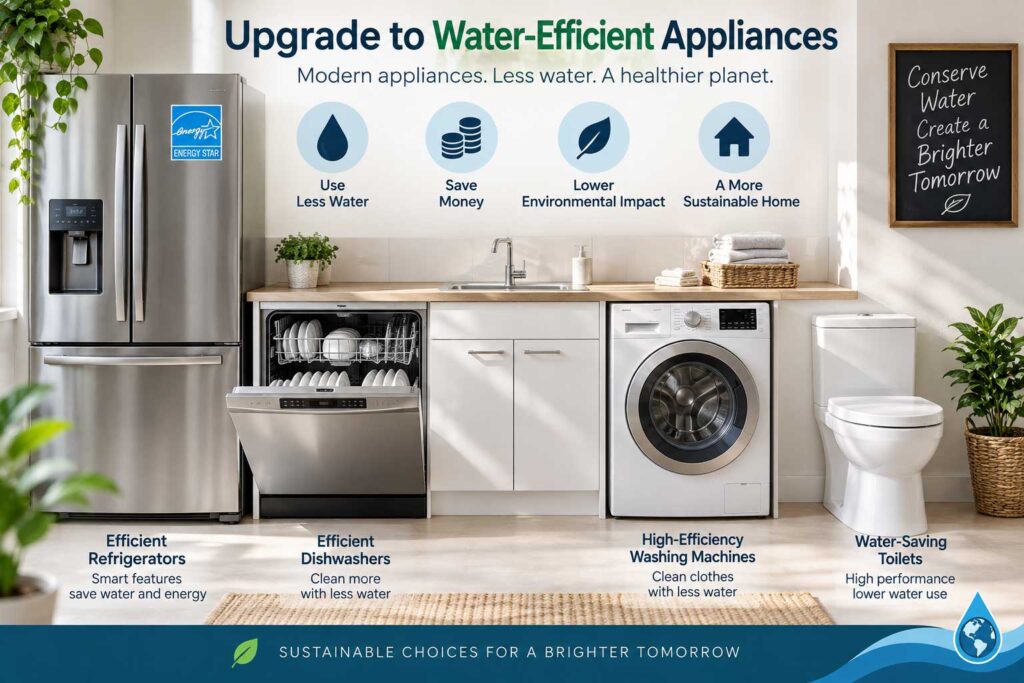
Replacing older appliances with modern, water-efficient models is one of the smartest long-term water conservation methods. Newer washing machines, dishwashers, and other household appliances are designed to use significantly less water and energy while maintaining excellent performance.
Although upgrading requires an initial investment, the long-term savings on utility bills and reduced water consumption often make it worthwhile. Many efficient appliances also provide better performance, require less maintenance, and have improved energy efficiency compared with older models.
Choose Appliances Designed to Save Water
High-efficiency washing machines are among the biggest opportunities for reducing household water use. Older models may consume more than twice as much water as newer high-efficiency machines, while modern designs automatically adjust water levels based on load size.
These improvements help reduce water waste while also lowering energy use, shortening drying times, and improving overall laundry efficiency.
Use Water-Efficient Dishwashers
Modern dishwashers can clean effectively while using far less water than older models. In many cases, running a full dishwasher load is more efficient than washing dishes by hand under continuously running water.
To maximize savings, homeowners should run dishwashers only when full, select eco-friendly cycles when available, and avoid unnecessary pre-rinsing unless dishes require extra cleaning.
Improve Outdoor Water Efficiency
Water preservation is not limited to indoor appliances. Smart irrigation controllers can also help reduce outdoor water waste by adjusting watering schedules based on rainfall, soil moisture, and weather conditions.
These systems help prevent overwatering, reduce runoff, improve plant health, and lower outdoor water consumption.
Consider Efficient Water Heating
While water heaters do not directly reduce the amount of water used, efficient models can reduce energy waste by heating water more effectively and delivering hot water faster. This can reduce the amount of water wasted while waiting for the temperature to reach the desired level.
How to Choose Efficient Appliances
When replacing appliances, consider models with strong water-efficiency ratings, energy-saving certifications, adjustable settings, and load-sensing technology. Looking beyond the purchase price and comparing long-term operating costs can help identify appliances that provide greater savings over their lifetime.
Benefits of Water-Efficient Appliances
Upgrading appliances can help conserve thousands of gallons of water over time while lowering utility costs and reducing energy consumption. These improvements also decrease pressure on municipal water systems and support a more sustainable household.
As older appliances reach the end of their lifespan, replacing them with efficient alternatives is one of the easiest ways to create a more environmentally friendly home.
For more practical ideas on reducing everyday water use, explore our guide on How Can We Do Water Conservation? and discover simple habits that can help protect freshwater resources.
Quick Tip: Use washing machines and dishwashers only when they are fully loaded. Combining efficient appliances with smart usage habits maximizes water and energy savings.
6. Use Smart Irrigation Techniques
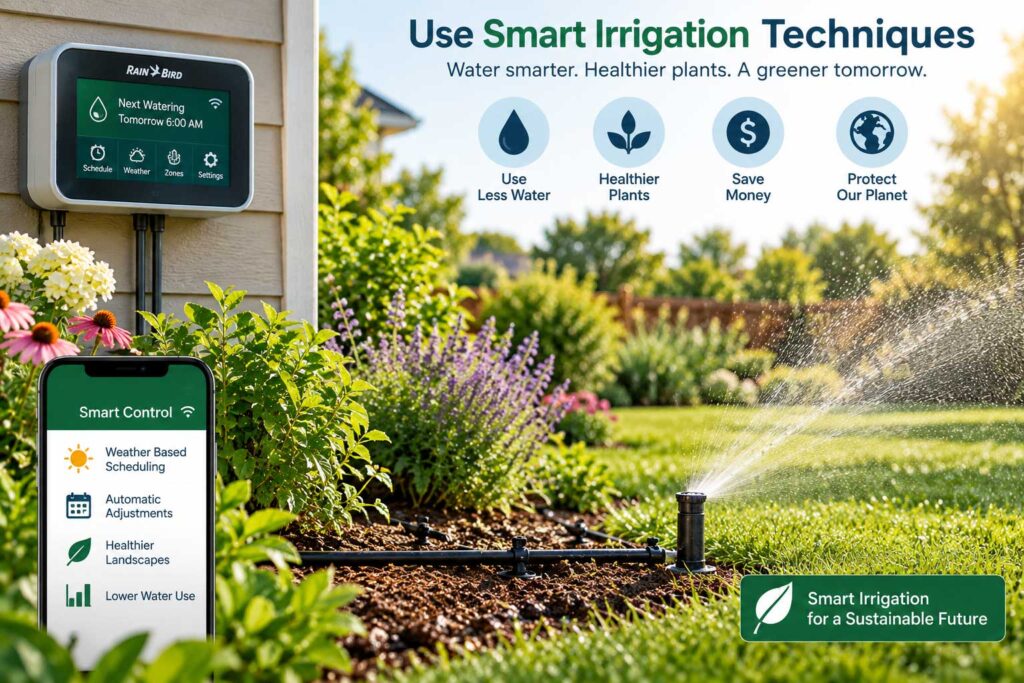
Outdoor watering can account for a significant portion of household water use, especially during hot and dry periods. Using smart irrigation techniques helps maintain healthy lawns, gardens, and landscapes while reducing unnecessary water waste.
By improving how and when plants receive water, homeowners can conserve thousands of gallons each year without sacrificing beautiful outdoor spaces. Modern irrigation methods combine technology with better gardening practices to deliver the right amount of water exactly where plants need it.
Water at the Right Time
Timing plays an important role in efficient irrigation. The best time to water plants is usually early in the morning when temperatures are cooler and winds are calmer.
Morning watering allows more water to reach plant roots before evaporation occurs. It also helps plants absorb moisture effectively while reducing the risk of problems caused by excessive overnight moisture.
Watering during the hottest part of the day often results in unnecessary water loss because a significant amount can evaporate before reaching the soil.
Use Drip Irrigation Systems
Drip irrigation is one of the most efficient ways to water plants because it delivers water slowly and directly to the root zone. Unlike traditional sprinklers that may lose water through evaporation and runoff, drip systems provide targeted moisture where plants need it most.
This method works especially well for vegetable gardens, flower beds, shrubs, trees, and other areas where consistent soil moisture is important.
Install Smart Irrigation Controllers
Smart irrigation controllers make outdoor watering more efficient by automatically adjusting schedules based on weather conditions, rainfall, soil moisture, and seasonal changes.
The EPA WaterSense program provides guidance on efficient irrigation controllers that help reduce outdoor water waste.
These systems help prevent unnecessary watering after rainfall and ensure plants receive enough moisture during dry periods. By avoiding overwatering, they also reduce runoff and help protect local water resources.
Improve Soil Water Retention
Healthy soil is an important part of water conservation because it stores moisture and allows plants to use water more efficiently.
Improving soil quality through compost, organic mulch, and other natural amendments can help retain moisture for longer periods. Materials such as biochar can also improve soil structure and water retention while supporting healthier plant growth. Learn more about this topic in our guide on 10 Benefits of Using Biochar.
Avoid Overwatering
Many landscapes receive more water than they actually need. Overwatering wastes freshwater and can damage plants by creating unhealthy growing conditions.
Common signs of overwatering include yellow leaves, weak stems, mold growth, standing water, root problems, and excessive weed growth. Checking soil moisture before watering helps ensure plants receive only the amount of water they need.
Benefits of Smart Irrigation
Efficient irrigation practices provide long-term environmental and financial benefits. They help conserve freshwater resources, reduce water bills, support healthier plants, prevent soil erosion, and minimize fertilizer runoff into nearby waterways.
Smart irrigation is also an important part of sustainable land management. Protecting soil health and using water efficiently can help create landscapes that are more resilient during drought conditions. For more ideas about protecting land and water resources, explore 5 Ways You Can Help Stop Desertification.
Quick Tip: Add a 2–4 inch layer of organic mulch around trees, shrubs, and garden plants. Mulch reduces evaporation, suppresses weeds, and helps soil stay moist longer.
7. Plant Drought-Resistant Landscaping
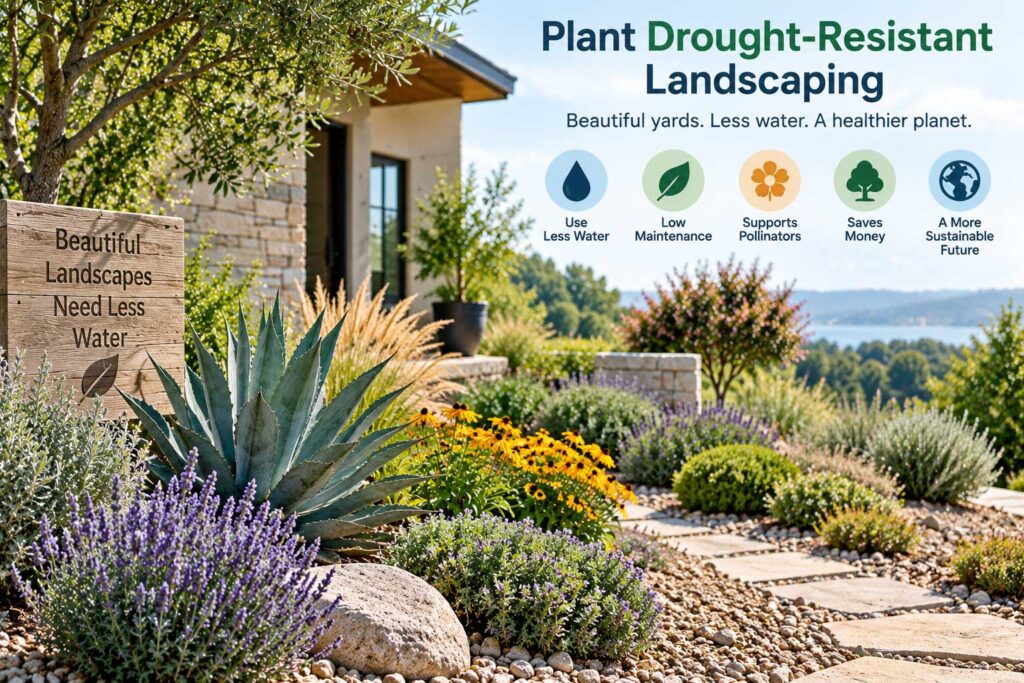
Creating a drought-resistant landscape is one of the most sustainable water preservation techniques for homes and businesses. Traditional lawns often require frequent watering, especially during hot and dry seasons, while drought-tolerant plants can thrive with much less irrigation once established.
Choosing native and climate-appropriate plants not only helps conserve water but also supports local wildlife, reduces maintenance needs, and creates landscapes that are better prepared for changing weather conditions.
Choose Native Plants
Native plants are naturally adapted to local climates, rainfall patterns, and soil conditions. Because they are suited to local conditions, they usually require less supplemental watering than many non-native species.
Beyond saving water, native plants can support pollinators, provide habitat for wildlife, reduce the need for chemical treatments, and create a healthier ecosystem around your home.
Replace High-Water-Use Lawns
Large traditional lawns can require significant amounts of water, fertilizer, and maintenance throughout the growing season. Reducing lawn areas and replacing them with more sustainable alternatives can dramatically lower irrigation needs.
Options such as native grasses, ground covers, wildflower areas, rock gardens, mulch beds, and drought-tolerant plants can create attractive landscapes while using far less water.
Group Plants With Similar Water Needs
A technique called hydrozoning involves grouping plants based on their water requirements. Plants with similar needs are placed together so irrigation can be adjusted more efficiently.
This approach helps prevent overwatering, reduces wasted water, simplifies maintenance, and improves overall plant health.
Use Mulch to Retain Soil Moisture
Mulch is a simple but effective way to conserve water in gardens and landscapes. Adding materials such as wood chips, bark, straw, compost, shredded leaves, or pine needles around plants helps reduce evaporation and keeps soil moisture available for longer periods.
Mulch also suppresses weeds, regulates soil temperature, and improves soil quality as organic materials break down.
Improve Soil Health
Healthy soil plays a major role in water conservation because it acts like a natural storage system for moisture. Soil with good structure allows water to move efficiently to plant roots while reducing runoff and evaporation.
Adding compost, maintaining organic matter, avoiding excessive soil disturbance, and improving soil structure can help landscapes become more drought-resistant. Materials such as biochar can also improve soil moisture retention and support healthier plant growth. Learn more in our guide on [10 Benefits of Using Biochar].
Benefits of Drought-Resistant Landscaping
A thoughtfully designed drought-resistant landscape provides long-term benefits, including lower water consumption, reduced irrigation costs, less maintenance, improved biodiversity, and stronger resilience during dry periods.
These landscaping choices also contribute to broader environmental protection efforts by helping conserve freshwater resources and protect healthier ecosystems. For more information about restoring damaged land and protecting natural resources, explore 5 Ways You Can Help Stop Desertification.
Quick Tip: When planting new trees, shrubs, or flowers, water deeply but less frequently. This encourages stronger root systems and helps plants become more drought-tolerant over time.
8. Reduce Indoor Water Waste
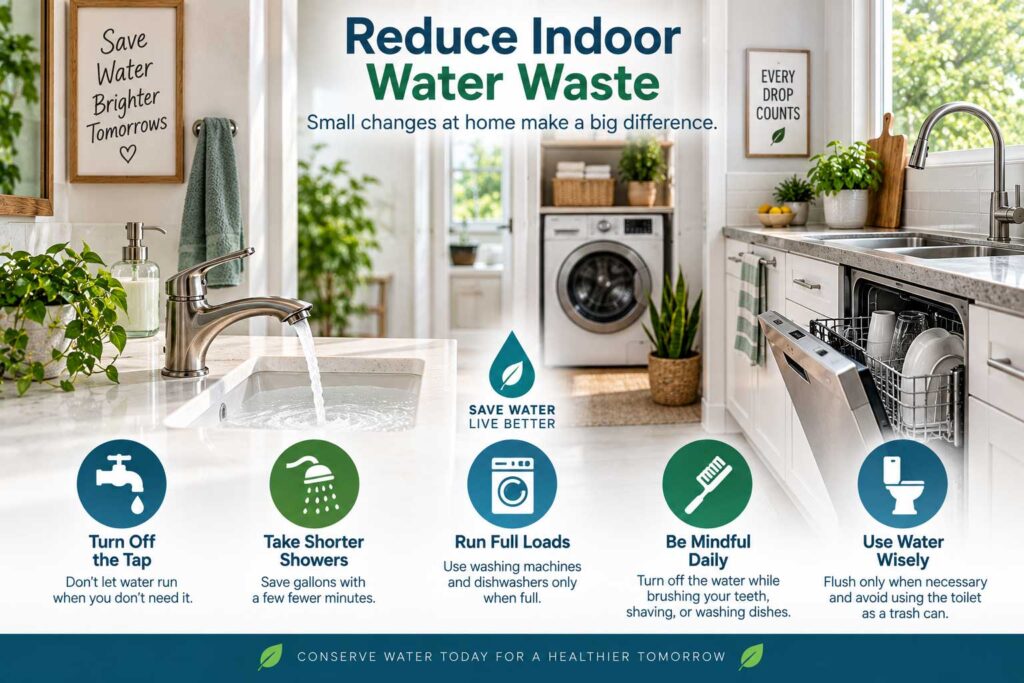
Conserving water indoors is one of the simplest and most effective water preservation techniques. Small changes to everyday habits can significantly reduce household water consumption without affecting comfort or convenience.
Most indoor water waste happens in areas such as bathrooms, kitchens, and laundry rooms. By becoming more aware of how water is used throughout the day, households can save thousands of gallons each year while lowering utility costs.
Use Water Only When Needed
One of the easiest ways to reduce water waste is to avoid leaving faucets running when water is not actively being used. Many people allow water to flow while brushing their teeth, shaving, preparing food, or washing dishes, creating unnecessary waste.
Simple changes, such as turning off the tap while brushing, filling the sink instead of continuously running water, and washing fruits and vegetables in a bowl, can reduce daily water consumption.
Take More Efficient Showers
Showers are another area where small changes can create meaningful savings. Reducing shower time by just a few minutes each day can save hundreds or thousands of gallons of water each year.
Installing a low-flow showerhead, taking shorter showers, and turning off water while applying soap or shampoo are simple ways to improve efficiency without sacrificing comfort.
Use Appliances Efficiently
Dishwashers and washing machines work most efficiently when used with full loads. Running these appliances only when necessary helps maximize water savings, reduce energy consumption, and lower household utility costs.
Modern appliances can also help reduce waste by automatically adjusting water levels based on load size, but responsible usage habits remain important.
Avoid Wasting Drinking Water
A simple but often overlooked source of waste is letting tap water run while waiting for it to become cold. Keeping a reusable bottle or pitcher of drinking water in the refrigerator eliminates this unnecessary loss.
Small amounts of leftover water from glasses, cooking, or food preparation can also often be reused for houseplants or outdoor landscaping instead of being poured away.
Reuse Water When Possible
Many household activities create water that can still serve another purpose. Water collected while waiting for a shower to warm up, leftover drinking water, and water used to rinse produce can often be reused for plants or cleaning.
These small habits complement other household conservation strategies. For more practical ideas, explore our guide on How Can We Do Water Conservation?.
Benefits of Reducing Indoor Water Waste
Reducing indoor water waste helps lower household water consumption, decrease monthly bills, reduce energy use associated with heating water, and protect local freshwater supplies.
When many households adopt simple conservation habits, the combined impact can significantly reduce pressure on water systems and support a more sustainable future.
Quick Tip: Choose one new water-saving habit each week and make it part of your normal routine. Small changes become powerful when practiced consistently.
9. Protect Local Water Sources
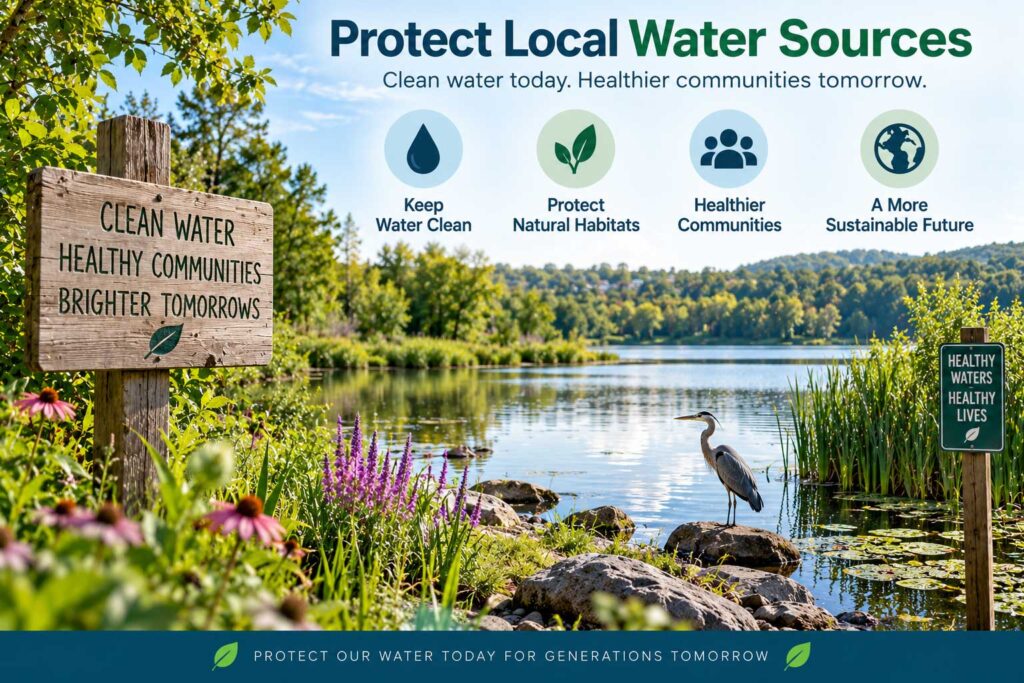
Protecting rivers, lakes, wetlands, and groundwater systems is an essential part of long-term water preservation efforts. Conserving water is not only about using less—it is also about protecting the quality of the water that already exists.
Pollution from chemicals, plastic waste, agricultural runoff, and industrial activities can damage freshwater ecosystems and make clean water more difficult and expensive to maintain. Preventing pollution at its source is one of the most effective ways to protect water supplies for future generations.
Reduce Water Pollution at Home
Many everyday household products can eventually reach waterways through drains, stormwater systems, and runoff. Making more environmentally responsible choices at home can help protect local rivers and lakes.
Using eco-friendly cleaning products, limiting unnecessary fertilizers and pesticides, disposing of medicines and chemicals properly, reducing plastic waste, and avoiding pouring oils or harmful substances down drains can all help keep waterways cleaner.
Small decisions made by households can have a meaningful impact on the health of local ecosystems.
Prevent Stormwater Pollution
During rainfall, water flowing across roads, driveways, and yards can collect pollutants before carrying them into nearby waterways. This type of runoff can introduce chemicals, trash, and other contaminants into rivers and lakes.
Simple solutions such as planting rain gardens, maintaining vegetation near waterways, using permeable surfaces, keeping litter away from storm drains, and collecting rainwater can help reduce pollution and allow natural systems to filter water more effectively.
Protect Wetlands and Natural Ecosystems
Wetlands are some of nature’s most important water protection systems. The U.S. Environmental Protection Agency Wetlands Protection Program explains how wetlands improve water quality, reduce flooding, and provide important ecosystem benefits. They absorb excess rainfall, reduce flooding, filter pollutants, recharge groundwater, and provide essential habitats for wildlife.
Protecting wetlands helps maintain cleaner water, preserve biodiversity, and support healthier ecosystems. These natural areas act as buffers that protect communities from both pollution and extreme weather events.
Support Sustainable Agriculture
Agriculture plays a major role in global water use, and farming practices can strongly influence water quality. Sustainable farming methods help reduce waste, prevent pollution, and protect both soil and freshwater resources.
Practices such as efficient irrigation, soil conservation, crop rotation, reduced chemical runoff, and responsible land management can improve agricultural sustainability while protecting nearby waterways.
Why Protecting Water Sources Matters
Clean water supports human health, food production, wildlife, and healthy ecosystems. Once freshwater sources become heavily polluted, restoring them can require decades of effort and significant financial investment.
Preventing pollution is much more effective than trying to restore damaged water systems later. Reducing waste and improving recycling habits can also help protect waterways. Learn more in our guide on How Recycling and Reusing Reduce Pollution.
Plastic pollution is another major threat to aquatic environments. Discover important facts about this global issue in 101 Plastic Pollution Facts You Don’t Know.
Quick Tip: Join local river, lake, or neighborhood cleanup events when possible. Removing trash from natural areas helps protect freshwater ecosystems and prevents pollution from spreading.
10. Educate Your Family and Community
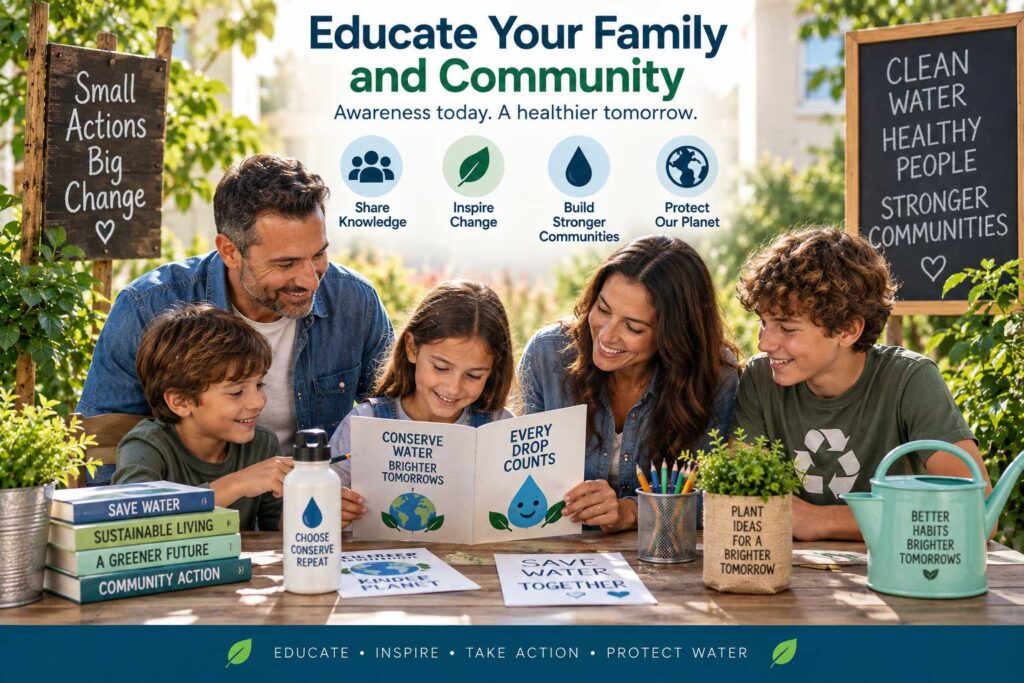
Education is one of the most powerful long-term water preservation techniques because lasting change begins when people understand the importance of freshwater resources. Individual actions matter, but communities working together can create a much greater impact.
Teaching water conservation habits at home, in schools, and throughout local communities helps create sustainable practices that can continue for generations.
Teach Water-Saving Habits at Home
Families can make water preservation part of everyday life by developing simple habits such as turning off faucets when water is not needed, taking shorter showers, fixing leaks quickly, using efficient appliances, and avoiding unnecessary outdoor watering.
Children who learn responsible water use at an early age often carry these habits into adulthood, creating a long-term culture of conservation.
Build Water-Conscious Communities
Communities can strengthen water conservation efforts by sharing knowledge and supporting local initiatives. Neighborhood programs, school education projects, community gardens, rainwater harvesting efforts, and conservation campaigns can help people work together toward common goals.
When neighbors share solutions and encourage one another, sustainable habits become easier to adopt.
Promote Sustainable Landscaping
Education also plays an important role in creating more water-efficient landscapes. Teaching homeowners about native plants, drought-resistant gardening, efficient irrigation, and soil improvement can help entire neighborhoods reduce outdoor water consumption.
Community improvements such as rain gardens, native plant areas, reduced lawn spaces, and sustainable public landscapes can create environmental benefits beyond individual properties.
Support Water Conservation Efforts
Many organizations work to protect freshwater supplies, restore ecosystems, and promote responsible water management. Supporting these efforts through volunteering, community participation, or educational programs can expand the impact of water conservation beyond individual households.
Understanding why freshwater protection matters is an important first step. Learn more in our guide on Why Water Preservation Is Important.
For practical actions that individuals and families can take every day, explore How Can We Do Water Conservation?.
The Power of Awareness
Many water challenges are caused not only by limited supplies but also by waste, pollution, and a lack of awareness. When more people understand how their choices affect water resources, communities can reduce consumption and better protect freshwater systems.
The benefits of water education extend beyond saving water. It can create cleaner waterways, stronger environmental responsibility, and more resilient communities prepared for future challenges.
Quick Tip: Start a family water challenge and track simple conservation actions for one month. Small improvements become lasting habits when everyone participates.
Benefits of Using Water Preservation Techniques
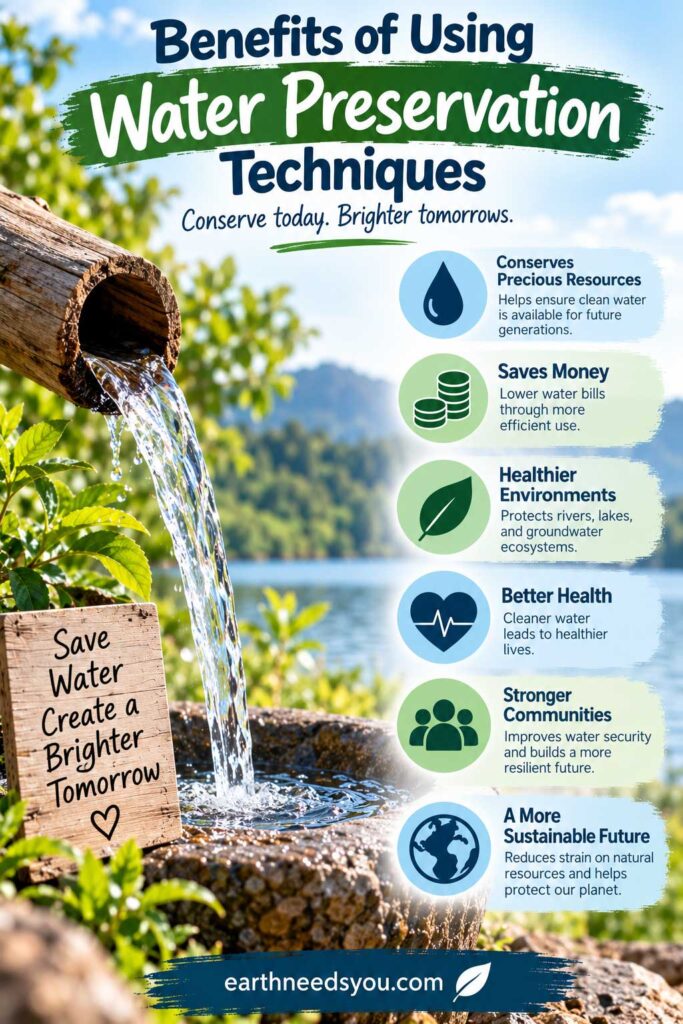
Adopting effective water preservation techniques provides benefits that go far beyond reducing water consumption. These practices help protect natural ecosystems, lower household expenses, strengthen community resilience, and ensure cleaner freshwater resources remain available for future generations.
As population growth, climate change, and increasing demand continue to place pressure on global water supplies, responsible water management is becoming more important than ever.
Protects Freshwater Resources
Freshwater is one of Earth’s most valuable resources, yet only a small portion of the planet’s water supply is easily available for human use. Conserving water helps reduce pressure on rivers, lakes, reservoirs, and underground aquifers.
Using water more efficiently helps maintain reliable supplies for drinking water, agriculture, wildlife habitats, industry, and natural ecosystems.
Reduces Water Bills
Many water preservation techniques provide direct financial benefits. Repairing leaks, improving irrigation, installing efficient fixtures, and reducing unnecessary water use can significantly lower household water expenses.
Although some improvements require an initial investment, the savings gained over time often make conservation upgrades worthwhile.
Saves Energy and Reduces Emissions
Water conservation also helps reduce energy use. Treating, transporting, heating, and distributing water requires significant amounts of energy. The U.S. Department of Energy explains that water and energy systems are closely connected, with energy required to move, treat, and heat water.
When less water is wasted, communities can reduce the energy needed for water treatment, lower heating costs, and decrease the overall environmental impact associated with water systems.
Protects Natural Ecosystems
Healthy water systems support countless species and maintain balanced ecosystems. Excessive water use and pollution can damage rivers, wetlands, lakes, and other freshwater habitats.
Water preservation helps protect biodiversity, maintain wildlife habitats, support aquatic life, and preserve natural areas that depend on healthy water supplies.
Improves Drought Resilience
Communities that practice responsible water management are better prepared during droughts and periods of water scarcity.
Efficient water use helps maintain supplies during dry seasons, reduce pressure on water systems, support agriculture, and strengthen resilience against future challenges.
Reduces Pollution
Using water more efficiently can reduce the amount of wastewater entering treatment systems and natural waterways. Combined with responsible waste management, conservation efforts help protect water quality and reduce environmental damage.
Creates a More Sustainable Future
Every water-saving action contributes to a larger effort to protect Earth’s resources. Whether it involves collecting rainwater, improving landscapes, upgrading appliances, or simply fixing a leaking faucet, individual choices can create meaningful environmental benefits when adopted by many people.
For more information about why protecting this resource matters, read our guide on Why Water Preservation Is Important.
You can also discover practical everyday actions in How Can We Do Water Conservation?.
Quick Tip: The most effective approach is combining multiple water preservation techniques. A single action helps, but a complete water-saving lifestyle creates the greatest impact.
Frequently Asked Questions About Water Preservation Techniques
What are the most effective water preservation techniques?
The most effective approach is combining several water-saving strategies, including fixing leaks, improving efficiency, collecting rainwater, and reducing unnecessary use.
Even small improvements across homes, businesses, and communities can create meaningful long-term water savings.
How can I preserve water at home?
You can preserve water at home by fixing leaking faucets and toilets, taking shorter showers, turning off taps when water is not needed, installing efficient fixtures, running full loads in washing machines and dishwashers, collecting rainwater, and reusing water whenever possible.
Simple daily habits can save thousands of gallons of water each year. For more practical ideas, explore our guide on How Can We Do Water Conservation?.
Why is water preservation important?
Water preservation is important because freshwater resources are limited and essential for people, agriculture, wildlife, and healthy ecosystems.
Conserving water helps protect natural supplies, reduce pollution, lower energy use, and improve resilience during droughts and changing climate conditions. Learn more about the importance of protecting this resource in Why Water Preservation Is Important.
How does rainwater harvesting help conserve water?
Rainwater harvesting helps reduce dependence on treated municipal water by capturing rainfall and storing it for later use. Collected rainwater can be used for gardening, landscaping, outdoor cleaning, and other non-drinking purposes.
This approach reduces pressure on freshwater supplies while making better use of a natural resource.
Can greywater be safely reused?
Yes, greywater from sources such as showers, bathtubs, bathroom sinks, and washing machines can often be reused for irrigation and other non-potable purposes when handled properly.
Before installing a greywater system, homeowners should check local regulations and follow safe reuse practices to protect plants, soil, and water quality.
How can businesses help with water preservation?
Businesses can reduce water consumption by improving equipment efficiency, monitoring water usage, repairing leaks, recycling process water where appropriate, improving landscaping practices, and educating employees about conservation.
Because many businesses use large amounts of water, efficiency improvements can create significant environmental benefits.
Does saving water help fight climate change?
Yes. Treating, pumping, transporting, and heating water requires energy. Reducing unnecessary water use can lower energy demand and reduce associated emissions.
Protecting healthy ecosystems and maintaining sustainable water systems also helps communities become more resilient to environmental changes.
What is the easiest water preservation method to start with?
Some of the easiest ways to begin include fixing household leaks, turning off running water when it is not needed, installing faucet aerators, taking shorter showers, and collecting rainwater for outdoor use.
These actions require little effort but can create immediate improvements in household water efficiency.
Water preservation starts with simple choices, and consistent small actions can create meaningful long-term results.
Final Thoughts on Water Preservation Techniques
Water is one of the most valuable resources on Earth, and protecting it requires both individual responsibility and collective action. The good news is that effective water preservation techniques are often simple, affordable, and easy to incorporate into everyday life.
From repairing leaks and upgrading appliances to collecting rainwater and creating drought-resistant landscapes, every conservation effort helps reduce waste and protect freshwater supplies. A single household may only save a small amount of water, but millions of households making better choices can create a significant collective impact.
Water preservation is not only about using less water—it is about using water more wisely. Improving efficiency, preventing pollution, protecting ecosystems, and sharing knowledge with others can help create a more sustainable future for people, wildlife, and the planet.
Understanding why freshwater protection matters is the first step toward making better decisions. Learn more in our guide on Why Water Preservation Is Important.
The choices we make today influence the availability of clean water for future generations. Every saved drop contributes to healthier ecosystems, stronger communities, and a more sustainable Earth.
Key Takeaways
Effective water preservation starts with practical actions:
- Fix leaks as soon as they are discovered.
- Choose water-efficient fixtures and appliances.
- Collect rainwater when possible.
- Reuse household water safely.
- Improve irrigation and landscaping practices.
- Reduce unnecessary indoor water waste.
- Protect rivers, lakes, wetlands, and groundwater.
- Encourage others to practice water conservation.
Together, these 10 water preservation techniques provide realistic solutions for protecting one of Earth’s most essential resources.
Water conservation starts with one simple action—and every drop counts.
Read More About Water Conservation and Sustainable Living
Protecting water resources is one part of creating a more sustainable future. Explore these related guides to learn more about conserving freshwater, reducing pollution, and building environmentally friendly habits:
- Why Water Preservation Is Important — Discover why freshwater protection matters and how water conservation supports people, wildlife, and ecosystems.
- How Can We Do Water Conservation? — Learn practical everyday actions that households and communities can take to reduce water waste.
- 10 Ways to Reuse Water — Explore simple ways to reuse household water and reduce unnecessary freshwater consumption.
- 5 Ways You Can Help Stop Desertification — Learn how protecting land, improving soil health, and conserving water can help restore damaged ecosystems.
- How Recycling and Reusing Reduce Pollution — Discover how smarter consumption habits can reduce waste and protect natural resources.



0 Comments