

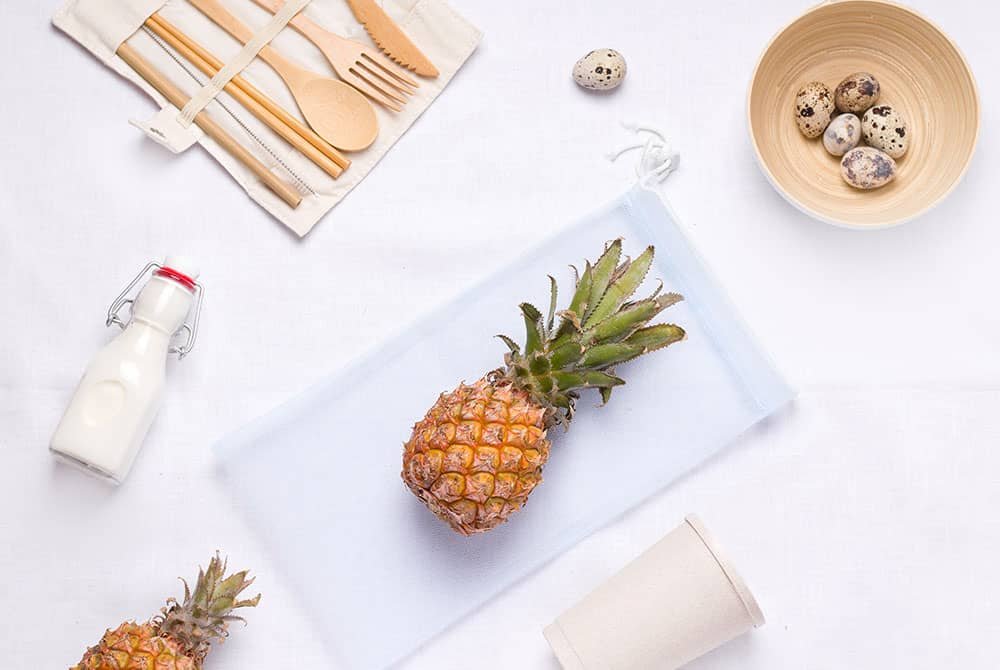
Travel opens the door to new cultures, landscapes, foods, and unforgettable experiences—but it can also create a surprising amount of waste. Disposable water bottles, single-use toiletries, plastic cutlery, shopping bags, and cheaply made travel accessories are often used briefly before ending up in landfills or polluting natural environments.
The good news is that traveling more sustainably does not mean giving up comfort or completely changing the way you pack. A few durable, reusable, and thoughtfully designed sustainable travel essentials can help reduce waste while making your trip more convenient.
From reusable water bottles and shampoo bars to recycled packing cubes and long-lasting luggage, the best sustainable travel products are practical items you can use again and again. Many eco-friendly travel accessories can also replace disposable alternatives, helping you cut waste and potentially save money over time.
In this guide, you’ll find 20 practical products that can help you cut down on waste, pack more efficiently, and make more thoughtful choices on the road—whether you are heading away for a weekend, taking an international vacation, or traveling for several weeks.
What Makes a Travel Product Sustainable?
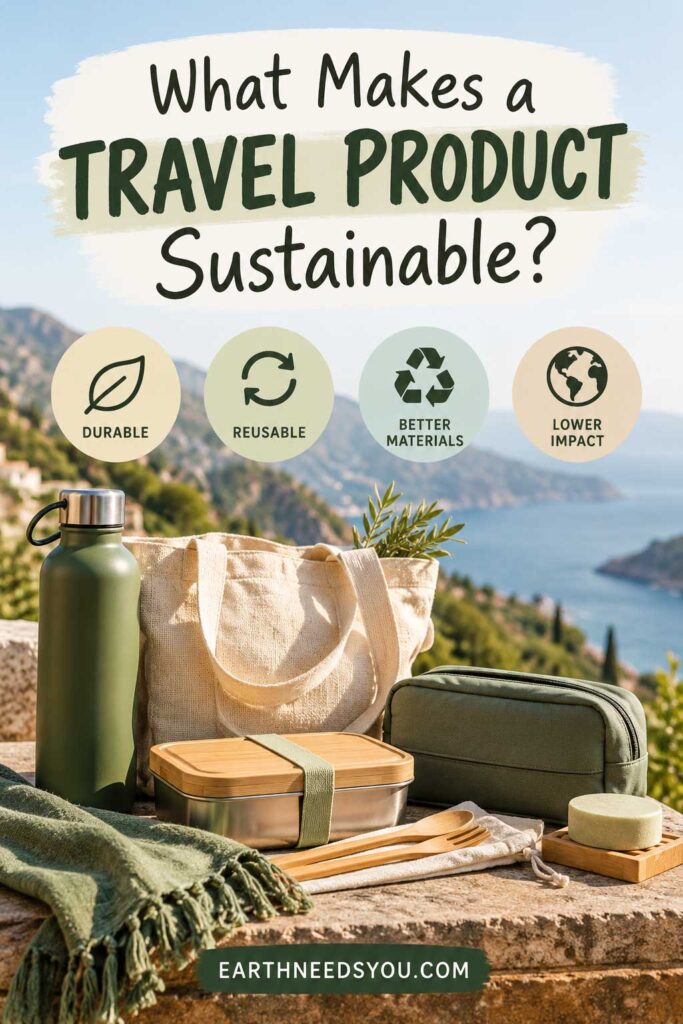
A sustainable travel product should help reduce waste, hold up through repeated use, and offer a practical alternative to disposable or short-lived items. But labels such as “green,” “natural,” and “eco-friendly” do not automatically make a product sustainable.
Durability is one of the biggest factors to consider. A well-made bottle, backpack, toiletry container, or travel towel that lasts for years can be a better choice than trendy eco-friendly travel accessories that quickly wear out and need replacing.
Reusability matters too. Many zero-waste travel products are designed to replace items you would otherwise throw away after one or a few uses, such as plastic bottles, disposable utensils, travel-size toiletries, and shopping bags.
Materials also deserve a closer look. Recycled fabrics, responsibly sourced wood, stainless steel, glass, and certified organic fibers can all be used in environmentally friendly travel products, but no material is completely impact-free. Manufacturing, transportation, packaging, repairability, and expected lifespan all contribute to a product’s overall footprint.
When comparing sustainable travel gear, look for products that:
- Replace disposable items you already use
- Are durable enough for frequent travel
- Can be repaired, refilled, washed, or reused
- Use recycled, certified, or responsibly sourced materials
- Come with minimal or recyclable packaging
- Serve a genuine purpose instead of adding unnecessary clutter
- Come from companies that clearly explain their environmental practices
It is also worth checking what you already own before buying something new. Reusing an existing bottle, bag, toiletry pouch, or backpack is often more sustainable than replacing it simply because a newer product is marketed as one of the latest green travel essentials.
The best sustainable travel products are usually the ones that solve a real problem, perform reliably, and remain useful for many trips.
Quick List: Best Sustainable Travel Products
The best sustainable travel products are practical, reusable, and easy to carry. Many of them replace disposable items you would otherwise buy during a trip, while others help you pack more efficiently or keep gear in use for longer.
Here is a quick overview of the 20 sustainable travel essentials covered in this guide:
| Sustainable Travel Product | Best For | Why It Helps |
|---|---|---|
| Reusable water bottle | Everyday travel | Reduces reliance on disposable plastic bottles |
| Water-filter bottle | International or remote travel | Can reduce the need to buy bottled water where appropriate |
| Reusable travel coffee cup | Coffee and tea drinkers | Replaces disposable cups and lids |
| Solid shampoo and conditioner bars | Carry-on packing | Reduce liquid packaging and save space |
| Refillable toiletry containers | Short and long trips | Avoid repeated purchases of travel-size bottles |
| Bamboo or replaceable-head toothbrush | Everyday toiletries | Can reduce plastic waste compared with some disposable options |
| Reusable cutlery set | Takeaway meals and picnics | Replaces disposable utensils |
| Reusable food and snack bags | Flights, hikes, and road trips | Reduce use of single-use food bags |
| Sustainable packing cubes | Organized packing | Help organize luggage and can last for many trips |
| Recycled-fabric travel towel | Beaches, hostels, and camping | Lightweight, reusable, and quick-drying |
| Reusable shopping and produce bags | Markets and groceries | Replace disposable shopping bags |
| Reef-conscious sunscreen | Beach and outdoor travel | Provides sun protection while encouraging closer attention to ingredients |
| Reusable makeup-removal pads | Skincare and cosmetics | Replace disposable cotton rounds and wipes |
| Menstrual cup or reusable period products | Longer trips | Reduce recurring disposable period-product waste |
| Laundry detergent sheets | Light packing | Compact alternative to travel-size detergent bottles |
| Portable solar charger | Camping and remote travel | Provides backup charging when outlets are limited |
| Durable power bank | Flights and sightseeing | Keeps devices charged and can last for years |
| Eco-friendly toiletry bag | Bathroom organization | Keeps reusable toiletries organized in one place |
| Reusable straw | Smoothies and cold drinks | Can replace disposable straws for frequent users |
| Long-lasting backpack or luggage | All types of travel | Durable gear reduces the need for frequent replacement |
You do not need to buy everything on this list. Start with the products that replace disposable items you already use regularly, such as water bottles, shopping bags, coffee cups, toiletry containers, and food bags.
Building your collection of eco-friendly travel products gradually is usually more practical than buying an entirely new travel kit at once. In many cases, the most sustainable choice is simply continuing to use a reliable product you already own.
Affiliate Disclosure: This article contains affiliate links. If you purchase through one of these links, we may earn a commission at no additional cost to you. As an Amazon Associate I earn from qualifying purchases.
Best Sustainable Travel Products for Your Next Trip
Now that you have the quick overview, let’s take a closer look at each product, when it is useful, and what to consider before adding it to your travel kit.
1. Reusable Water Bottle
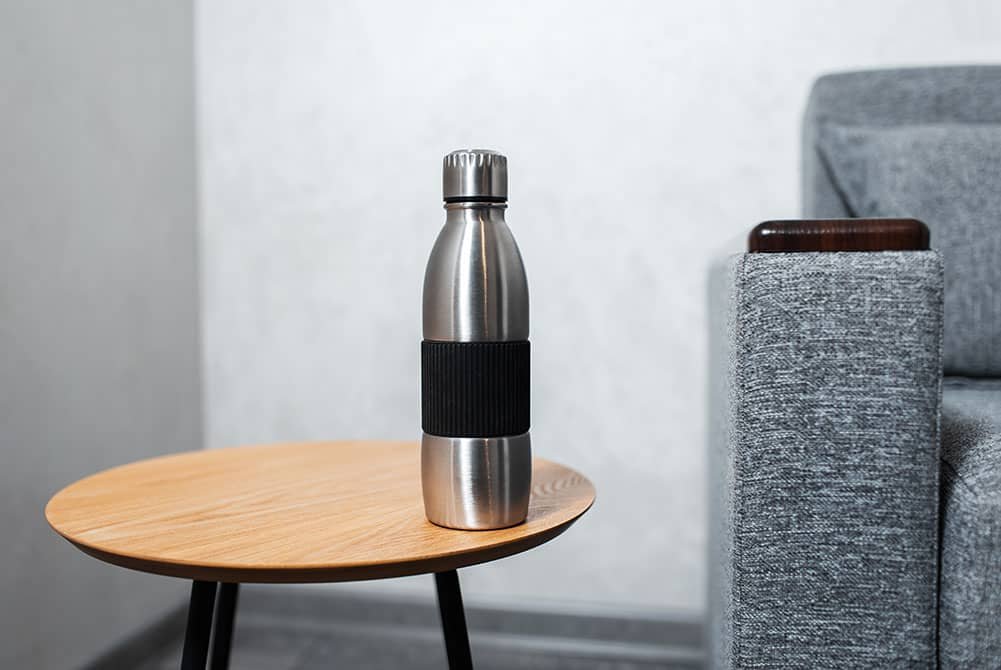
A reusable water bottle is one of the easiest sustainable travel essentials to pack. It helps reduce the need for disposable plastic bottles and keeps water within reach during flights, road trips, hikes, sightseeing, and long travel days.
Stainless-steel bottles are a popular choice because they are durable, easy to clean, and often insulated to keep drinks cold or hot for hours. Lightweight reusable plastic bottles can also work well when weight matters, especially for hiking or day trips.
When choosing a reusable bottle for travel, focus on a few practical details:
- Leak protection: A secure lid is especially important when the bottle will be carried inside a backpack.
- Easy cleaning: A wide opening makes washing and refilling much easier.
- Size: Choose a bottle that fits your bag, cup holder, and usual drinking habits.
- Weight: Lightweight bottles are easier to carry during long sightseeing days.
- Insulation: Double-wall insulation is useful if you want drinks to stay hot or cold for longer.
- Replacement parts: Replaceable lids, seals, or straws can help keep the bottle in use for years.
For air travel, the TSA allows empty water bottles through security, so you can refill yours after the checkpoint. When traveling internationally, check whether local tap water is safe to drink before filling your bottle.
You do not need to buy a new bottle just because one is marketed as eco-friendly. If you already own a durable bottle that works well, keep using it. The most sustainable option is often the one you already have and will continue using for years.
Popular reusable water bottle brands include Simple Modern, S’well, Hydro Flask, and YETI. These brands offer a range of insulated and lightweight bottles in different sizes, lid styles, and designs, making it easier to find one that fits your travel needs. You can also compare current models, sizes, and prices on Amazon before choosing the best option for your trip.
2. Water-Filter Bottle

A water-filter bottle can be a smart addition to your sustainable travel gear when you are visiting places where tap water quality is uncertain or safe drinking water is not always easy to find. Unlike a standard reusable bottle, it includes a built-in filter designed to reduce specific contaminants, tastes, or odors.
Not all filters work the same way. Some are mainly designed to improve taste by reducing chlorine, while others may be tested to reduce bacteria, protozoa, microplastics, or certain chemicals. Always check what the filter is actually designed and tested to remove.
Before buying a water-filter bottle, check a few important details:
- Filter performance: Look for independent testing or recognized certification and check exactly which contaminants the filter is designed to reduce.
- Filter lifespan: Compare how long each filter lasts and how much replacement filters cost.
- Bottle size and weight: Choose a capacity that fits your travel style without making the bottle too heavy to carry.
- Replacement availability: Make sure new filters are easy to order, especially if you plan to use the bottle regularly.
- Cleaning requirements: Look for a design that is easy to take apart, rinse, and maintain while traveling.
- Intended use: Check whether the bottle is designed for treated tap water, outdoor water sources, or both.
A good filter bottle may help reduce your reliance on single-use bottled water, especially on longer trips. But it should always be used according to the manufacturer’s directions.
Do not assume that a portable filter can make every water source safe. Water affected by viruses, industrial pollution, salt, or unknown chemical contamination may require additional treatment.
For destinations with reliable, safe tap water, a regular reusable bottle is usually enough. A filter bottle makes the most sense when it solves a real water-access problem rather than becoming another item you carry but rarely use.
3. Reusable Travel Coffee Cup
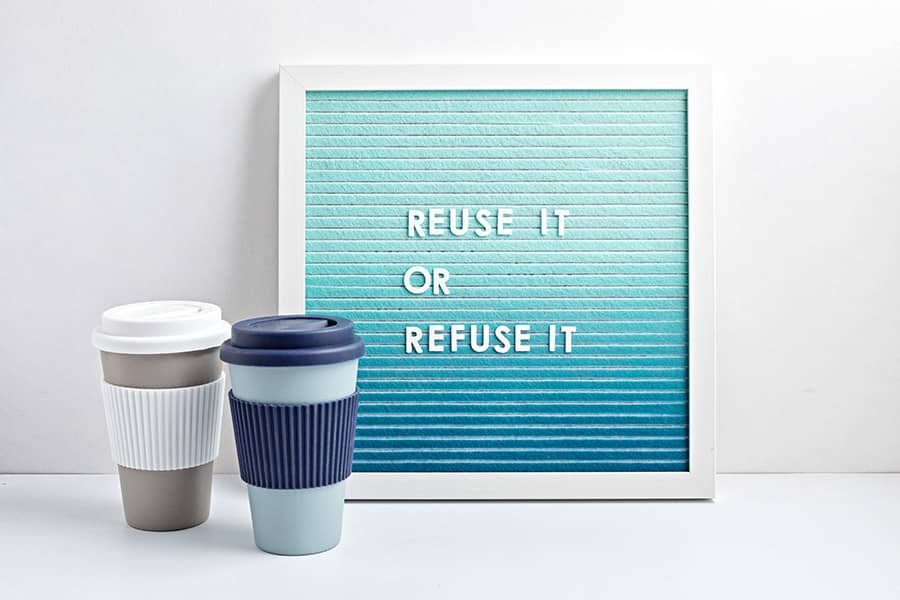
A reusable travel coffee cup is a practical choice for travelers who regularly buy coffee, tea, or other hot drinks. It can replace disposable cups and lids while also helping prevent spills during road trips, train journeys, airport waits, and busy sightseeing days.
Insulated stainless-steel cups are a good option if you want drinks to stay hot or cold for longer, while collapsible cups can be useful when luggage space is limited. The best choice is one that is comfortable to use, easy to clean, and convenient enough that you will actually carry it.
When choosing a reusable travel cup, focus on a secure lid, a comfortable drinking opening, and a size that fits both your usual drink order and standard cup holders. Insulation is useful if you want drinks to stay hot or cold for longer, while dishwasher-safe parts and replaceable seals can make the cup easier to maintain over time.
Some cafés may offer a small discount for bringing your own cup, although policies vary by location. It is also a good idea to hand over a clean cup when ordering.
A reusable cup becomes more sustainable the more often you use it. Instead of collecting several different styles, choose one durable cup that fits your routine and bring it with you consistently.
4. Solid Shampoo and Conditioner Bars
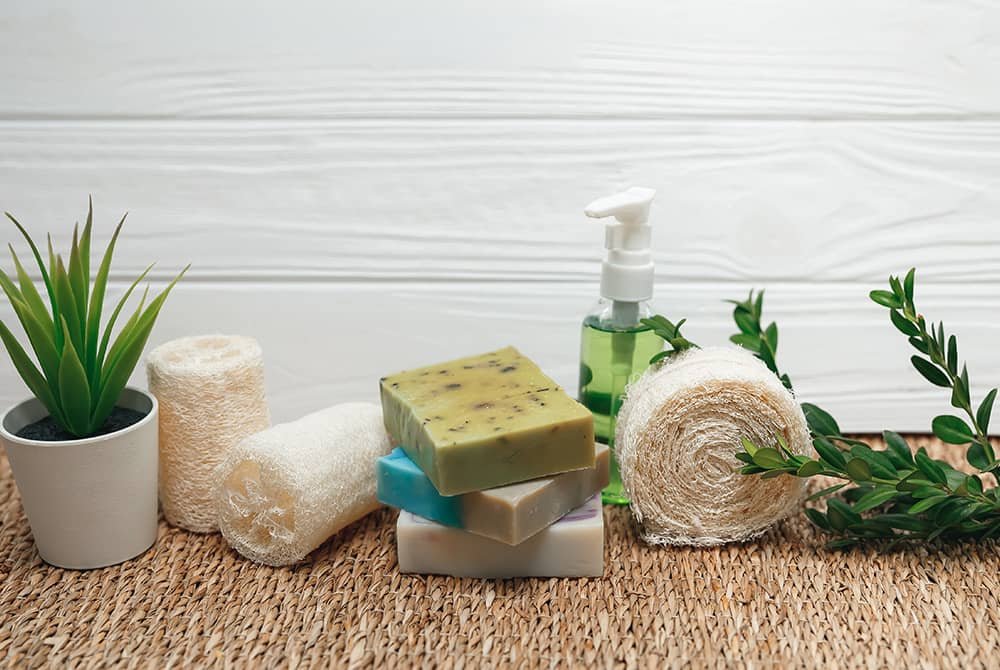
Solid shampoo and conditioner bars are convenient sustainable travel products because they take up less space, reduce the risk of leaks, and can cut down on plastic packaging compared with traditional bottled toiletries. They are also useful for carry-on travel because solid bars generally are not treated like standard liquids at airport security.
A good shampoo or conditioner bar can last through many washes, making it practical for both weekend trips and longer vacations. However, results can vary depending on your hair type, the formula, and even the hardness of the local water, so it is worth testing a bar at home before relying on it during a trip.
Before choosing solid hair-care products, check:
- Hair compatibility: Choose a formula designed for your hair type, whether it is dry, oily, curly, color-treated, or sensitive.
- Packaging: Look for minimal, recyclable, or plastic-free packaging.
- Ingredients: Check the ingredient list if you have sensitivities or prefer fragrance-free products.
- Longevity: Concentrated bars that hold their shape well tend to last longer.
- Storage: A ventilated travel case or soap dish helps the bar dry between uses.
- Ease of use: Make sure the product lathers and rinses easily enough for your normal routine.
Let the bars dry as much as possible before packing them away. Keeping a wet bar sealed in a container can make it soften, break apart, and wear out much faster.
Solid shampoo and conditioner bars work best when they genuinely replace bottled products you would otherwise carry. If you already have toiletries that work well and can be transferred into refillable containers, there is no need to replace them just for the sake of having a more eco-friendly travel kit.
5. Refillable Travel Toiletry Containers
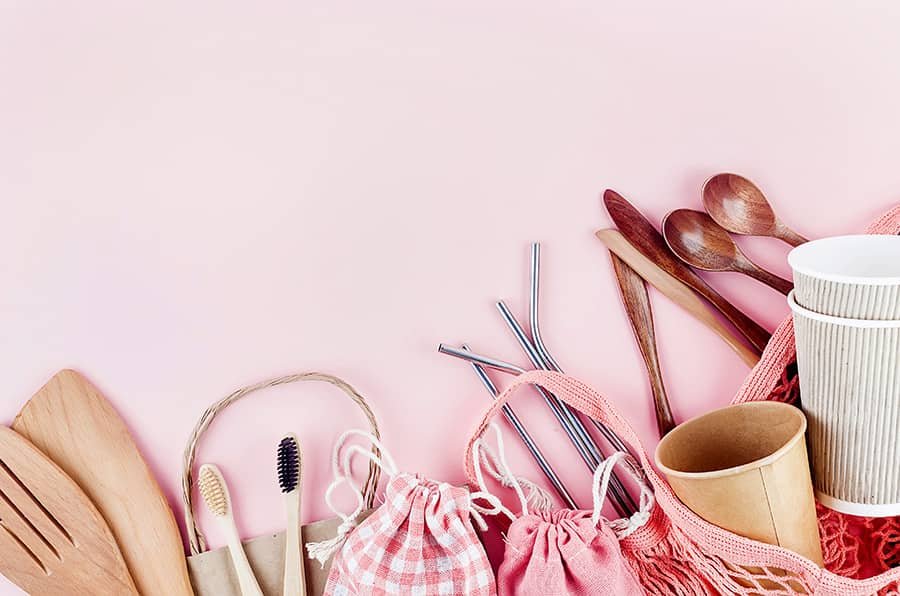
Refillable travel toiletry containers are a practical alternative to repeatedly buying miniature shampoo, conditioner, lotion, body wash, and skincare products. They let you pack only what you need while reducing the packaging waste that comes with single-use travel-size bottles.
Silicone squeeze bottles are useful for thicker products such as shampoo and conditioner, while small pump bottles or jars may work better for lotions, serums, creams, and facial products. Clear labeling is especially helpful when several containers look almost identical.
Before buying refillable travel containers, check:
- Leak protection: Look for secure caps, valves, and seals that are designed to stay closed in transit.
- Easy filling: Wide openings make bottles easier to refill and clean between trips.
- Material quality: Choose durable containers made for cosmetic or personal-care use.
- Travel-friendly sizes: Make sure the containers fit current airline liquid limits if you plan to carry them in hand luggage.
- Clear labeling: Permanent or water-resistant labels help prevent mix-ups.
- Compact design: Choose shapes that fit neatly inside your toiletry bag without wasting space.
- Replaceable parts: Containers with replaceable caps or lids may be easier to keep in use for longer.
Avoid filling containers all the way to the top, especially before flying. Leaving a little extra space can help reduce leaks caused by pressure changes.
Clean and dry each container thoroughly before refilling it, particularly when switching to a different product. A durable set that you reuse trip after trip can be cheaper and less wasteful than buying new miniature toiletries before every vacation.
6. Bamboo or Replaceable-Head Toothbrush

A bamboo toothbrush or replaceable-head toothbrush can help reduce some of the plastic waste associated with conventional toothbrushes. Neither option is automatically sustainable, though, so it is still worth looking at materials, durability, packaging, and how the product is disposed of at the end of its life.
Bamboo handles are made from a renewable material and may use less plastic overall, but the bristles are often nylon and usually need to be removed before the handle can be composted. Replaceable-head toothbrushes take a different approach by keeping the main handle and replacing only the worn brush head.
For travel, look for a toothbrush with soft bristles, a comfortable handle, and a ventilated cover that allows moisture to escape. If you choose a replaceable-head model, make sure replacement heads are easy to find. For bamboo brushes, check what the bristles and coatings are made from, since those components may need to be separated from the handle before disposal.
Let the toothbrush dry before placing it back in a travel case. Keeping a damp brush sealed for long periods can trap moisture and make it less pleasant to use.
The best option is still the toothbrush that supports good oral hygiene and works well for you. Sustainability should not come at the expense of effective brushing, and the brush or head should be replaced once the bristles become worn.
7. Reusable Utensils Set

A reusable cutlery set is a simple way to avoid disposable forks, spoons, knives, and chopsticks while traveling. It can be especially useful for takeaway meals, food markets, picnics, train journeys, camping, and road trips where single-use utensils are still common.
Travel cutlery is available in stainless steel, bamboo, wood, and durable plastic. Stainless steel is usually the most durable and easiest to clean, while bamboo and wood are lighter but may wear out faster if they stay damp or are washed frequently.
A simple fork-and-spoon set is enough for most travelers, although chopsticks and a blunt table knife can be useful depending on what you normally eat. Choose utensils that are lightweight, comfortable to use, and easy to wash, and keep them in a small washable pouch so used cutlery stays separate from the rest of your bag.
Choose a set that is compact, comfortable to use, and easy to clean. There is little benefit in carrying a bulky kit filled with utensils you rarely need.
If you are flying, check current airport and airline rules before packing any knife or sharp metal utensil. A rounded, non-sharp knife or a simple fork-and-spoon set is often the easiest option for carry-on travel.
After eating, rinse or wipe the utensils before putting them back in their case. A durable set that you use regularly can replace a large number of disposable utensils over time.
8. Reusable Food and Snack Bags
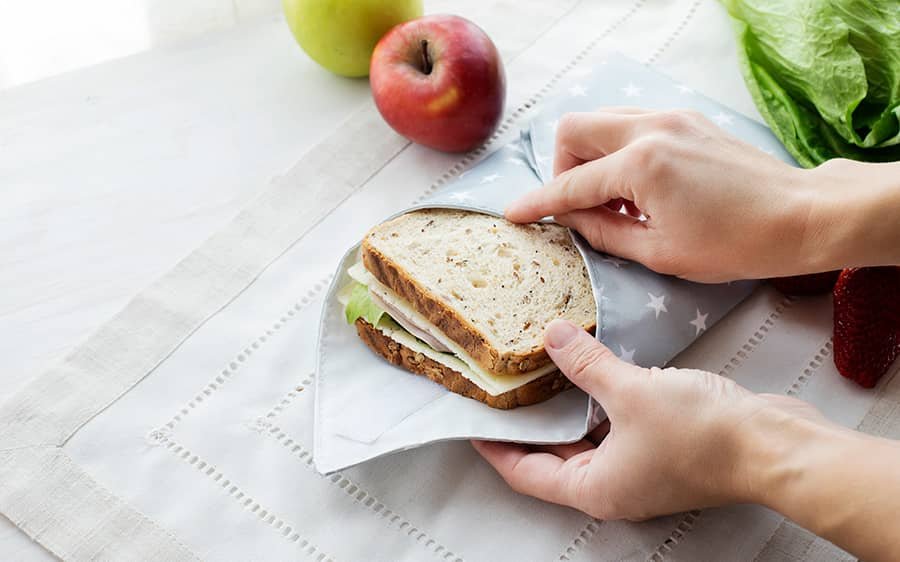
Reusable food and snack bags are a convenient way to carry sandwiches, fruit, nuts, baked goods, and other small meals without relying on disposable plastic bags. They are especially useful for road trips, hikes, flights, picnics, and long sightseeing days when you want to pack your own snacks.
Common options include washable silicone bags, fabric snack pouches, reusable wraps, and lightweight food containers. The best choice depends on what you usually carry. Silicone bags work well for moist or messier foods, while fabric pouches are better suited to dry snacks.
Before choosing reusable food storage for travel, check:
- Closure: Look for a secure seal that helps prevent leaks and spills.
- Materials: Choose food-safe materials designed for repeated use.
- Cleaning: Make sure the bag or container is easy to wash and dry completely.
- Packability: Lightweight, flexible designs are easier to fit into a backpack or carry-on.
- Temperature compatibility: Check whether the product is suitable for the freezer, microwave, or dishwasher if those features matter to you.
- Size: Choose a capacity that matches the portions you normally pack.
- Durability: Strong seams, seals, and closures can help the product last through many trips.
Wash reusable bags thoroughly after each use and let them dry completely before storing them. Oily, strong-smelling, or highly perishable foods may be better carried in a more secure container.
A small set of reusable snack bags in practical sizes is usually enough. They are most useful when they consistently replace disposable bags you would otherwise use during travel.
9. Sustainable Packing Cubes

Packing cubes can make luggage easier to organize, keep clothing separated, and simplify unpacking during a trip. Some compression-style cubes can also help reduce bulk, but packing cubes are not automatically sustainable just because they are reusable.
Their value depends mostly on how well they are made, what materials they use, and how long they stay in use. A durable set made from recycled nylon or recycled polyester can be a good option, especially when it has strong zippers, reinforced seams, and washable fabric.
Before buying sustainable packing cubes, check:
- Materials: Look for recycled or responsibly sourced fabrics where possible.
- Construction: Strong stitching and durable zippers matter more than ultra-lightweight design.
- Weight: Choose cubes that organize your luggage without adding unnecessary bulk.
- Ventilation: Mesh panels can help you see the contents and improve airflow.
- Washability: Travel organizers should be easy to clean after repeated use.
- Sizes: A few practical sizes are usually more useful than a large matching set.
- Repairability: Replaceable zippers or repair-friendly construction can extend their lifespan.
- Packaging: Minimal or recyclable packaging is preferable to excessive plastic wrapping.
Packing cubes can also make it easier to avoid overpacking by giving each category a fixed amount of space. For example, you might use separate cubes for shirts, underwear, activewear, or electronics.
Before purchasing a new set, check whether you already own zippered pouches, drawstring bags, or other organizers that can do the same job. A durable set can stay useful for years, so prioritize strong zippers, practical sizes, and good construction over trendy colors or oversized sets.
10. Recycled-Fabric Travel Towel
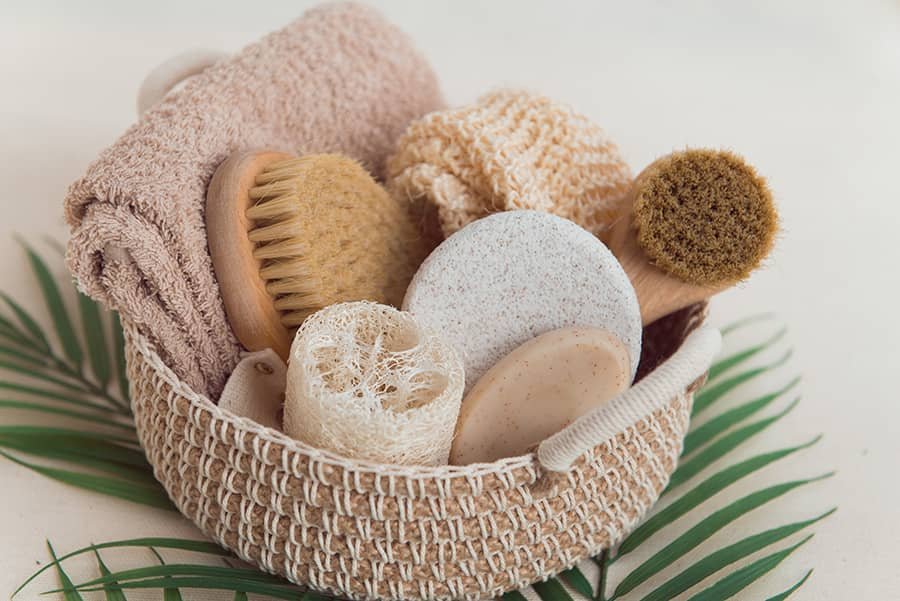
A compact travel towel is useful for beach trips, camping, hostels, swimming, hiking, and any destination where towels may not be available. Choosing one made with recycled fabric can help reduce demand for virgin synthetic materials, especially when the towel is durable enough to stay in use for many trips.
Many travel towels are made from microfiber because it is lightweight, absorbent, and quick-drying. The tradeoff is that synthetic fabrics can release microfibers during washing. Washing only when necessary, using a microfiber-catching laundry bag or filter, and avoiding excessive heat can help reduce shedding and extend the towel’s lifespan.
Before buying a travel towel, check:
- Material: Look for recycled or certified fabric when possible.
- Drying speed: Quick-drying construction is especially useful for frequent travel.
- Packed size: Choose a towel that folds down small enough for your luggage.
- Stitching: Reinforced edges can help prevent fraying over time.
- Hanging loop: A simple loop makes it easier to dry the towel in hotels, hostels, or campsites.
- Storage pouch: A breathable pouch is better than sealing a damp towel in plastic.
- Care instructions: Check how the towel should be washed and dried.
- Size: Choose one that fits your actual needs rather than automatically buying the largest option.
A larger towel may make sense for beaches and swimming, while a smaller version can be enough for the gym, camping, or quick cleanups.
As with other sustainable travel gear, durability matters more than an eco-friendly label alone. A well-made towel that performs reliably for years is usually a better choice than a cheaper “green” option that quickly loses its shape, stitching, or absorbency.
11. Reusable Shopping and Produce Bags

Reusable shopping and produce bags are lightweight sustainable travel essentials that can help reduce your reliance on disposable plastic bags. They are useful for grocery shopping, farmers markets, souvenirs, takeaway food, and everyday purchases while traveling.
A foldable shopping bag is especially convenient because it takes up very little room and can stay in your backpack, handbag, or daypack until you need it. Lightweight mesh produce bags are also useful for fruit, vegetables, bread, and other unpackaged foods.
For travel, one strong foldable shopping bag and a few lightweight produce bags are usually enough. Look for reinforced handles, washable fabric, and a compact design that folds into its own pouch. If you regularly buy loose produce, bags with the tare weight printed on the label can make checkout easier.
Avoid collecting more reusable bags than you actually need. They still require materials and energy to manufacture, so their environmental benefit increases when the same bags are used frequently for years.
For most trips, one durable foldable shopping bag and a few lightweight produce bags are plenty. They can also serve double duty for carrying laundry, beach gear, snacks, shoes, or extra clothing, making them some of the most versatile eco-friendly travel accessories you can pack.
12. Reef-Conscious Sunscreen

Sunscreen is an important travel essential for protecting your skin from UV exposure during beach trips, hiking, sightseeing, and other outdoor activities. A reef-conscious sunscreen aims to provide effective sun protection while avoiding some ingredients or formulations that may create unnecessary environmental concerns.
Terms such as “reef-safe” and “reef-friendly” are not consistently regulated, so it is better to look beyond the front label and check the actual product details.
Before choosing sunscreen for travel, look for:
- Broad-spectrum protection: Choose a product that protects against both UVA and UVB rays.
- SPF 30 or higher: This is a practical minimum for most outdoor travel.
- Water resistance: Especially important for swimming, snorkeling, or activities that involve heavy sweating.
- Clear active ingredients: Check exactly which UV filters the product uses.
- Skin compatibility: Choose a formula that works well for your skin type and sensitivities.
- Packaging: Recyclable, refillable, or reduced-plastic packaging can be a useful bonus.
- Transparent claims: Look for brands that clearly explain testing, ingredients, and environmental statements rather than relying only on vague “reef-safe” marketing.
Mineral sunscreens commonly use zinc oxide or titanium dioxide as active ingredients. These can provide effective sun protection, but no sunscreen should be assumed to have zero environmental impact.
You can also reduce how much sunscreen you need by combining it with other forms of protection, such as a wide-brimmed hat, sunglasses, lightweight long sleeves, UV-protective clothing, and shade during the strongest sun.
The priority is still protecting your skin. Choose a sunscreen that you will use correctly and consistently, while favoring transparent products and thoughtful packaging when possible.
13. Reusable Makeup-Removal Pads

Reusable makeup-removal pads are a simple way to replace disposable cotton rounds and facial wipes while traveling. They can be used for removing makeup, applying toner, or cleansing the skin without creating as much single-use waste.
Common materials include cotton, bamboo-derived fabric, microfiber, and blended textiles. The best choice depends on your skin type, the products you use, and how easy the pads are to wash and dry during a trip.
Choose soft pads with reinforced edges that can handle repeated washing without becoming rough or misshapen. Quick-drying materials are especially useful for travel, and a small washable pouch makes it easy to keep used pads separate until laundry day.
Keep used pads separate from clean ones until they can be washed. A small washable wet bag or zippered pouch can help keep damp pads away from clothing and other toiletries.
Reusable pads still require water and detergent, so they make the most sense when they are used many times and washed efficiently. Allowing them to dry completely can also help prevent odors and extend their lifespan.
For heavy or waterproof makeup, a cleansing balm or oil used with a soft reusable cloth may be more effective than repeatedly rubbing the skin with small pads.
14. Menstrual Cup or Reusable Period Products

A menstrual cup or other reusable period product can help reduce the amount of disposable waste created during travel. Depending on personal comfort and routine, options may include menstrual cups, reusable pads, period underwear, or a combination of several products.
Menstrual cups are compact and can be practical for long flights, road trips, hiking, and full days of sightseeing. Reusable pads and period underwear may be more comfortable for some travelers, especially when access to private bathrooms or clean water is limited.
Before choosing reusable period products for travel, consider:
- Fit and absorbency: Choose the correct cup size, pad absorbency, or underwear protection level for your needs.
- Materials: Look for products made from comfortable, body-safe materials.
- Cleaning requirements: Check how the product should be washed, sanitized, and stored.
- Travel practicality: Consider whether you will have reliable access to clean water and private facilities.
- Drying time: Quick-drying products can be easier to manage on longer trips.
- Storage: A breathable, washable pouch helps keep clean products organized.
- Backup options: Carrying a small backup supply can be useful during long travel days or unexpected delays.
It is a good idea to try any new reusable period product at home before relying on it during a trip. Becoming familiar with insertion, removal, washing, and storage can make travel much easier.
Always follow the manufacturer’s hygiene and care instructions. Wash your hands before handling reusable products and allow washable items to dry properly before storing them.
Reusable period products will not suit everyone, but for travelers who are comfortable using them, they can reduce recurring purchases, save luggage space, and cut down on single-use waste over time.
The potential waste reduction can add up over time. National Geographic estimates that a person who menstruates may use roughly 5,000 to 15,000 disposable pads and tampons over a lifetime. Many conventional period products also contain plastic in their packaging, applicators, backings, or other components, which adds to their long-term waste footprint.
Reusable alternatives such as menstrual cups, washable pads, and period underwear can reduce the number of disposable products used over many years, although the best option ultimately depends on comfort, access to washing facilities, and personal preference.
15. Laundry Detergent Sheets

Laundry detergent sheets are a compact alternative to carrying liquid detergent or buying small plastic bottles during a trip. They are lightweight, easy to pack, and useful for washing clothes in hotel sinks, vacation rentals, laundromats, or shared laundry rooms.
Because the detergent is pre-measured, sheets can also help prevent spills and make it easier to use only what you need. Formulas vary, though, so it is worth checking the ingredients if you have sensitive skin or prefer fragrance-free products.
Look for detergent sheets that work in both washing machines and hand-washing situations, dissolve well in cold water, and come with clear dosage instructions. Fragrance-free options may be preferable for sensitive skin, and simple plastic-free packaging can make them easier to carry without adding another bottle to your luggage.
Keep the sheets dry and store them in a sealed pouch, especially in humid destinations. For a quick sink wash, part of a sheet may be enough, depending on the brand’s instructions.
Laundry detergent sheets are most useful when they replace bulky bottles or single-use travel detergent packets. They can also help you pack fewer clothes by making it easier to wash a few essentials during the trip instead of carrying a larger wardrobe.
16. Portable Solar Charger
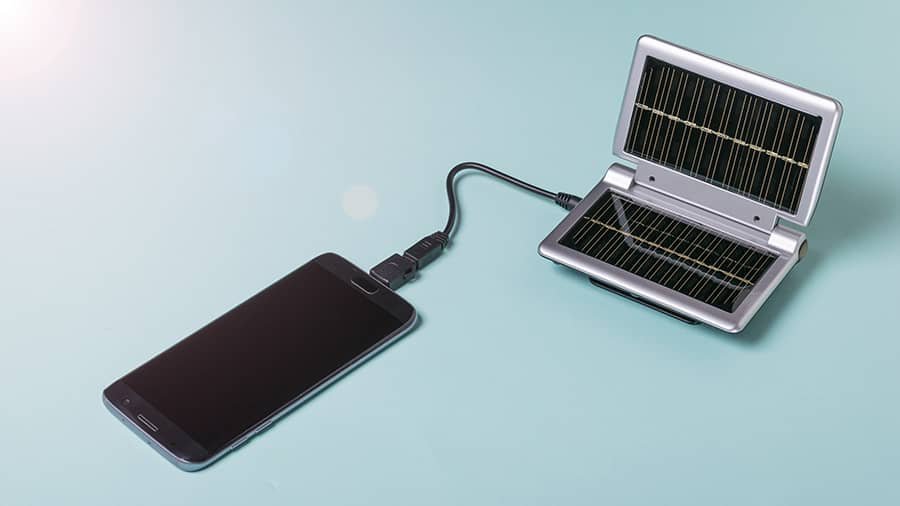
A portable solar charger can be useful for camping, hiking, road trips, and travel in places where electrical outlets are limited. It uses sunlight to recharge compatible devices or a separate power bank, making it a practical backup for phones, GPS units, lights, and other small electronics.
Compact solar chargers are usually slower than wall outlets, and performance can vary significantly depending on sunlight, panel size, weather, angle, and temperature. For most travelers, they work best as a backup power source rather than the main way to charge devices.
Before buying a portable solar charger, check:
- Panel efficiency: Larger, higher-quality panels generally collect more energy.
- Weather resistance: Look for construction that can handle outdoor use and light exposure to moisture.
- Packability: Foldable designs are easier to attach to a backpack or store in luggage.
- Charging ports: Make sure the available USB or USB-C ports work with your devices.
- Output specifications: Check the stated wattage and charging speeds rather than relying on vague marketing claims.
- Attachment points: Reinforced loops or clips can make the charger easier to position while hiking or camping.
- Safety features: Overcharge, overheating, and short-circuit protection are worth having.
- Warranty: A reliable warranty can be a good sign of better construction and long-term support.
Some solar chargers include a built-in battery, while others are designed to charge a separate power bank. Using a solar panel with a dedicated power bank can be more dependable because changing sunlight can cause direct phone charging to start and stop.
Test the charger before your trip so you know how it performs under real outdoor conditions. A well-made solar charger can be valuable for remote travel, but it may be unnecessary for city breaks or hotel stays where reliable electricity is easy to find.
17. Durable Power Bank
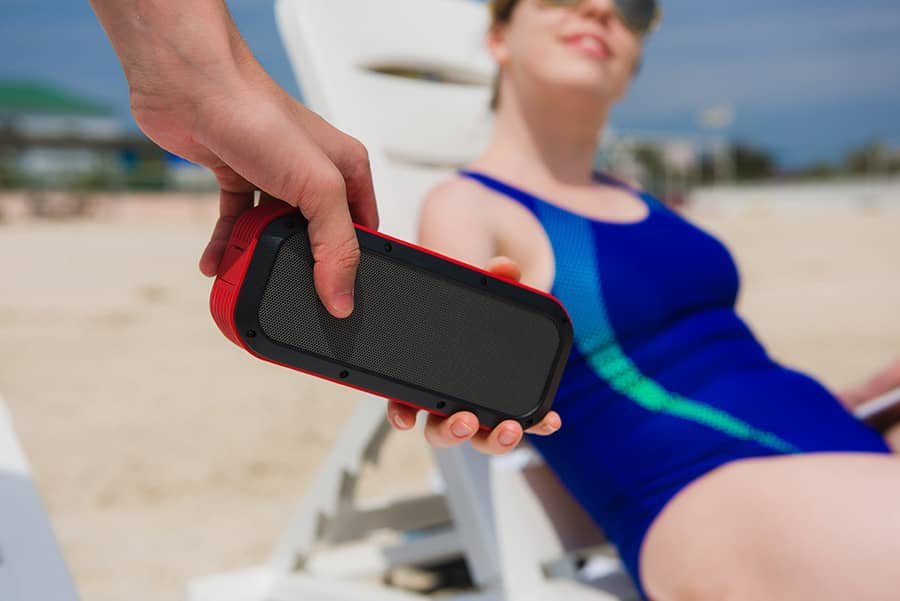
A durable power bank is one of the most practical travel accessories for keeping phones, cameras, headphones, and other small devices charged when you are away from an outlet. While a power bank is not inherently sustainable, choosing a reliable model that lasts for years can help avoid repeatedly replacing low-quality chargers.
Power-bank capacity is measured in milliamp-hours, or mAh. A smaller model may be enough for one emergency phone charge, while a larger unit can recharge several devices but will usually be heavier and take longer to refill.
Before buying a travel power bank, check:
- Capacity: Choose enough power for your typical needs without carrying unnecessary weight.
- Charging speed: USB-C and power delivery can recharge compatible devices much faster.
- Build quality: Durable casing and sturdy ports can help the unit last through frequent travel.
- Safety features: Look for protection against overheating, overcharging, and short circuits.
- Warranty: A clear warranty can be a useful sign of better long-term support.
- Cable compatibility: Replaceable cables are easier to maintain than permanently attached ones.
- Airline compatibility: Check that the battery capacity meets current airline rules.
- Manufacturer transparency: Choose a reputable brand that clearly states capacity, output, and safety specifications.
Power banks use lithium-ion batteries and should be handled with care. Avoid leaving them in extreme heat, using damaged charging cables, or continuing to use a unit that becomes swollen, cracked, or unusually hot.
Most airlines require power banks and spare lithium batteries to be carried in hand luggage rather than checked baggage, but capacity limits can vary. Always check the current rules for your airline before flying.
To help extend battery life, store the power bank in a cool, dry place and avoid leaving it completely discharged for long periods. A dependable model that works for many trips is usually a better investment than a bargain charger that needs frequent replacement.
18. Eco-Friendly Toiletry Bag
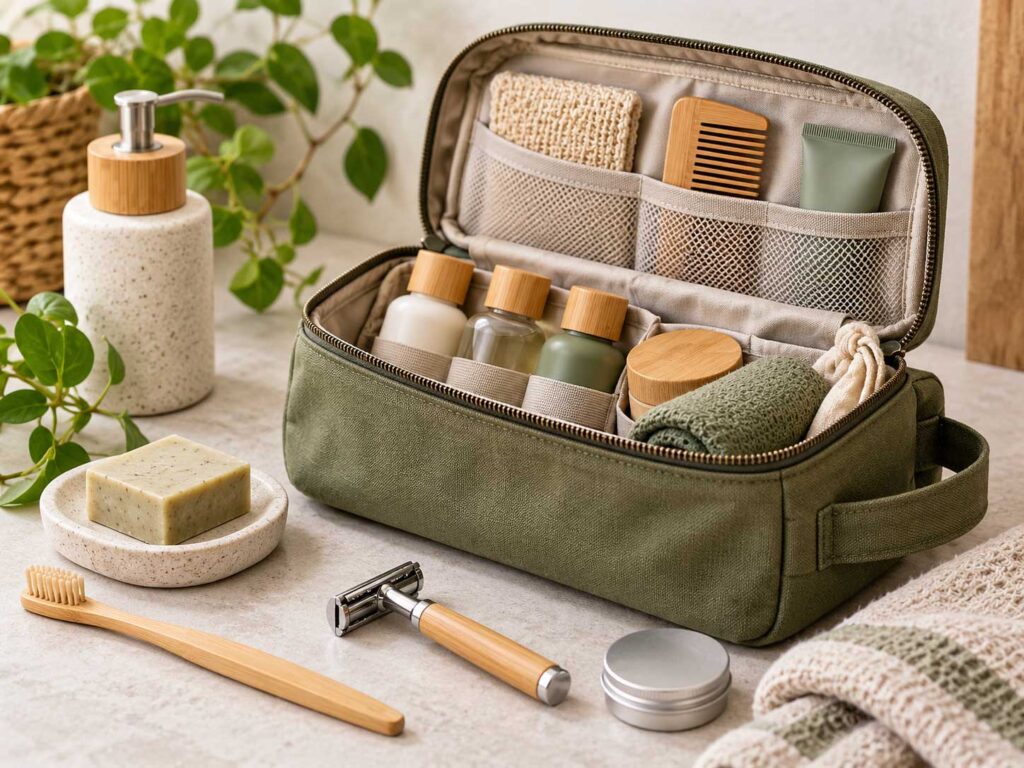
An eco-friendly toiletry bag can keep personal-care items organized while giving refillable bottles, solid toiletries, and other travel essentials a dedicated place in your luggage.
When buying a new one, look for durable materials such as recycled polyester, recycled nylon, organic cotton, or cork. A water-resistant lining can also be helpful for containing small leaks and making the interior easier to clean.
Prioritize strong zippers, reinforced seams, an easy-to-clean lining, and enough compartments to keep liquids separate without making the bag bulky. A hanging hook can be especially useful in small bathrooms, while a compact size can help keep toiletries from expanding into unnecessary extras.
Before buying a new one, check whether you already have a makeup pouch, zippered case, or small organizer that can do the same job. Reusing an existing bag is often more sustainable than replacing it simply because a new product is marketed as eco-friendly.
19. Reusable Straw
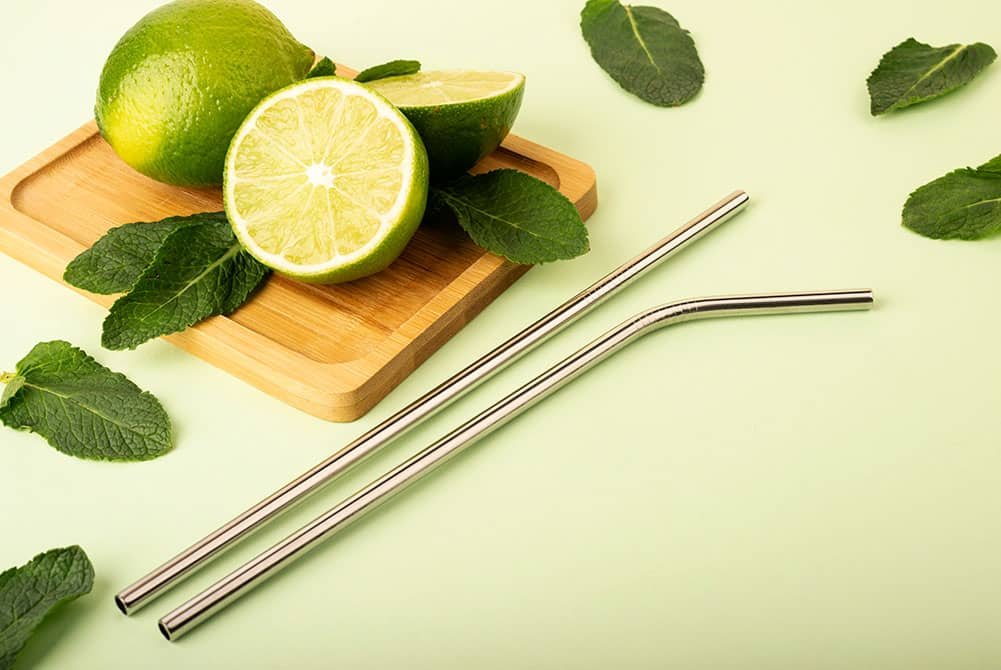
A reusable straw can help reduce single-use plastic waste, especially if you regularly order iced coffee, smoothies, juices, or other cold drinks while traveling. It can also be useful for people who prefer or need a straw for comfort or accessibility.
Reusable straws are commonly made from stainless steel, silicone, glass, bamboo, or durable plastic. Each material has tradeoffs. Stainless steel is long-lasting, silicone is flexible, glass is easy to inspect for cleanliness, and bamboo is lightweight but may wear out more quickly.
Choose a straw that fits the drinks you normally order and is easy to clean while traveling. Stainless steel is durable, silicone is flexible, and glass makes it easy to see whether the inside is clean. A small travel case and cleaning brush are useful if you plan to carry the straw regularly.
Clean the straw after each use, especially after smoothies, milk-based drinks, or sweet beverages. A narrow brush can remove residue that rinsing alone may leave behind.
A reusable straw makes the most sense when you actually use straws often. If you rarely need one, simply declining a disposable straw may be the more practical choice than buying another travel accessory.
20. Long-Lasting Travel Backpack or Luggage
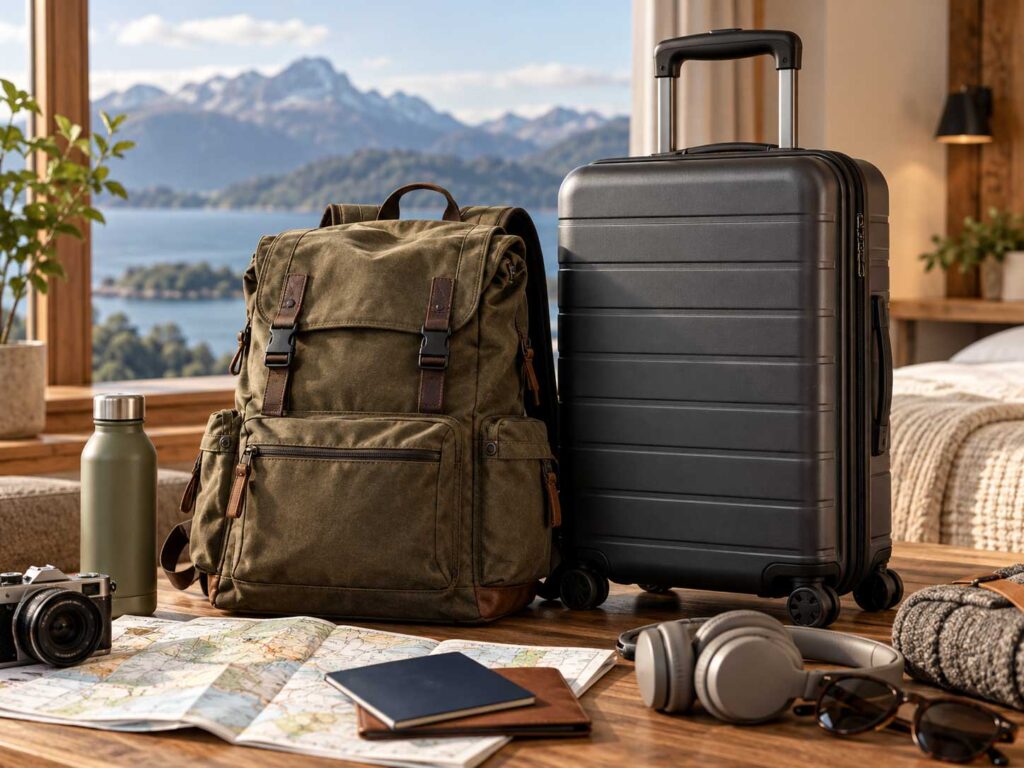
A backpack or suitcase can stay in your travel rotation for many years, which makes longevity especially important. Choosing luggage with strong construction, repairable parts, and a practical design can reduce the need to replace broken bags after only a few trips.
Sustainable luggage may use recycled fabrics, responsibly sourced materials, replaceable components, or lower-waste manufacturing methods. Still, durability, repairability, and practical design usually matter more than environmental marketing alone.
Before choosing a travel backpack or suitcase, check:
- Build quality: Look for strong zippers, wheels, handles, seams, and stitching.
- Materials: Recycled or certified fabrics can be a useful bonus when the product is also durable.
- Repairability: Replaceable wheels, straps, handles, and zipper pulls can extend the life of the bag.
- Warranty: A dependable repair service or long warranty can make a big difference over time.
- Size: Choose luggage that fits the way you normally travel without encouraging overpacking.
- Weight: Lightweight construction is useful, but not if it comes at the expense of strength.
- Comfort: For backpacks, padded straps and good back support are especially important.
- Weather resistance: Water-resistant materials can help protect clothing and electronics.
- Simple design: Avoid unnecessary compartments and features that add weight without adding much value.
Hard-shell luggage can offer better protection for fragile items, while soft-sided bags may be easier to squeeze into tight spaces and may be simpler to repair. Backpacks are often more practical for public transportation, stairs, cobblestone streets, and destinations where rolling luggage is inconvenient.
Avoid buying luggage based only on appearance or short-term trends. A versatile, well-built bag that works for different types of trips will usually provide more value over time.
Before replacing an older bag, check whether worn wheels, broken zipper pulls, straps, or handles can be repaired. Extending the life of luggage you already own is often the most sustainable choice of all.
How to Choose Sustainable Travel Products
Not every product marketed as sustainable will actually reduce your environmental impact. Before buying something new, ask whether you genuinely need it, how often you will use it, and whether it can replace a disposable or short-lived alternative.
Start with what you already own. A reusable bottle, tote bag, food container, toiletry pouch, or backpack does not need an eco-friendly label to be a sustainable choice. Continuing to use a reliable product is often better than replacing it simply because a newer version uses recycled materials.
When comparing sustainable travel products, focus on these factors:
- Durability: Look for strong seams, sturdy zippers, reliable closures, and construction that can handle frequent travel.
- Practicality: Lightweight, compact, leak-resistant, and easy-to-clean products are more likely to become part of your regular routine.
- Materials: Recycled, certified, renewable, or responsibly sourced materials can be a plus, but they should not come at the expense of quality.
- Repairability: Replaceable lids, straps, wheels, filters, seals, and other parts can keep a product in use much longer.
- Packaging: Minimal, recyclable, refillable, or plastic-free packaging can help reduce unnecessary waste.
- Brand transparency: Look for companies that clearly explain their materials, manufacturing practices, certifications, and environmental claims.
- End-of-life options: Consider whether the product can eventually be repaired, recycled, donated, composted, or returned through a take-back program.
Be cautious of products that rely heavily on words such as “green,” “natural,” or “planet-friendly” without explaining what those claims actually mean.
The best sustainable travel gear is not necessarily the most expensive or technologically advanced. It is the gear that solves a real problem, performs reliably, replaces wasteful alternatives, and stays useful for many trips.
Sustainable Materials to Look For
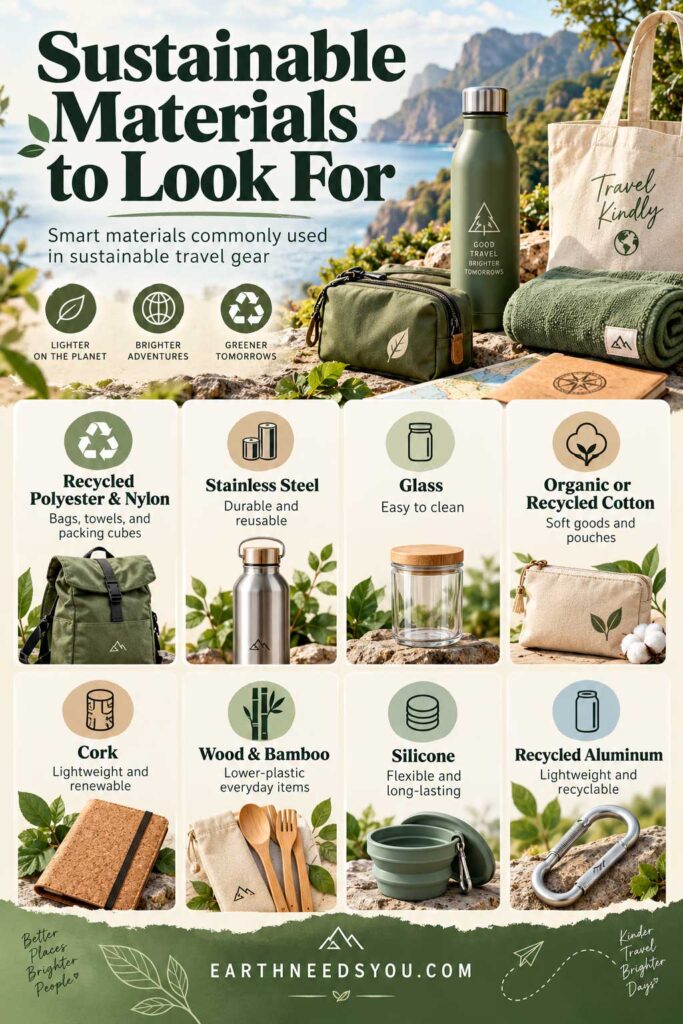
Materials can affect a travel product’s durability, weight, repairability, and environmental impact. However, no material is perfectly sustainable, so it is better to consider the full product rather than judge it by one label alone.
Here are some materials commonly found in sustainable travel gear:
| Material | Common Uses | What to Know |
|---|---|---|
| Recycled polyester and nylon | Backpacks, packing cubes, toiletry bags, travel towels | Can reduce demand for virgin synthetic fibers, but may still release microfibers during washing |
| Stainless steel | Bottles, cups, cutlery, straws, food containers | Durable, easy to clean, and widely recyclable in many places |
| Glass | Bottles, jars, food containers | Reusable and easy to clean, but heavier and more fragile for travel |
| Organic or recycled cotton | Tote bags, towels, pouches, makeup pads | Can reduce reliance on conventional cotton, but durability and washing still matter |
| Cork | Wallets, toiletry bags, luggage tags, accessories | Lightweight and renewable, but quality depends heavily on construction |
| Wood and bamboo | Toothbrushes, utensils, brushes, containers | Can reduce plastic use, but mixed materials and coatings may complicate disposal |
| Silicone | Food bags, toiletry bottles, straws, collapsible cups | Durable and flexible, but not biodegradable and not widely recycled |
| Recycled aluminum | Bottles, containers, luggage parts | Lightweight, durable, and generally less resource-intensive than producing new aluminum |
When comparing materials, look beyond words such as “natural,” “recycled,” or “eco-friendly.” A recycled product that breaks quickly may be less sustainable than a conventional product that lasts for many years.
Durability, repairability, responsible sourcing, packaging, and how often you actually use the item all matter. In many cases, the most sustainable choice is simply a well-made product that stays in your travel kit for a long time.
Products That Sound Sustainable but May Not Be
Terms such as “green,” “natural,” “biodegradable,” and “planet-friendly” can sound convincing, but they do not always tell you much about a product’s real environmental impact. The FTC’s Green Guides also caution against broad environmental claims that are not clearly qualified.
Here are a few claims and product types worth examining more closely:
| Claim or Product Type | Why to Look Closer |
|---|---|
| “Biodegradable” products | Some only break down under specific industrial conditions, not in landfills or natural environments |
| Bamboo products | Many still contain nylon bristles, plastic, resin, adhesives, or synthetic coatings |
| Cheap reusable items | A reusable product that breaks quickly may create more waste than expected |
| Small solar gadgets | Some charge slowly, use low-quality batteries, or are rarely useful outside remote travel |
| “Eco” packaging | Green branding can still hide excessive plastic wrapping or unnecessary packaging |
| Natural single-use items | Wooden forks and paper straws are still disposable and require resources to produce |
| Carbon-neutral claims | These may rely heavily on offsets rather than reductions in manufacturing emissions |
| “Recycled” products | The recycled content may be small unless the percentage is clearly stated |
| Trend-driven eco products | Buying unnecessary “green” products can still increase consumption and waste |
When a product makes an environmental claim, look for specifics. Useful details include the percentage of recycled content, certifications, manufacturing information, repair options, packaging materials, and clear disposal instructions.
The best defense against greenwashing is simple: buy less, use what you already own, and choose durable products that solve a real problem rather than products that merely look sustainable.
How to Pack a Low-Waste Travel Kit
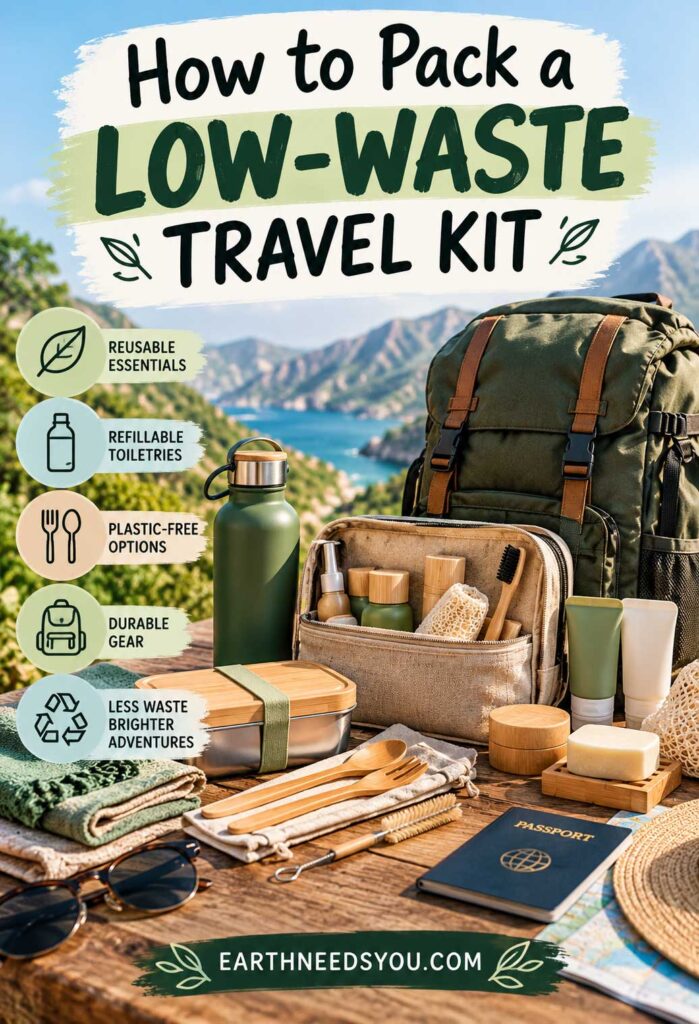
A low-waste travel kit should be practical, compact, and built around the items you will actually use. The goal is not to carry every reusable product available, but to replace the disposable items you regularly rely on while traveling.
A simple kit might include:
- Reusable water bottle
- Foldable shopping bag
- Refillable toiletry containers
- Reusable coffee cup
- Cutlery or a small reusable utensil
- Reusable snack bag or food container
- Solid toiletries
- Reusable period products, when needed
Adjust the kit to the type of trip you are taking. A short city break may only require a bottle, shopping bag, and compact toiletry setup, while a camping or hiking trip may also justify a water-filter bottle, quick-drying towel, food containers, or portable solar charger.
Choose multi-purpose items whenever possible. A foldable tote can carry groceries, laundry, or beach gear, while a reusable food container can hold snacks, leftovers, or small accessories.
Before leaving, refill toiletries from larger containers at home, recharge your power bank, wash reusable bottles and cups, and replace any worn filters or seals. Keeping frequently used items near the top of your day bag also makes them much more likely to get used.
It also helps to separate clean and used items. A washable pouch can keep damp towels, makeup-removal pads, reusable cutlery, or food bags away from the rest of your luggage until they can be cleaned.
Most importantly, avoid packing reusable products “just in case.” Sustainable packing still means packing lightly. A small collection of dependable items that fits your routine is usually more useful than a fully stocked zero-waste kit that adds weight and clutter.
Frequently Asked Questions About Sustainable Travel Products
What are the most useful sustainable travel products?
The most useful sustainable travel products are the ones that replace disposable items you already use. For many travelers, that includes a reusable water bottle, foldable shopping bag, refillable toiletry containers, reusable coffee cup, solid toiletries, and washable food-storage bags.
The best choices depend on your habits and destination. A reusable coffee cup may be unnecessary if you rarely buy takeaway drinks, while a water-filter bottle may not be needed where safe tap water is widely available.
Are eco-friendly travel products always better for the environment?
Not always. A product may use recycled or renewable materials but still be poorly made, difficult to repair, or packaged excessively.
Durability, manufacturing, transportation, packaging, frequency of use, and end-of-life disposal all matter. In many cases, continuing to use something you already own is more sustainable than replacing it with a new product labeled eco-friendly.
Are sustainable travel products more expensive?
Some sustainable travel products cost more upfront because they use stronger materials or are designed for repeated use. However, reusable bottles, toiletry containers, food bags, and period products may reduce recurring purchases over time.
Price alone does not guarantee quality. Compare durability, warranty coverage, repair options, replacement parts, and expected lifespan before buying.
Which sustainable travel products are allowed on airplanes?
Most reusable bottles, cups, packing cubes, travel towels, refillable toiletry containers, and reusable bags can be packed for air travel.
Reusable bottles can generally be taken through airport security when empty and refilled afterward, while liquids must follow the current carry-on rules for your departure country or airport. Power banks and spare lithium batteries are typically carried in hand luggage rather than checked baggage. Sharp utensils and certain tools may also be restricted, so always check current airline and airport-security rules before departure.
Are bamboo travel products biodegradable?
Sometimes, but not always. Many bamboo products also contain nylon, plastic, resin, adhesives, or protective coatings.
For example, a bamboo toothbrush may have a compostable handle but nylon bristles that need to be removed first. Always check the manufacturer’s material and disposal instructions rather than assuming the entire product will biodegrade.
Are solid toiletries better for travel?
Solid shampoo, conditioner, soap, and cleansing bars can be useful because they take up less space, reduce the risk of leaks, and often use less packaging than bottled products.
Their sustainability still depends on ingredients, packaging, durability, and whether you use the entire bar. A ventilated container can help solid toiletries dry properly between uses.
How many reusable products should I pack?
Pack only what fits your normal routine and the type of trip you are taking. For many travelers, a small kit with a reusable bottle, tote bag, refillable toiletry containers, and one or two food or drink accessories is enough.
Carrying too many reusable products can add unnecessary weight and make your travel kit harder to manage.
How can I avoid greenwashing when shopping?
Look beyond terms such as “green,” “natural,” “conscious,” and “planet-friendly.” Stronger environmental claims usually include specific information about materials, recycled content, certifications, manufacturing practices, packaging, repairability, and product lifespan.
Be cautious when claims are vague, unsupported, or impossible to verify.
What is the most sustainable travel product?
There is no single best option for everyone. In many cases, the most sustainable travel product is one you already own, use regularly, and can keep in good condition for years.
A product becomes more sustainable when it solves a real need, replaces disposable alternatives, and remains useful across many trips.
Build a More Sustainable Travel Kit, One Item at a Time
Sustainable travel products can make it easier to reduce waste, avoid unnecessary single-use items, and travel more thoughtfully. However, the goal should not be to replace everything you own with products marketed as eco-friendly.
Start with what you already have. A durable water bottle, old tote bag, reliable backpack, refillable container, or food box can remain useful for years, even if it was not originally sold as a sustainable product.
When you genuinely need something new, prioritize quality, practicality, repairability, and long-term use. Look beyond vague environmental claims and choose products that clearly explain their materials, manufacturing practices, packaging, and expected lifespan.
You also do not need all 20 products in this guide. The best sustainable travel kit is one built around your real habits and destination. A reusable bottle may be essential for almost every trip, while a solar charger or water-filter bottle may only be useful for remote adventures.
Small choices become more meaningful when they are repeated. Refilling a bottle, declining unnecessary plastic, carrying a reusable bag, and using the same dependable travel gear for many years can all contribute to a lower-waste way of exploring the world.
Travel may never be completely impact-free, but thoughtful preparation can help you reduce unnecessary consumption while still enjoying comfortable, memorable, and rewarding journeys.
Continue Your Sustainable Journey
Looking for more ways to reduce waste and travel with a lighter environmental footprint? These guides can help you make more thoughtful choices both on the road and at home:
- How to Be More Sustainable When Traveling: 25 Practical Tips — simple ways to reduce waste, choose better transportation, support local communities, and travel more responsibly.
- 10 Easy Ways to Reduce Plastic Waste in Everyday Life — practical ideas for cutting down on single-use plastics before, during, and after your trip.
- Why Recycling Is Important for the Environment — learn how recycling helps conserve resources, reduce waste, and support a more circular economy.



0 Comments