


Welcoming a new baby is exciting, but finding a gift that is both useful and meaningful isn’t always easy. Babies grow quickly, and many traditional gifts are used for only a short time or come with unnecessary plastic, synthetic materials, and excessive packaging. That’s why sustainable baby gift ideas can be such a thoughtful choice.
From cozy organic cotton blankets and beautifully made wooden toys to reusable feeding essentials and practical everyday items, eco-friendly baby gifts can be just as adorable as conventional options—without creating as much waste. Many are designed to last longer, use responsibly sourced materials, and provide clearer information about the materials used in products that come into contact with a baby’s skin, food, or mouth.
The best part is that choosing a sustainable gift doesn’t mean sacrificing usefulness. In fact, some of the most appreciated gifts are the ones parents can use again and again, pass down to another child, or continue using well beyond the newborn stage.
Below, you’ll find 15 sustainable baby gift ideas for baby showers, newborn celebrations, first birthdays, holidays, and other special occasions. We’ve included options at different price points, from simple everyday essentials to larger gifts, so you can find something that’s good for the baby, genuinely helpful for the parents, and a little kinder to the planet.
What Is a Sustainable Gift?
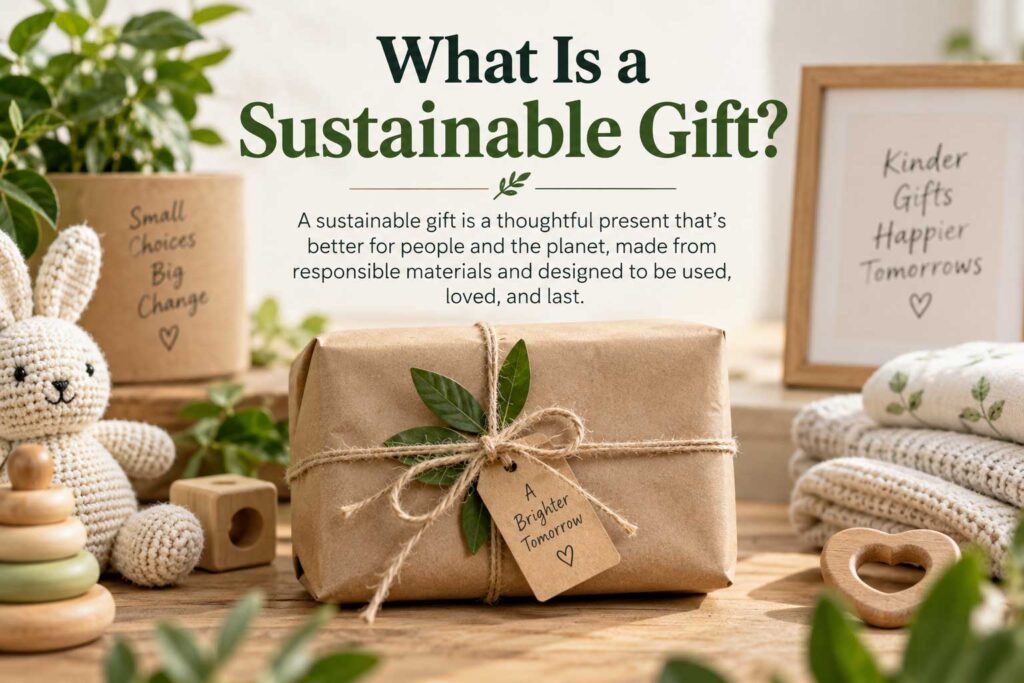
A sustainable gift is chosen with both the recipient and its environmental impact in mind. Rather than buying something that may be used once and forgotten, the goal is to choose a useful, durable product made with more responsibly sourced materials and designed to last.
Sustainable gifts may be made from organic, recycled, renewable, or responsibly sourced materials. They may also use less plastic, minimal packaging, reusable components, or manufacturing practices intended to reduce waste and environmental impact.
When shopping for a baby, this approach makes especially good sense. Babies need plenty of everyday essentials, so a practical gift such as an organic cotton blanket, durable wooden toy, reusable feeding set, or washable accessory can be enjoyed again and again—and, in some cases, passed along to another child.
A sustainable gift doesn’t have to be expensive or perfect. Even a small, thoughtfully chosen item can be a better choice when it’s useful, well made, and likely to have a long life.
With that in mind, we’ve put together some of our favorite sustainable baby gift ideas for new parents, baby showers, newborn celebrations, and growing little ones.
Why Choose Sustainable Baby Gifts?
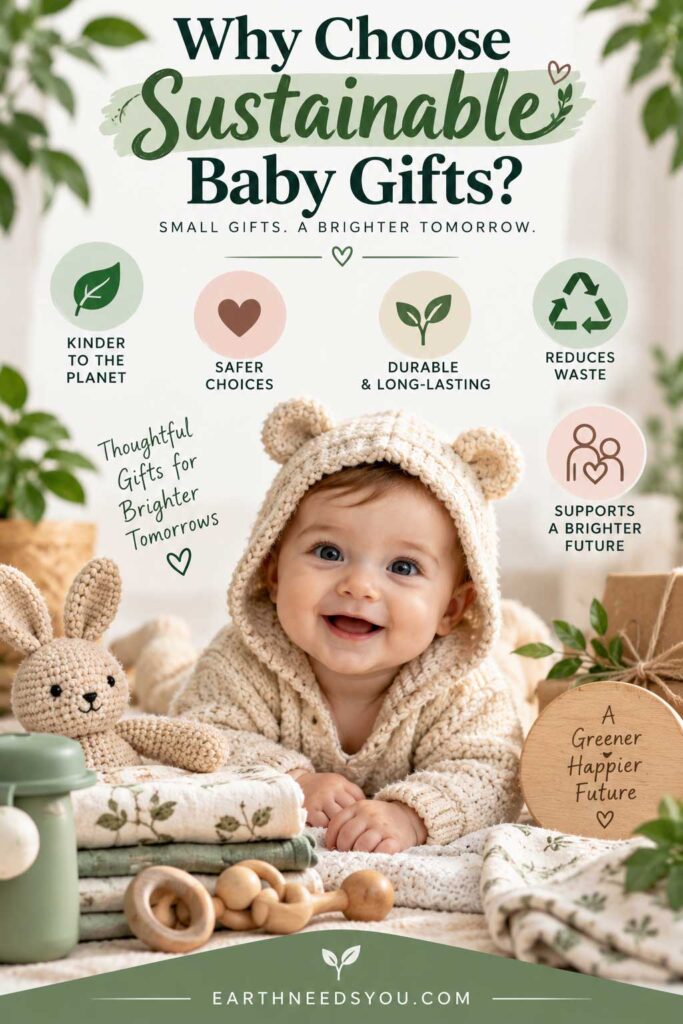
Choosing a sustainable baby gift isn’t only about finding something cute for a new arrival. It’s also an opportunity to give parents something practical, well made, and designed to be used for more than a few weeks or months.
Many eco-friendly baby gifts are made from materials such as organic cotton, responsibly sourced wood, natural rubber, stainless steel, or food-grade silicone. Depending on the product, these materials can reduce reliance on disposable plastics and make it easier to choose items designed with durability and responsible sourcing in mind.
Better Materials for Everyday Baby Essentials
Babies spend a lot of time touching, wearing, and sometimes chewing the products around them, so it’s understandable that parents pay close attention to what those products are made from.
When shopping, look beyond words like “green” and “natural” on the packaging. Certifications and specific material information are much more useful. GOTS-certified organic cotton, FSC-certified wood, and products tested to applicable safety standards give you more information about how an item was produced and what it contains.
Gifts That Can Be Used Again and Again
One of the simplest ways to make a baby gift more sustainable is to choose something that will actually get used.
A durable wooden toy may eventually be passed to a younger sibling. A good organic cotton blanket can survive countless washes. Reusable feeding products can replace disposable alternatives for years. Even choosing clothing in a slightly larger size can sometimes give parents more time to use your gift.
This focus on longevity matters because sustainability isn’t just about what a product is made from. How long it lasts and whether it can be reused are important too.
Less Waste and Unnecessary Packaging
Baby products can come with a surprising amount of packaging. Choosing products sold in recyclable cardboard, reusable containers, or minimal packaging is an easy way to cut down on unnecessary waste.
Reusable gifts can go even further. Cloth wipes, washable bibs, reusable food containers, and similar everyday essentials can replace products that would otherwise be thrown away after a single use.
If you’re trying to cut disposable products throughout the household, see our guide to how to reduce plastic waste at home.
Support for More Responsible Companies
Your gift can also support businesses working toward better environmental and social practices. Some sustainable baby brands use certified materials, responsibly managed forests, recycled inputs, renewable energy, lower-waste packaging, or manufacturing standards intended to improve working conditions.
No company or product is perfectly sustainable, so it’s worth looking for specific evidence rather than relying on vague environmental claims.
Ultimately, the best sustainable baby gifts combine three things: they’re useful for the parents, appropriate for the baby, and made to last. That’s a much better starting point than buying something simply because it has an “eco-friendly” label on the box.
What Makes a Baby Gift Eco-Friendly?
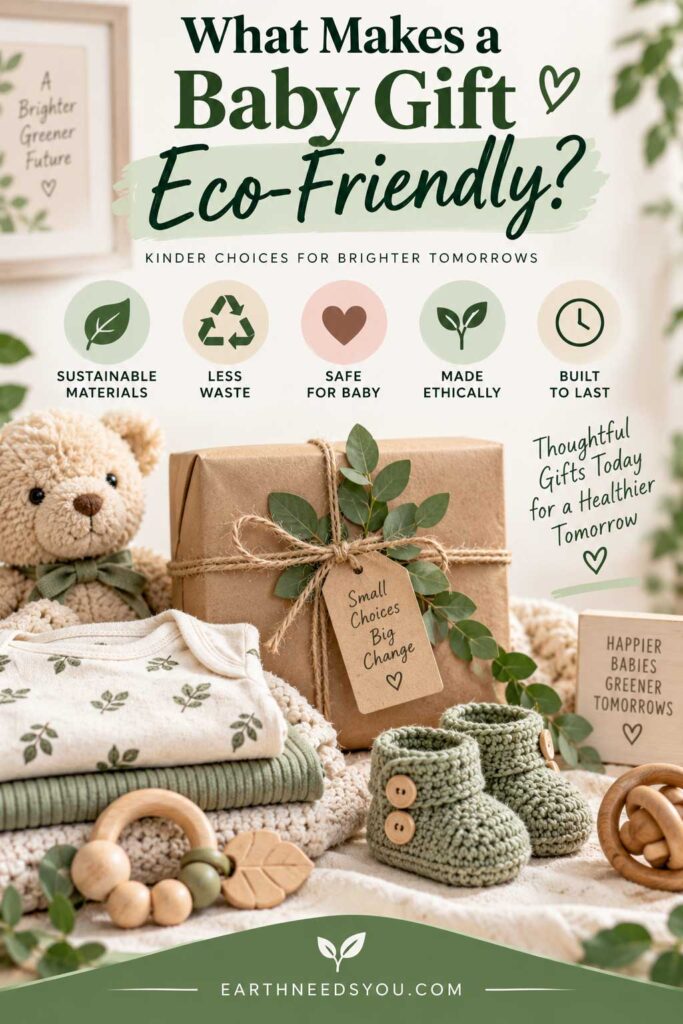
Not every baby product marketed as “green,” “natural,” or “eco-friendly” is necessarily a sustainable choice. Those terms can be vague, so it’s worth looking at the materials, durability, packaging, certifications, and how the product is likely to be used.
Here are some of the most important things to consider when comparing sustainable baby gift ideas.
Made From More Sustainable Materials
Start by checking what the product is actually made from. Depending on the type of gift, good options may include:
- Organic cotton
- FSC-certified wood
- Natural rubber
- Recycled fabrics
- Responsibly sourced natural fibers
- Durable food-grade silicone
- Stainless steel
- Glass
No material is environmentally perfect. A reusable stainless steel container, for example, requires resources and energy to manufacture, but its durability means it can potentially replace many disposable containers over its lifetime.
The same principle applies to silicone: it isn’t biodegradable, but a well-made silicone bib, cup, or feeding set that is used for years may be a more practical choice than repeatedly replacing disposable or short-lived alternatives.
Check What’s Actually in the Product
Because babies may chew toys, suck on pacifiers, eat from feeding products, and spend hours wearing or sleeping against fabrics, material and product safety deserve extra attention.
Rather than relying solely on claims such as “non-toxic,” look for clear material disclosures and information showing that the product meets applicable safety requirements for its intended use.
Recognized certifications can also provide useful information. GOTS certification can help when shopping for organic textiles, while FSC certification identifies wood or forest-based materials sourced according to the organization’s forestry standards.
Built to Last
One of the easiest ways to make a gift more sustainable is to choose something that won’t need replacing after a few uses.
A sturdy wooden toy can entertain several children over its lifetime. A quality blanket may survive years of washing. Adjustable baby carriers, reusable feeding products, and durable food containers can remain useful as a child grows.
Products that can be repaired, reused, donated, or passed down often make better gifts than trendy items with a very short useful life.
Minimal Packaging
Pay attention to the packaging too. A small baby product doesn’t need to arrive surrounded by layers of plastic.
Look for brands using appropriately sized boxes, recycled or recyclable cardboard, reusable packaging, or minimal plastic. If you’re wrapping the gift yourself, you can reduce waste further with a reusable gift bag, fabric wrap, basket, or recycled paper.
Choosing reusable wrapping and avoiding unnecessary packaging also fits into a broader zero waste lifestyle.
Responsibly and Transparently Produced
Sustainability also includes how products are made.
Some brands provide detailed information about where their materials come from, where products are manufactured, and which environmental or labor standards they follow. Certifications such as GOTS, Fairtrade, FSC, and others can provide additional information, depending on the product.
Be cautious when a company makes broad claims about being “planet-friendly” or “100% sustainable” without explaining what those claims actually mean.
Practical Enough to Be Used
Perhaps the most overlooked question is also the simplest:
Will the parents actually use it?
A beautifully marketed eco product isn’t particularly sustainable if it spends two years in a closet before being thrown away.
Practical gifts such as washable bibs, organic cotton clothing, reusable wipes, feeding essentials, blankets, and durable toys are often good choices because they can become part of a family’s everyday routine.
When choosing an eco-friendly baby gift, think about the entire product rather than a single green claim: what it’s made from, how it was produced, how long it should last, how much packaging it uses, and what can happen to it when the family no longer needs it.
The most sustainable gift is often not the one with the greenest-looking label. It’s the well-made, thoughtfully chosen product that gets used again and again.
Sustainable Baby Gift Ideas at a Glance
Short on time? Here’s a quick look at our 15 sustainable baby gift ideas and what each one is best suited for. When shopping, remember that durability, useful life, materials, and whether the parents will actually use the product matter more than an “eco-friendly” label.
| Sustainable Baby Gift | Best For | Why It’s a Good Gift | Our Pick |
|---|---|---|---|
| Organic Cotton Baby Blanket | Newborns & baby showers | Soft, washable, and useful for years | See Our Pick |
| Wooden Montessori Toy | Developmental play | Durable, screen-free, hands-on play | See Our Pick |
| Reusable Silicone Feeding Set | Starting solid foods | Reusable for hundreds of meals | See Our Pick |
| Cloth Diaper Starter Kit | Parents interested in cloth diapering | Reduces reliance on disposable diapers | See Our Pick |
| Natural Rubber Teether | Small baby gift | Renewable material and practical for teething | See Our Pick |
| Organic Baby Clothing | Everyday essentials | Practical, washable, and easy to pass down | See Our Pick |
| Reusable Baby Wipes | Budget-friendly gift | Washable and useful beyond the diaper stage | See Our Pick |
| Stainless Steel Food Containers | Long-term use | Durable and useful into the school years | See Our Pick |
| Sustainable Baby Carrier | Larger baby gift | Adjustable designs can last through several stages | See Our Pick |
| Eco-Friendly Bath Gift Set | Baby showers | Combines reusable bath-time essentials | See Our Pick |
| Sustainable Diaper Bag | Larger practical gift | Can be repurposed after the diaper years | See Our Pick |
| Glass Baby Bottles | Reusable feeding | Durable and don’t readily retain odors | See Our Pick |
| Washable Changing Mat | Travel & diaper bags | Reusable alternative to disposable changing liners | See Our Pick |
| Handmade Baby Booties | Small & personal gift | Handmade options can use responsibly sourced fibers | See Our Pick |
| Sustainable Baby Gift Basket | Personalized gift | Easy to customize with useful reusable essentials | See Our Pick |
Our recommendations prioritize usefulness, durability, reusable designs, material transparency, and credible certifications where relevant.
1. Organic Cotton Baby Blanket
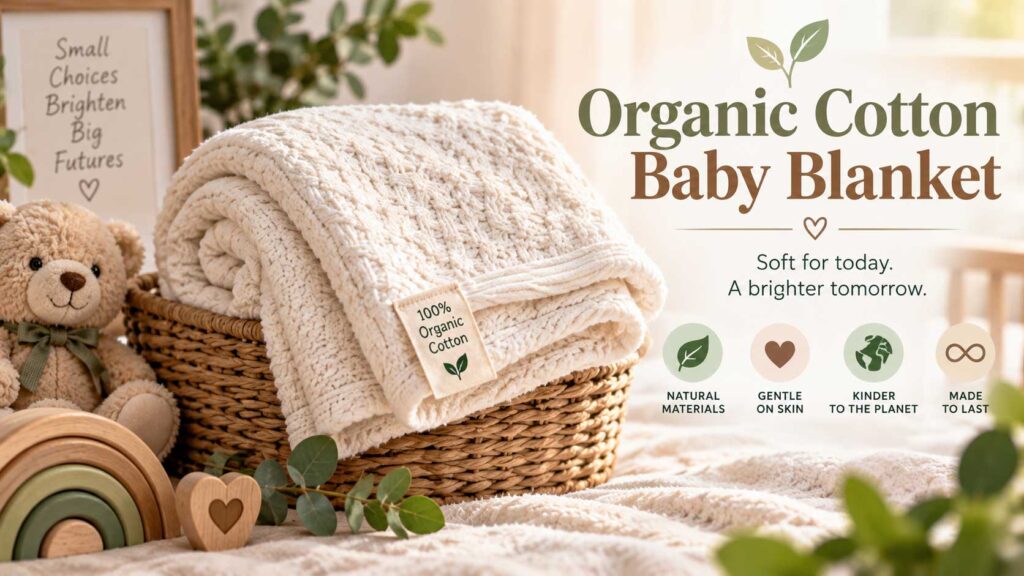
An organic cotton baby blanket is one of those gifts that’s both beautiful and genuinely useful. Parents can reach for it during stroller walks, tummy time, cuddling, nursing, or as an extra layer when they’re out with the baby, making it a practical choice rather than something that simply looks nice in the nursery.
Organic cotton is grown according to standards that restrict the use of many conventional synthetic pesticides and fertilizers. Choosing organic cotton doesn’t make a blanket impact-free, but it can support farming and textile practices designed to reduce some of the environmental concerns associated with conventional cotton production.
Cotton is also soft and breathable, two qualities that make it particularly appealing for baby products. Look for a blanket that feels comfortable against the skin but is sturdy enough to handle the repeated washing that inevitably comes with babies.
Look for GOTS-Certified Organic Cotton
If you’re paying extra for an organic blanket, check whether the product carries a recognized certification rather than relying only on the word “organic” in the product description.
The Global Organic Textile Standard (GOTS) covers more than the fiber itself. Certified products must meet requirements related to organic fibers, textile processing, restricted chemical inputs, environmental practices, and social criteria throughout certified stages of production.
That makes GOTS certification a useful feature to look for when comparing organic baby blankets.
Why Parents Love It
- Soft and comfortable for everyday use
- Useful for tummy time, cuddling, nursing, and stroller outings
- Available in organic and certified textile options
- Easy to wash and reuse
- Durable blankets can be passed down to another child
- Makes a practical baby shower or newborn gift
A neutral or timeless design can make the blanket even more versatile. Instead of choosing something the baby will quickly outgrow stylistically, consider simple patterns and colors that can work for another child later.
Buying Tip: Look for 100% GOTS-certified organic cotton, durable stitching, machine-washable construction, and minimal packaging. A slightly larger blanket may also remain useful longer as the baby grows.
Important Safety Note: A blanket should not be placed loose in an infant’s sleep space. The American Academy of Pediatrics recommends keeping blankets and other soft objects out of a baby’s sleep area and using appropriate sleep clothing instead.
2. Wooden Montessori Toys
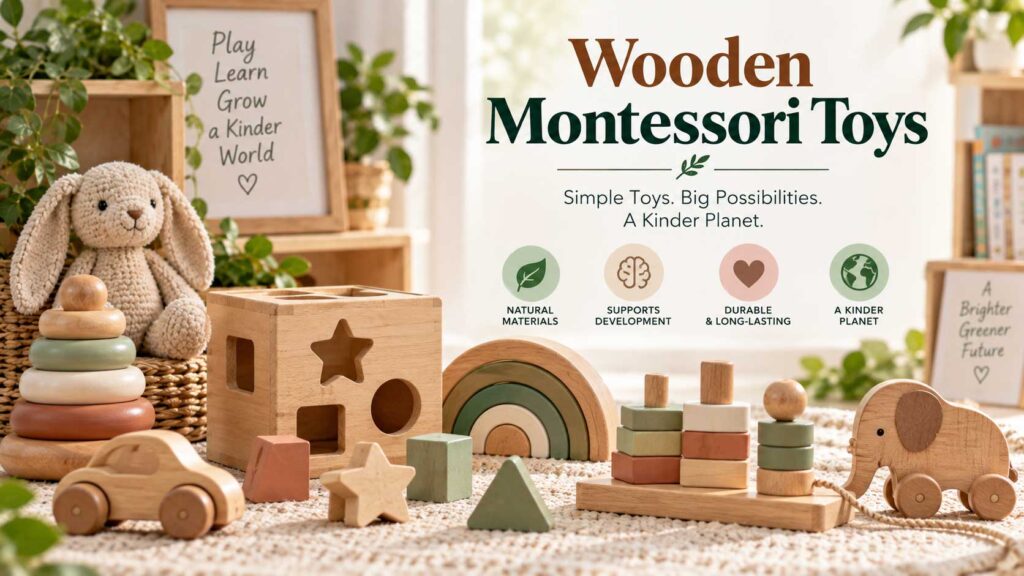
Wooden toys are a classic gift for babies and toddlers, and well-made versions can last through years of play. If you’re looking for eco-friendly baby gifts that don’t depend on batteries, screens, or lots of plastic components, a simple wooden toy is worth considering.
Montessori-inspired toys tend to keep things simple. Instead of flashing lights and electronic sounds, they encourage children to interact with the toy themselves—stacking, sorting, grasping, fitting pieces together, or figuring out how something moves.
Depending on the child’s age, good options include wooden stacking rings, grasping toys, shape sorters, blocks, activity toys, and simple puzzles. These types of toys can encourage hands-on exploration while children practice skills such as grasping, hand-eye coordination, sorting, and problem-solving.
Not Every Wooden Toy Is Sustainable
Wood may be a renewable material, but a wooden toy isn’t automatically an environmentally responsible choice.
Look for products made from responsibly sourced solid wood rather than assuming that anything labeled “natural” is sustainable. FSC-certified wood is one useful indicator because the Forest Stewardship Council sets standards for responsible forest management and chain-of-custody sourcing.
Durability matters too. A sturdy wooden toy that survives years of play and can eventually be handed down to a sibling, cousin, or another family may offer far more long-term value than a toy that’s quickly broken or discarded.
Why Parents Love Them
- Encourage simple, hands-on play
- Don’t require batteries or electronic components
- Available for different stages of development
- Durable designs can be used for years
- Quality toys can be passed down or donated
- Many options use responsibly sourced wood
Simple toys can also leave more of the play up to the child. A set of blocks, for example, doesn’t dictate one particular activity—it can become something different as a child’s skills and imagination develop.
Buying Tip: Look for an age-appropriate toy made from solid, responsibly sourced wood, such as FSC-certified wood, with finishes intended for children’s products. Check the manufacturer’s age recommendation and applicable toy-safety information, and avoid toys with small detachable parts when shopping for babies who may put objects in their mouths.
3. Reusable Silicone Feeding Set
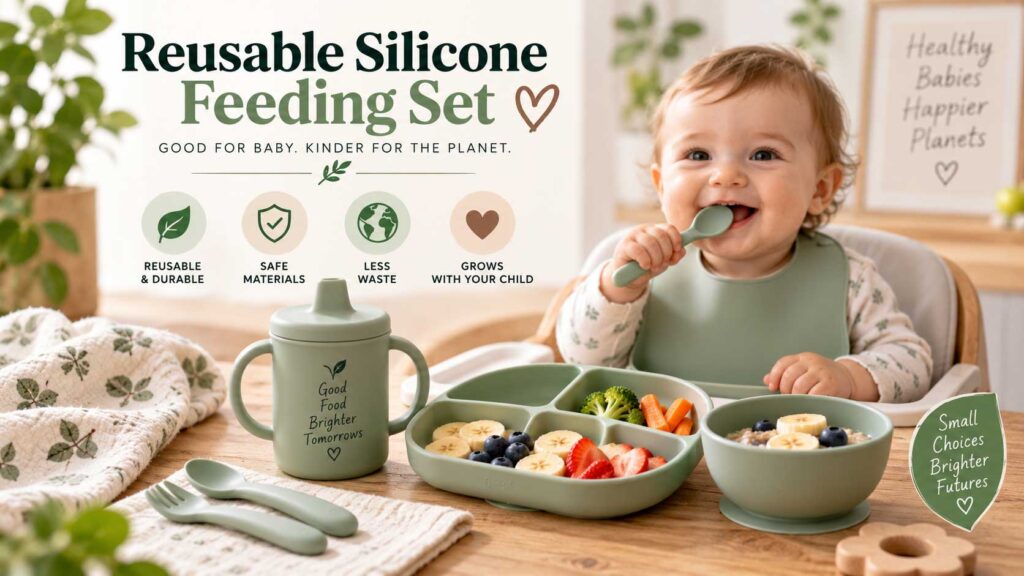
Once a baby starts exploring solid foods, a reusable feeding set can quickly become one of the most-used items in the kitchen. That’s what makes it such a practical sustainable baby gift idea—parents can use it meal after meal instead of relying on disposable plates, bowls, bibs, or utensils.
Baby feeding sets commonly include a suction bowl or divided plate, silicone bib with a food-catching pocket, training spoon, cup, and sometimes a fork. Suction bases can be particularly useful during the wonderfully messy stage when babies are learning to feed themselves.
Silicone is flexible, lightweight, and resistant to breaking, which makes it convenient around little hands. Unlike glass or ceramic, it won’t shatter when a bowl inevitably ends up on the floor.
Is Silicone Really Eco-Friendly?
Silicone deserves a little context because it’s frequently marketed as an environmentally friendly alternative to plastic.
It isn’t biodegradable, and producing it still requires energy and resources. Its main sustainability advantage for baby products is reusability and durability. A well-made feeding set that is used hundreds of times—and perhaps later passed to another child—can reduce the need for disposable or frequently replaced feeding products.
That makes longevity especially important. Choose a set parents will realistically use for several years rather than buying one simply because it carries an “eco” label.
Why Parents Love It
- Reusable for hundreds of meals
- Lightweight and difficult to break
- Easy for little hands to use
- Suction bowls and plates can help contain mealtime messes
- Washable bibs replace disposable alternatives
- Quality sets can remain useful into the toddler years
Many silicone feeding products are dishwasher safe, and some are suitable for microwaves, freezers, or ovens. However, temperature limits and care instructions vary, so always check the manufacturer’s directions before using a product in this way.
Buying Tip: Look for feeding products specifically intended for food contact and sold by manufacturers that clearly identify their materials and testing standards. If a company references standards such as LFGB or FDA food-contact requirements, check exactly what has been tested or certified rather than relying on vague claims such as “100% non-toxic.” Also look for sturdy construction, a strong suction base, and individual components that are easy to wash and reuse.
4. Cloth Diaper Starter Kit
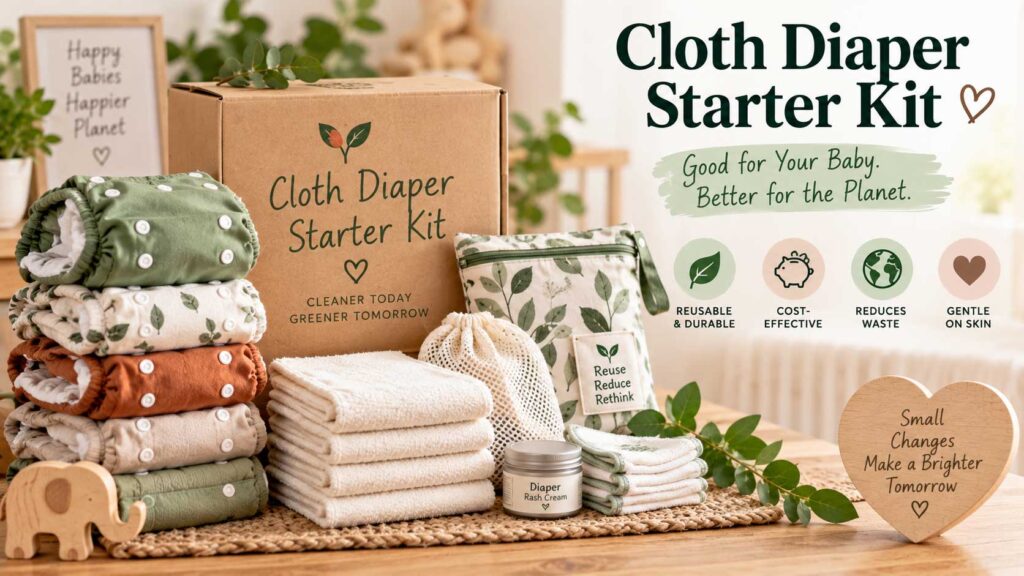
For parents who are interested in trying reusable diapers, a cloth diaper starter kit can be one of the most practical sustainable baby gift ideas on this list. Instead of buying a complete cloth diaper collection right away, a small starter set lets a family experiment with different styles and decide whether cloth diapering works for their routine.
Modern cloth diapers look very different from the traditional folded cloth and safety pins many people picture. Depending on the system, they may feature adjustable snaps or hook-and-loop closures, washable covers, removable absorbent inserts, or convenient all-in-one designs.
Inserts can be made from materials such as cotton, hemp, or blends designed for absorbency. Some starter kits also include reusable wipes and a washable wet bag for storing used diapers while away from home.
Why Cloth Diapers Can Reduce Waste
One of the clearest advantages of reusable diapers is that they can replace a large number of disposable diapers over the years before a child is toilet trained.
However, reusable doesn’t automatically mean impact-free. Cloth diapers require water, detergent, and energy for washing and drying. Their overall environmental footprint can vary considerably depending on how they’re laundered, how often they’re replaced, and whether they’re eventually reused for another child.
Simple habits can make a difference. Washing full loads, following the manufacturer’s care instructions, using an efficient washing machine, and line-drying when practical can reduce some of the energy associated with regular laundering.
A Gift to Discuss With the Parents First
Unlike a blanket or toy, cloth diapers are a fairly personal parenting choice. Some families love them, while others prefer disposables or use a combination of the two.
For that reason, this is one sustainable baby gift that’s worth discussing with the parents before purchasing. If they’re already interested in cloth diapering, a starter kit can be extremely useful. If they aren’t, another reusable baby essential may be a better choice.
Why Parents May Love It
- Can substantially reduce disposable diaper waste
- Reusable many times with proper care
- Adjustable styles can fit babies through multiple growth stages
- Individual inserts and covers can often be replaced separately
- Diapers in good condition may be reused for another child
- Starter kits let parents try cloth diapering before investing in a full collection
Cloth diapers can also reduce ongoing spending on disposables, although the actual savings depend on the diaper system, laundering costs, utility prices, and how long the diapers remain in use.
Buying Tip: Look for an adjustable starter kit with washable inserts and a reusable wet bag. If you’re considering organic textiles, certifications such as GOTS can provide information about organic fiber processing, while OEKO-TEX® STANDARD 100 indicates that a textile has been tested against the certification’s limits for a range of substances. Most importantly, check with the parents first—this gift is far more valuable when it matches the way they actually plan to diaper their baby.
5. Natural Rubber Teethers and Pacifiers
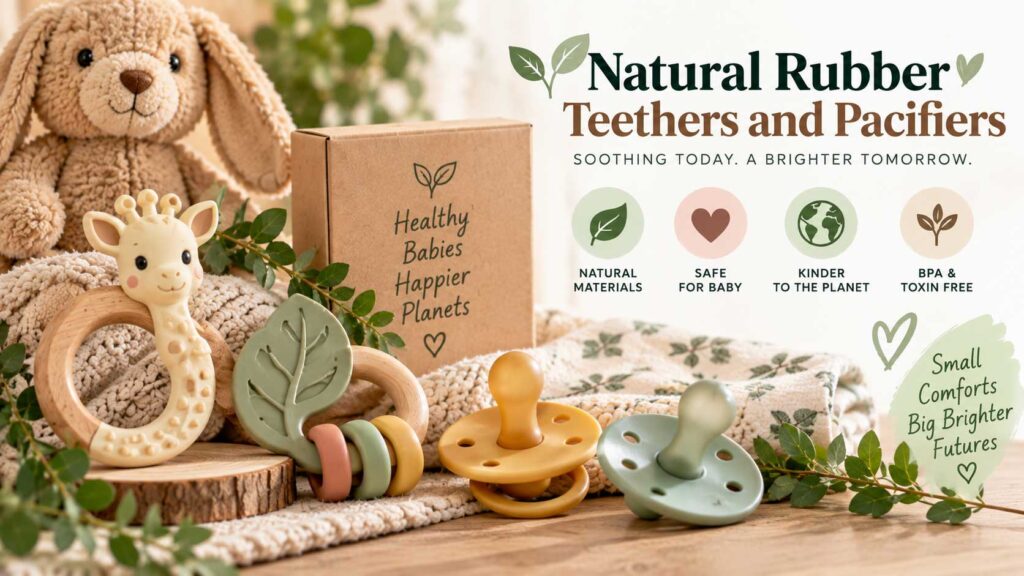
Natural rubber teethers can be a useful addition to a sustainable baby gift basket, particularly once a baby reaches the teething stage. They’re soft, flexible, easy for small hands to grasp, and made from a renewable material rather than conventional petroleum-based plastic.
Natural rubber latex comes from the sap of rubber trees. When responsibly sourced, it offers an interesting renewable-material option for products such as teethers, bath toys, and pacifiers.
For teething babies, textured rubber surfaces can provide something appropriate to chew on when gums feel uncomfortable. Some products are molded as a single piece, which can simplify cleaning and eliminate joints where moisture or debris might otherwise collect.
What to Look for in a Natural Rubber Teether
Being made from natural rubber doesn’t automatically make a baby product a good choice. A teether still needs to be designed specifically for babies and meet applicable product-safety requirements.
Look for a reputable manufacturer that clearly states the product’s materials, recommended age, cleaning instructions, and relevant safety testing. Avoid products with loose or detachable pieces that could present a choking hazard.
It’s also worth checking whether colors or decorative details are created using pigments and finishes intended for children’s products.
What About Natural Rubber Pacifiers?
Natural rubber pacifiers are another alternative to silicone models. They’re generally soft and flexible, and some are made from a single molded piece.
However, pacifiers are a particularly personal gift. Babies can be surprisingly selective about nipple shape, size, and material, while parents may already have a preferred type. If you’re unsure, a natural rubber teether may be the easier gift choice.
Natural rubber also contains latex proteins, so it isn’t suitable for everyone. Parents with concerns about latex sensitivity or allergy should discuss appropriate alternatives with their child’s healthcare professional.
Why Parents May Love Them
- Natural rubber comes from a renewable source
- Soft and flexible for teething babies
- Available in simple one-piece designs
- Lightweight and easy for small hands to grasp
- Can reduce reliance on conventional plastic products
- Easy to include in a larger sustainable baby gift basket
Buying Tip: Choose a natural rubber teether or pacifier from a reputable manufacturer and check the recommended age and care instructions carefully. Inspect it frequently for cracks, tears, stickiness, swelling, or other deterioration, and replace it according to the manufacturer’s guidance. Never attach a pacifier or teether around a baby’s neck or use homemade cords, ribbons, or strings that could create a strangulation hazard.
6. Organic Baby Clothing
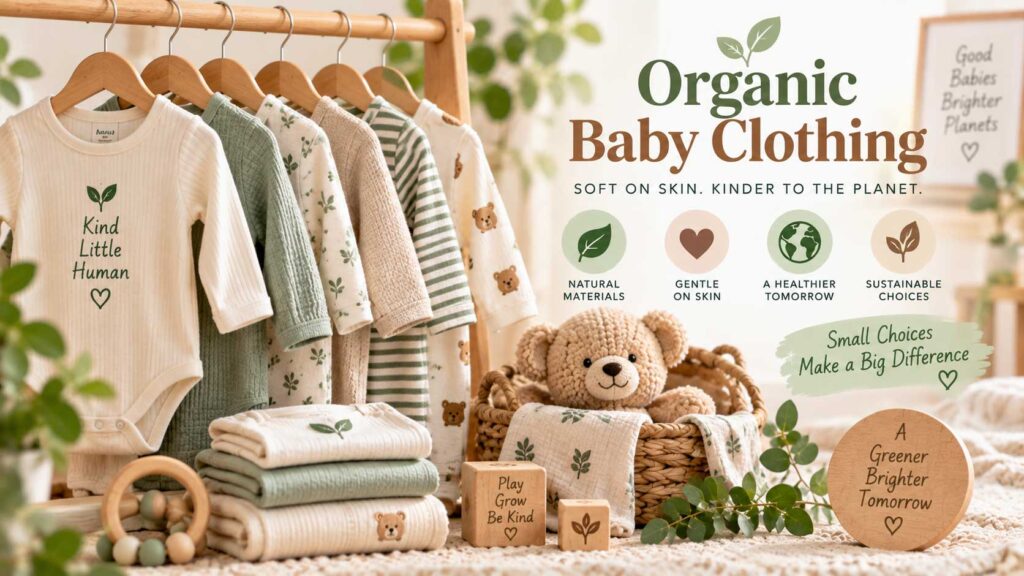
Organic baby clothing is one of the easiest sustainable gifts to get right. Babies go through plenty of bodysuits, pajamas, leggings, and other everyday basics, so clothing is likely to be used rather than forgotten at the back of a closet.
Organic cotton is particularly popular for baby clothes because it’s soft, breathable, washable, and suitable for everyday wear. Certified organic cotton is grown according to standards that restrict the use of certain synthetic pesticides and fertilizers, while some textile certifications also address later stages of processing and manufacturing.
That distinction matters. A label that simply says “organic cotton” tells you something about the fiber, but it doesn’t necessarily tell you everything about how the finished garment was dyed, processed, or manufactured.
Look Beyond the “Organic” Label
For a more informed purchase, look for recognized textile certifications.
GOTS (Global Organic Textile Standard) covers certified organic fibers along with environmental and social requirements throughout specified stages of textile processing and manufacturing.
You may also see OEKO-TEX® STANDARD 100, which indicates that the finished textile and its components have been tested against the certification’s limits for a range of substances.
The two certifications aren’t interchangeable, but both can provide useful information that a vague claim such as “natural baby clothing” cannot.
Choose Clothes the Baby Can Actually Use
Bodysuits, sleepers, leggings, hats, and pajamas all make practical gifts, but there’s one easy mistake to avoid: buying everything in newborn size.
Babies grow quickly, and parents often receive plenty of newborn clothing at baby showers. Consider choosing a larger size, such as 3–6 months, 6–12 months, or even 12–18 months, while keeping the season in mind. A winter sleeper won’t be particularly useful if the baby reaches that size in July.
Simple colors and timeless designs can also make clothing easier to reuse or pass along to another family.
Why Parents May Love It
- Soft and breathable for everyday wear
- Easy to wash and reuse
- Available with recognized textile certifications
- Practical for frequent clothing changes
- Quality garments can be passed down to another child
- Available at many different price points
Durability is particularly important with baby clothes. A garment that survives repeated washing and remains in good condition can potentially be worn by several children instead of being discarded after one short stage of infancy.
Buying Tip: Look for well-constructed clothing made with certified organic cotton, durable seams, and clear care instructions. If possible, choose a size the parents haven’t already received in abundance and avoid overly seasonal designs unless you know when the baby will be able to wear them. Minimal or recyclable packaging is another nice sustainability bonus.
7. Reusable Baby Wipes and Organic Washcloths
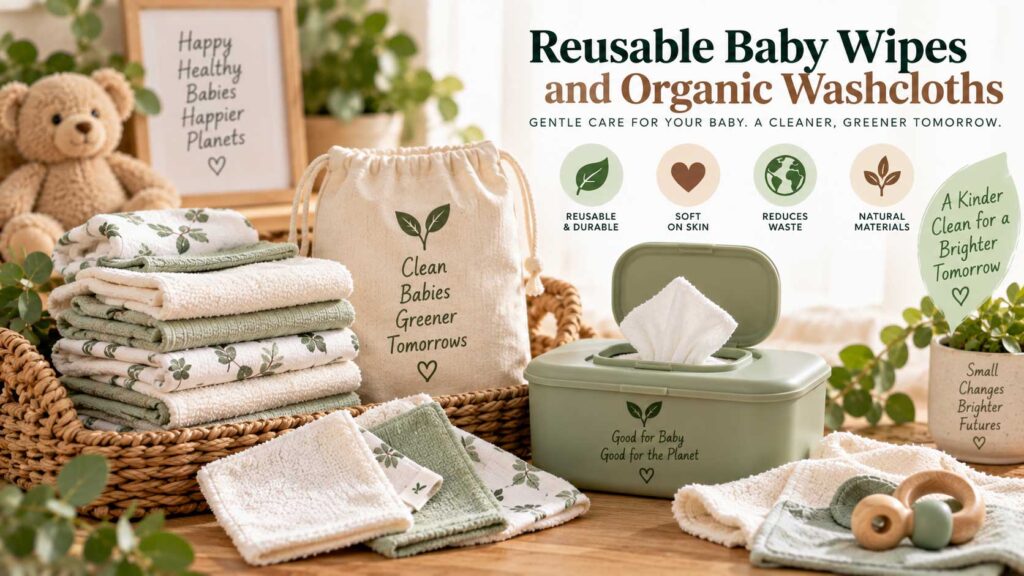
Reusable baby wipes and washcloths may not be the flashiest gift at the baby shower, but they’re the kind of practical essentials parents can reach for several times a day. They can be used during diaper changes, bath time, messy meals, and countless little cleanups in between.
Instead of throwing away a wipe after every use, washable cloths can be cleaned and used repeatedly. A good set may remain useful long after the diaper stage is over, eventually becoming toddler washcloths, cleaning cloths, or general household rags.
That long useful life is what makes them one of the simplest sustainable baby gift ideas on this list.
Choose Soft, Washable Fabrics
Reusable wipes are available in organic cotton, cotton flannel, terry cloth, and other washable fabrics. For babies, look for something soft enough for frequent use but sturdy enough to withstand regular laundering.
Organic cotton is an easy option, particularly when backed by a recognized certification such as GOTS.
You’ll also find many products marketed as “bamboo wipes.” Check the actual fiber label rather than relying on the word bamboo alone. Many soft bamboo textiles are actually rayon or viscose manufactured from bamboo-derived cellulose, which involves considerably more processing than the marketing may suggest.
More Than Just Diaper Wipes
One reason washcloths make such a practical gift is their versatility. Parents can keep a few near the changing area, several in the bathroom, and another stack near the kitchen or diaper bag.
They can be useful for:
- Diaper changes
- Bath time
- Cleaning hands and faces
- Wiping high-chair messes
- Cleaning small spills
- Using as small burp cloths
- Everyday toddler cleanups
For routine cleaning, parents can follow their pediatrician’s or product manufacturer’s recommendations about what to use on a baby’s skin rather than relying on complicated homemade mixtures.
Why Parents May Love Them
- Washable and reusable many times
- Help reduce reliance on disposable wipes
- Useful well beyond the newborn stage
- Small enough to keep around the house or in a diaper bag
- Easy to add to a larger baby gift basket
- Worn-out cloths can often be repurposed for household cleaning
Reusable wipes do require water and energy for laundering, so they’re not impact-free. Their environmental advantage is strongest when they’re used frequently, washed efficiently with other laundry, and kept in service for a long time.
Buying Tip: Look for soft, machine-washable wipes with reinforced edges that can survive repeated laundering. If choosing organic cotton, look for a credible certification such as GOTS rather than relying only on words like “natural” or “eco.” A set of 12–24 cloths is more useful than just two or three and still makes an affordable sustainable baby gift.
8. Stainless Steel Baby Bottles and Food Containers
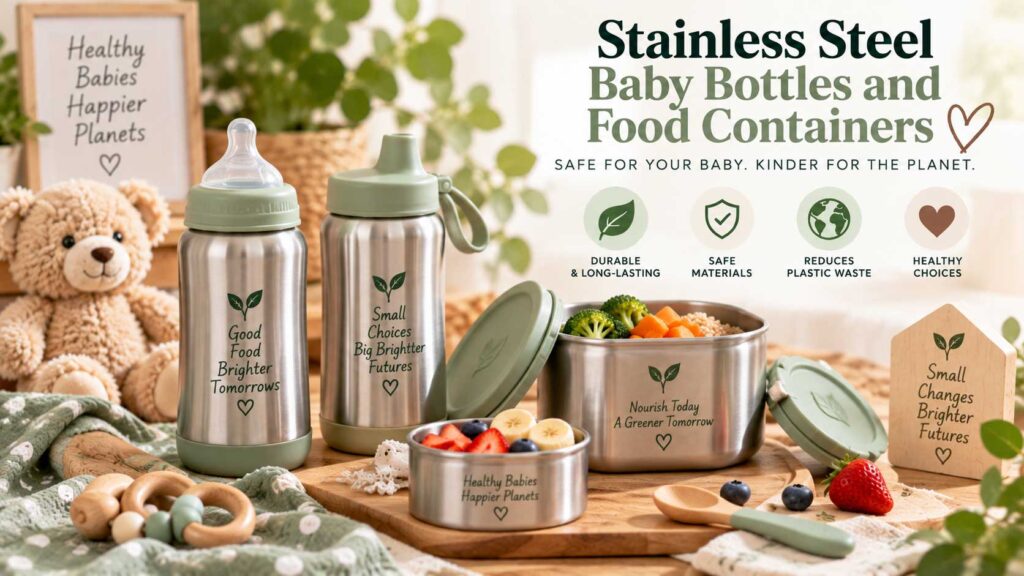
Stainless steel bottles and food containers can be excellent reusable gifts for families looking to reduce their reliance on disposable food storage and short-lived plastic products. They’re durable, difficult to break, and many designs remain useful long after the baby stage is over.
Stainless steel is particularly practical for snack containers, lunch boxes, insulated food jars, and eventually children’s water bottles. Unlike glass, it won’t shatter when dropped, which is a definite advantage once toddlers start carrying their own cups and containers.
Why Stainless Steel Works Well for Reusable Baby Gear
Quality stainless steel is durable, corrosion-resistant, and doesn’t require BPA or phthalates as ingredients in the metal itself. It also doesn’t readily absorb food odors or colors, making it practical for products that will be washed and reused frequently.
You’ll often see 18/8 or 304 stainless steel listed on food containers. These terms describe commonly used grades of stainless steel containing approximately 18% chromium and 8% nickel.
That doesn’t mean every stainless steel product is identical, however. Lids, seals, coatings, straws, nipples, handles, and other components may be made from different materials, so it’s worth checking the entire product rather than focusing only on the metal body.
Look for Products That Grow With the Child
Some reusable bottles are designed with interchangeable tops, allowing the same container to be adapted with different lids as a child grows. A bottle might later become a straw cup or water bottle, for example.
This kind of modular design can be a sustainability advantage because parents can replace one component instead of purchasing an entirely new bottle.
Stainless steel food containers can have an even longer useful life. Small containers that begin as storage for baby snacks or finger foods may eventually find their way into preschool lunch boxes, family picnics, or everyday travel bags.
Why Parents May Love Them
- Durable and reusable for years
- Difficult to break if dropped
- Don’t readily retain food odors or stains
- Useful for snacks, lunches, outings, and travel
- Some designs can adapt as a child grows
- Can reduce the need for disposable food-storage products
One drawback is that stainless steel isn’t transparent, so parents can’t see how much liquid or food remains without opening the container. Metal containers also shouldn’t be used in a microwave.
A Note About Baby Bottles
Baby bottles are a more personal purchase than snack containers. Babies may prefer particular nipple shapes or flow rates, and parents may already be using a specific feeding system.
If you don’t know the family’s preferences, a stainless steel snack container or insulated food jar may be a safer gift choice than a complete bottle set.
Buying Tip: Look for products intended specifically for food or beverage use from a reputable manufacturer. 18/8 (304) stainless steel is commonly used for food-contact products. Check the materials used in the lid, seal, straw, or nipple as well, and follow the manufacturer’s cleaning instructions—don’t assume every stainless steel product is dishwasher safe. A leak-resistant, stackable design can make the gift particularly useful for daycare, travel, and eventually school lunches.
9. Sustainable Baby Carrier
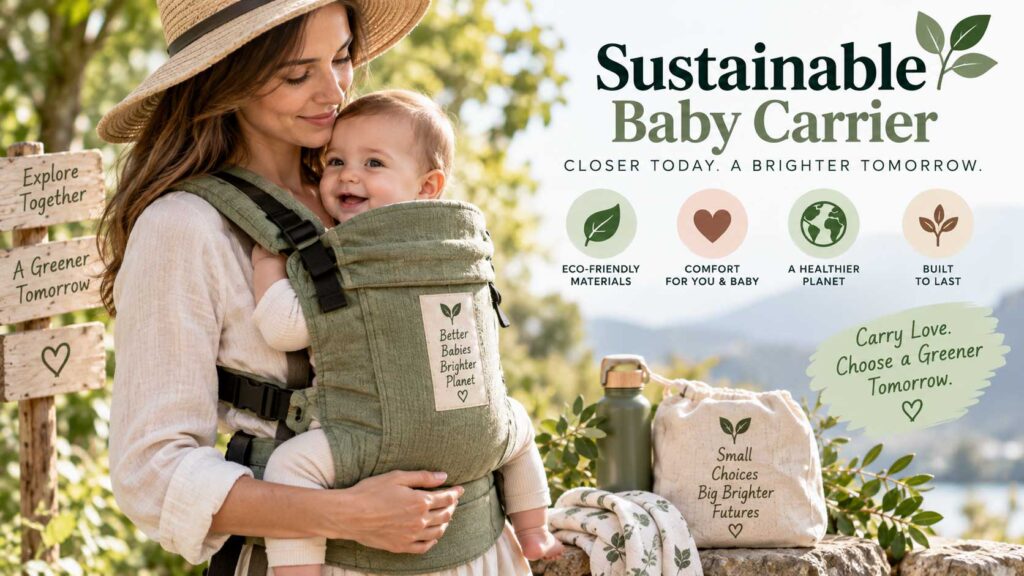
A well-made baby carrier can be one of the most useful gifts a new parent receives. It allows a caregiver to keep the baby close while leaving their hands free for walks, errands, travel, or simply moving around the house.
From a sustainability perspective, the biggest advantage is longevity. A durable, adjustable carrier may remain useful through several stages of a child’s early years and, if kept in good condition, can potentially be passed along to another family.
Some brands also offer carriers made with organic cotton, hemp, linen, recycled fibers, or combinations of these materials, giving environmentally conscious parents more options beyond conventional synthetic fabrics.
Choose Fit and Safety Before Fabric
Natural or recycled materials are a nice bonus, but they shouldn’t be the first consideration when choosing a baby carrier.
The carrier needs to be appropriate for the baby’s age, weight, size, and developmental stage, and caregivers need to follow the manufacturer’s positioning and use instructions carefully. Adjustable straps, secure fasteners, appropriate head and neck support, and a design that fits the caregiver comfortably are all important.
Some carriers are suitable for newborns, while others require an infant insert or aren’t intended for use until a baby reaches a particular size. Never assume that an adjustable carrier automatically works from birth.
Look for a Carrier That Can Grow With the Baby
An adjustable design can extend the useful life of the gift considerably.
Some carriers accommodate different carrying positions or adjust as a child becomes larger. A product that remains comfortable and functional over a longer period may eliminate the need to purchase several different carriers as the baby grows.
Washability matters too. Baby carriers inevitably encounter drool, spills, and other messes, so removable or machine-washable components can help keep the carrier usable for longer.
What Does “Hip-Healthy” Mean?
You may see carriers recognized by the International Hip Dysplasia Institute (IHDI). IHDI provides educational guidance about hip positioning, but it states that it is not a certifying body and does not certify or endorse baby carriers. Parents should still follow the carrier manufacturer’s instructions and age and weight requirements.
Parents should still follow the carrier manufacturer’s instructions and age and weight requirements.
Why Parents May Love It
- Keeps the baby close while leaving the caregiver’s hands free
- Useful for walks, errands, travel, and everyday activities
- Adjustable models may remain useful as the baby grows
- Available in organic, natural, and recycled fabric options
- Quality carriers can potentially be reused for another child
- Can reduce the need to purchase several age-specific carriers
A carrier is also a fairly personal item. Body shape, comfort, preferred carrying position, climate, and lifestyle can all influence which model works best.
Buying Tip: For a higher-priced gift like this, ask the parents which carrier they want or check their baby registry before buying. Look for an age- and weight-appropriate model from a reputable manufacturer with clear safety instructions and secure construction. Once those essentials are covered, features such as GOTS-certified organic cotton, hemp, linen, recycled fabrics, replaceable components, and minimal packaging can help you choose a more sustainability-minded option.
10. Eco-Friendly Baby Bath Gift Set
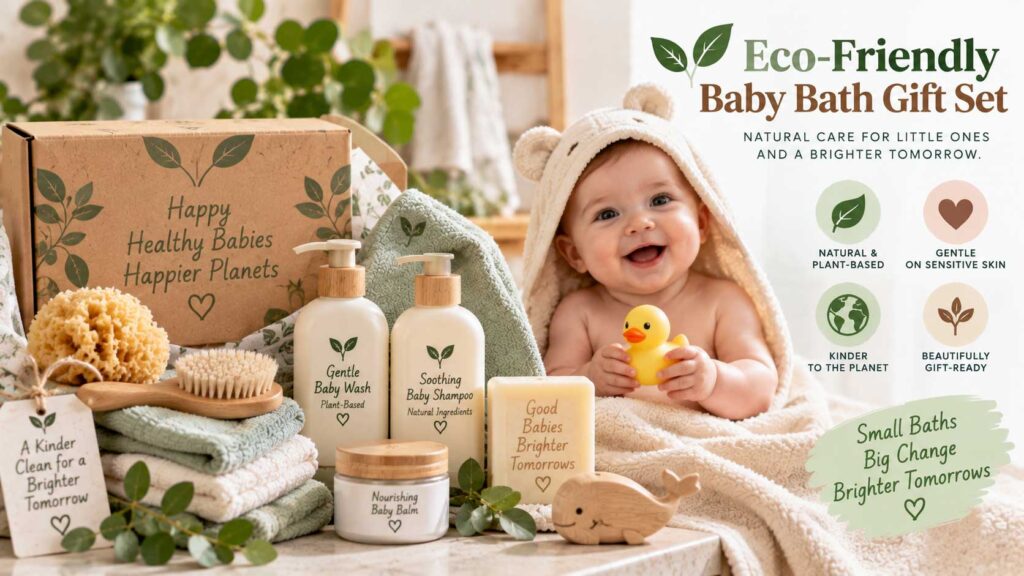
A baby bath gift set is a practical present that can combine several everyday essentials in one package. Instead of choosing a basket filled with heavily fragranced products or single-use accessories, you can build a more thoughtful set around reusable items, simple skincare products, and minimal packaging.
A sustainable baby bath set might include a soft hooded towel, several washable organic cotton washcloths, a gentle baby cleanser, moisturizer, and a reusable bath accessory or toy appropriate for the child’s age.
Better yet, place everything inside a small reusable basket or storage bin rather than a disposable gift box. Once the bath products are gone, parents can use the container for diapers, towels, toys, or other nursery essentials.
Keep Baby Skincare Simple
Words such as “natural,” “botanical,” and “plant-based” can sound reassuring, but they don’t automatically mean a skincare product is better suited to a baby’s skin.
Fragrances, essential oils, and botanical ingredients can still cause irritation or allergic reactions in some people. For babies—particularly newborns and those with sensitive skin—simple formulations are often worth considering.
Look for products specifically formulated for babies, with clear ingredient lists and directions for use. Fragrance-free options can also be useful for families who prefer to minimize added fragrance.
There’s no need to build a gift basket around a long list of lotions, oils, shampoos, and washes. A few useful products are usually better than a dozen items the parents may never use.
Make the Reusable Items the Star
The most sustainable part of a bath gift set may not be the bottle of baby wash at all.
Washable items such as:
- Organic cotton washcloths
- A durable hooded towel
- Reusable bath mitts
- Washable bath toys designed for easy cleaning
- A reusable storage basket
can remain useful long after the original skincare products have been used up.
Look for products that can be thoroughly cleaned and dried between uses. Bath toys with complicated interiors or openings that trap water can be difficult to keep clean, so simple, easy-to-dry designs are worth considering.
Pay Attention to the Packaging
Bath and skincare products can generate a surprising amount of packaging.
When comparing gift sets, look for appropriately sized containers, recyclable packaging where locally accepted, refill options where available, and minimal unnecessary plastic. Concentrated products or larger refillable containers may also reduce packaging over time when they fit the family’s routine.
Why Parents May Love It
- Combines several useful bath-time essentials
- Easy to customize for the family’s preferences
- Washable accessories can be reused for years
- Works well at several different gift budgets
- Can be packaged in a reusable basket instead of disposable wrapping
- Makes an attractive baby shower or newborn gift
A bath set is also easy to personalize. You can keep it very simple with a towel and washcloths or create a larger basket with a few carefully selected baby-care products.
Buying Tip: When choosing skincare, look for products specifically formulated for babies with transparent ingredient lists, and consider fragrance-free options rather than assuming “natural fragrance” is automatically gentler. For the reusable portion of the gift, certified organic cotton towels and washcloths, easy-to-clean bath accessories, refillable products, and minimal packaging can make the set a more thoughtful sustainability-minded choice.
11. Sustainable Diaper Bag
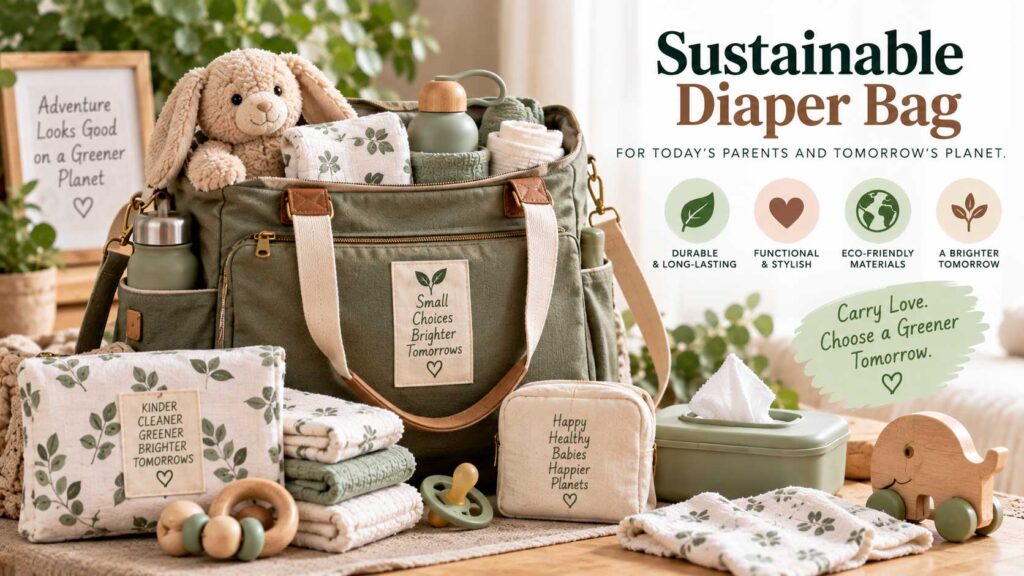
A diaper bag is one of those baby gifts that can get used almost every day. Parents need somewhere to carry diapers, wipes, bottles, snacks, extra clothes, and all the other essentials that somehow become necessary for even a short trip out of the house.
For a more sustainable option, look for a durable diaper bag made with recycled or responsibly sourced materials and, just as importantly, one that’s built to survive several years of regular use.
Look for Recycled and Durable Materials
Some diaper bags now incorporate recycled polyester or other recycled fabrics, giving existing materials another use rather than relying entirely on virgin synthetic fibers.
Recycled material alone doesn’t make a bag sustainable, however. Construction matters just as much.
Check the stitching, zippers, straps, lining, and reinforced areas. A cheaply made bag that needs replacing after a year isn’t necessarily a better environmental choice simply because part of the fabric is recycled.
A well-constructed bag that survives the entire diaper stage—and continues being used afterward—can offer much more long-term value.
Choose a Bag That Doesn’t Look Too Much Like a Diaper Bag
One of the best ways to extend the life of this gift is to choose a versatile design.
A simple backpack or tote-style diaper bag can eventually become a travel bag, work bag, picnic bag, gym bag, or everyday backpack once diapers and bottles are no longer part of the family’s routine.
Useful features may include:
- Comfortable adjustable straps
- Several interior compartments
- Insulated bottle pockets
- A washable or wipeable lining
- Stroller attachment points
- A removable changing pad
- Strong zippers and reinforced seams
- Exterior pockets for frequently used items
More features aren’t automatically better. A straightforward, well-designed bag that matches the parents’ lifestyle is usually more useful than an oversized model filled with compartments they’ll never use.
Why Parents May Love It
- Useful from the newborn stage through the toddler years
- Keeps everyday baby essentials organized
- Available in recycled and responsibly sourced materials
- Backpack designs leave both hands free
- Durable models may last through multiple children
- Versatile styles can be repurposed after the diaper years
A diaper bag is also a good option when several people want to contribute toward one larger baby shower gift rather than purchasing several small items.
Buying Tip: Look for a durable bag made with recycled or responsibly sourced materials and check whether the brand clearly explains what percentage of the product is actually recycled. Prioritize strong construction, washable components, comfortable straps, and a timeless design that parents can continue using long after the baby stage. If possible, check the baby registry first—bag size and style can be surprisingly personal.
12. Glass Baby Bottles
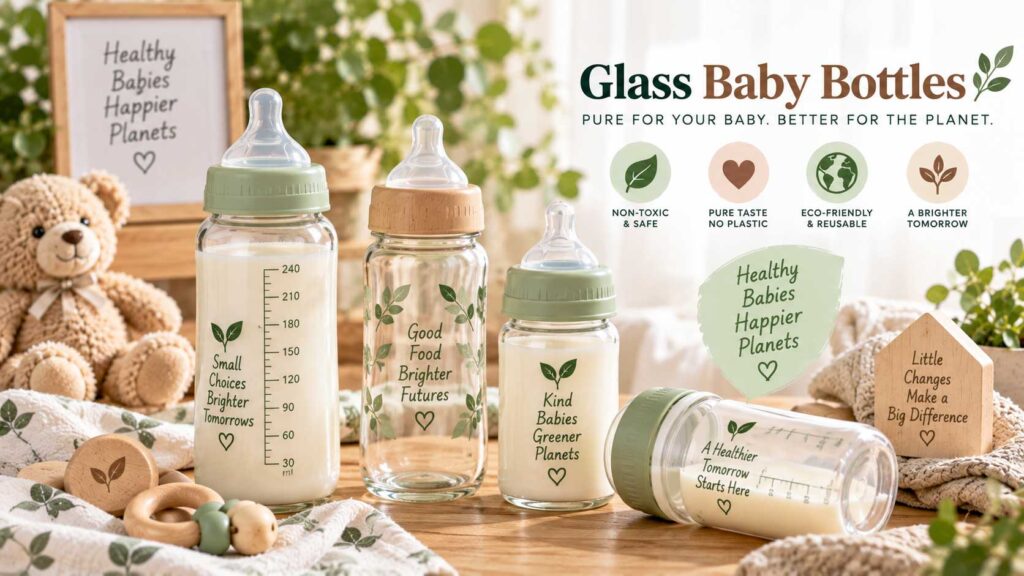
Glass baby bottles are another reusable alternative for parents who prefer to minimize plastic in products that come into contact with milk or formula. They can be washed and reused many times, don’t readily absorb odors or colors, and may remain useful for more than one child when properly cared for.
Unlike plastic, glass doesn’t require BPA or phthalates as components of the bottle itself. It’s also easy to see exactly how much liquid remains inside, which is one practical advantage over opaque stainless steel bottles.
Why Choose Glass?
Glass has several qualities that make it useful for feeding products. It doesn’t readily retain smells or flavors, and its smooth surface is relatively easy to clean.
High-quality bottles are often made from durable glass designed to tolerate normal temperature changes associated with feeding and cleaning. Some come with removable silicone sleeves that improve grip and provide an additional layer of protection against everyday bumps.
Glass also has an established recycling infrastructure in many communities, although whether a particular item is accepted depends on local recycling rules.
There Are Some Trade-Offs
Glass isn’t automatically the best bottle material for every family.
It’s heavier than plastic and stainless steel, and it can break if dropped or damaged. Parents should inspect bottles regularly for chips, cracks, or other signs of damage and stop using them if the manufacturer recommends replacement.
Bottle preference can also vary from one baby to another. Nipple shape, nipple flow, bottle size, and compatibility with a parent’s feeding or pumping system may matter more than the material of the bottle itself.
For that reason, a large bottle set isn’t something I’d buy without first checking the parents’ registry or asking what feeding system they plan to use.
Why Parents May Love Them
- Reusable for many feedings
- Don’t readily retain odors or flavors
- Easy to see how much liquid remains
- Available with protective silicone sleeves
- Can potentially be reused for another child
- Reduces reliance on plastic bottle bodies
Some brands also sell replacement nipples, caps, sleeves, and other individual components. Being able to replace a worn part instead of the entire bottle can extend the useful life of the product.
Buying Tip: Choose bottles specifically designed for infant feeding from a reputable manufacturer and check the product’s age guidance, care instructions, temperature limits, and nipple compatibility. A protective silicone sleeve can make glass bottles easier to grip, but it doesn’t make them unbreakable. If you’re giving bottles as a gift, checking the family’s registry first is the easiest way to avoid buying a feeding system they won’t use.
13. Washable Organic Cotton Changing Mat
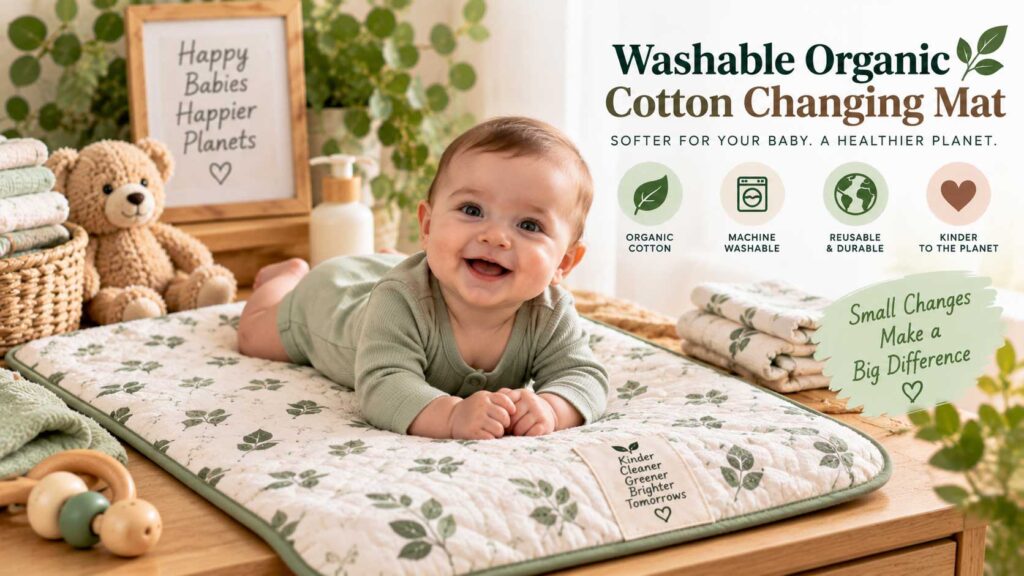
A washable changing mat is one of those practical baby gifts parents may not think to put at the top of their wish list—but they’ll probably be glad to have one the first time they need to change a diaper away from home.
Portable changing mats create a clean surface for diaper changes in public restrooms, the car, a stroller, at a friend’s house, or almost anywhere else. Unlike disposable changing liners, a washable mat can be cleaned and reused throughout the diaper years.
For a more sustainability-minded option, look for a durable design made with organic cotton or other responsibly sourced fabrics.
Choose Washable Over Disposable
The biggest environmental advantage of a reusable changing mat is simple: it can replace disposable changing pads used once and thrown away.
Because changing mats are likely to encounter plenty of messes, however, practicality matters. A beautiful organic cotton mat isn’t particularly useful if it’s difficult to clean.
Look for a machine-washable design or one with a washable fabric exterior and an easy-to-clean protective layer. Check what that waterproof layer is made from as well, since an “organic cotton changing mat” may still contain synthetic materials inside.
That’s not necessarily a reason to avoid it. A waterproof layer can make the product far more functional and extend its useful life. The important thing is transparency about what the entire product contains.
Portability Makes It More Useful
A good travel changing mat should fold or roll into a compact size that fits easily inside a diaper bag.
Some designs include built-in pockets for diapers and wipes, effectively turning the mat into a small changing station. Others keep things deliberately simple with a lightweight foldable design.
Either can work—the best option depends on how the parents expect to use it.
Why Parents May Love It
- Provides a reusable surface for diaper changes away from home
- Can replace disposable changing liners
- Folds easily into a diaper bag or stroller
- Washable designs can be used throughout the diaper years
- Available in organic and certified textile options
- Can later be repurposed as a small protective or travel mat
A changing mat also pairs naturally with several other gifts in this guide. Add reusable wipes, a wet bag, and a few diapering essentials, and you have a practical sustainable baby gift set without filling a basket with things the parents may never use.
Buying Tip: Look for a compact, washable changing mat with strong stitching and an easy-to-clean surface. If you’re choosing organic cotton, look for a recognized certification such as GOTS rather than relying only on an “organic” marketing claim. Check the materials used in any waterproof backing too, and prioritize a durable design that can withstand frequent washing and folding.
14. Handmade Sustainable Baby Booties
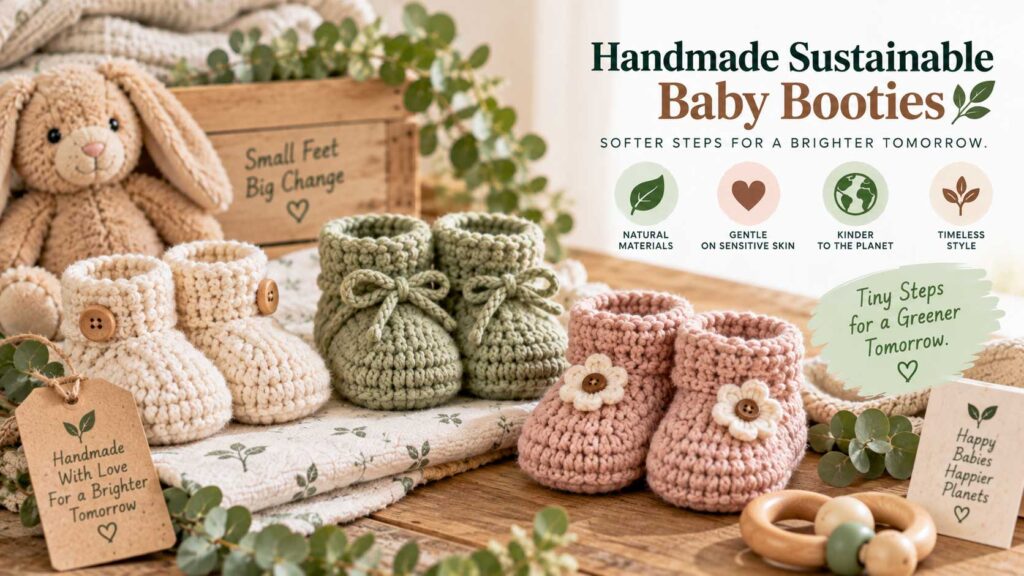
If you’re looking for a smaller gift with a personal touch, handmade baby booties can be a lovely alternative to mass-produced baby accessories. They’re cozy, easy to add to a newborn gift basket, and can become a keepsake once the baby outgrows them.
For a more sustainable choice, look for booties made from organic cotton, responsibly sourced wool, recycled yarn, or other durable fibers. Buying from an independent maker can also give you more information about where the materials came from and how the item was made.
Pay Attention to the Fiber
“Handmade” doesn’t automatically mean sustainable, so take a moment to check the yarn or fabric.
Organic cotton can be a good choice for lightweight booties, while wool provides warmth for colder months. If you’re considering wool, look for brands or makers that provide information about fiber sourcing and animal-welfare practices.
Recycled fibers are another interesting option because they make use of existing materials, although the exact composition can vary considerably between products.
Whatever material you choose, softness, construction, washability, and suitability for babies matter just as much as the sustainability claim.
A Great Opportunity to Support Small Makers
Handmade booties are also one of the gifts on this list that can easily be purchased from a local craftsperson or independent maker.
That doesn’t automatically give the product a smaller environmental footprint, but buying locally or directly from a maker may provide greater transparency about materials, production, and packaging. It also gives you the opportunity to choose something unique instead of another mass-produced baby item.
If you knit or crochet yourself, handmade booties can become an especially meaningful gift. Using yarn you already own is an excellent way to make use of existing materials rather than purchasing something new.
Why Parents May Love Them
- Small, useful, and easy to include in a gift basket
- Available in organic, natural, or recycled fibers
- Handmade versions feel personal and unique
- Can support independent or local makers
- Easy to save as a keepsake after the baby outgrows them
- Available at relatively affordable gift prices
Keep the design simple for very young babies. Decorative buttons, beads, pom-poms, or other detachable embellishments may look adorable, but loose small parts can create a choking hazard.
Buying Tip: Choose soft, well-constructed booties made specifically for babies and check the fiber content and care instructions before purchasing. Avoid designs with loose buttons, beads, charms, or other detachable decorations. For an even more thoughtful sustainable gift, look for GOTS-certified organic cotton, responsibly sourced wool, recycled yarn, or a handmade pair from a maker who clearly identifies the materials used.
15. Sustainable Baby Gift Basket
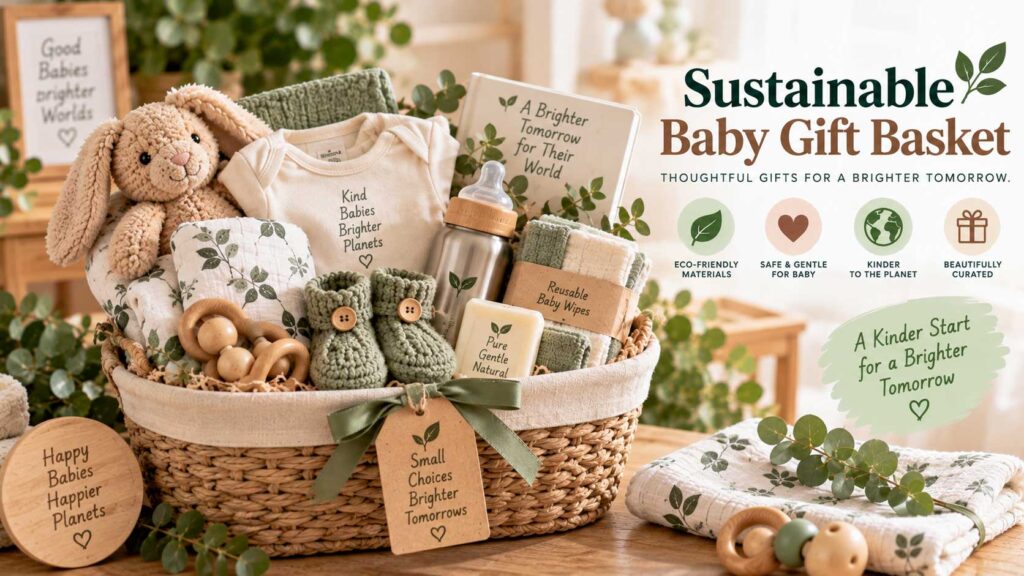
Can’t decide on just one gift? A sustainable baby gift basket lets you combine several useful everyday essentials into one thoughtful present—and you can tailor everything inside it to the family’s needs and your budget.
Instead of buying a prepackaged hamper filled with miniature products and decorative filler, build your own using items the parents are likely to use. This gives you control over the materials, packaging, and quality of every product while avoiding unnecessary extras.
What to Put in a Sustainable Baby Gift Basket
You don’t need to fill an enormous basket. Four or five carefully chosen items can make a much better gift than a dozen things purchased simply to make the package look full.
Consider combining:
- An organic cotton bodysuit or sleeper
- Reusable baby wipes
- Organic cotton washcloths
- A natural rubber teether
- A small wooden toy
- A washable silicone bib
- An organic cotton blanket
- A hooded bath towel
- Handmade baby booties
- A reusable wet bag
Choose items from different categories so the parents receive a useful mix rather than six versions of essentially the same product.
Skip the Disposable Gift Basket
The container itself can become part of the present.
Instead of a plastic-wrapped gift basket, arrange everything inside something the family can reuse, such as a:
- Fabric storage basket
- Small nursery organizer
- Diaper caddy
- Reusable tote bag
- Wooden storage box
- Sturdy diaper bag
You can then wrap the basket with a reusable fabric ribbon or leave it unwrapped and add a simple recycled-paper gift tag.
This avoids much of the cellophane, plastic filler, ribbons, and decorative packaging that often gets thrown away immediately after a baby shower.
Personalize It Without Buying More Stuff
A thoughtful gift doesn’t need dozens of products to feel special.
Add a handwritten note, choose colors that match the nursery, include something handmade, or build the basket around a simple theme.
For example, you could create a bath-time basket with organic cotton washcloths, a hooded towel, and simple baby-care products. A feeding basket could include a reusable bib, cup, bowl, and utensils. A newborn essentials basket might combine organic clothing, reusable wipes, a blanket, and a teether.
Personalizing what you already planned to buy is usually better than adding decorative items simply to make the gift look bigger.
Why Parents May Love It
- Easy to customize for the family
- Works with almost any gift budget
- Combines several practical everyday essentials
- Can include products from the baby’s registry
- Avoids unnecessary prepackaged gift-set filler
- The basket or container itself can be reused
- Makes an attractive baby shower or newborn gift
A sustainable gift basket is also ideal for group gifting. Friends, relatives, or coworkers can each contribute one useful item rather than everyone purchasing separate gifts that may overlap.
Buying Tip: Start with the parents’ registry if they have one, then fill any gaps with a few durable, reusable essentials. Focus on quality over quantity and avoid buying something merely because it carries an “eco-friendly” label. Four products that will genuinely be used are more sustainable—and more helpful—than a basket overflowing with things the family doesn’t need.
Looking for more ways to reduce disposable products at home? Explore our simple eco-friendly habits anyone can start today.
Sustainable Baby Brands Worth Exploring

If you’d rather start with a company than search product by product, several baby brands offer organic, recycled, reusable, or responsibly sourced options.
Keep in mind that no brand—or product—is perfectly sustainable. Materials, certifications, manufacturing locations, packaging, and durability can vary even within the same company’s catalog. Use this list as a starting point, then check the details of the individual product you’re considering.
1. Burt’s Bees Baby
Burt’s Bees Baby is a good place to look for organic cotton clothing, pajamas, blankets, bedding, and other textile gifts.
The company says organic cotton is its primary fiber and lists both GOTS and OEKO-TEX® certifications within its product range. It also reports using recycled or FSC-certified materials for some packaging and working with factories that use practices such as renewable energy and water recycling.
For an easy baby-shower gift, an organic cotton sleeper, blanket, or clothing set is a practical place to start.
2. Finn + Emma
Finn + Emma offers organic baby clothing alongside toys, play gyms, gift sets, and other baby gear.
The company emphasizes organic cotton, artisan production, fair-wage manufacturing, and durable products designed to remain useful rather than being treated as disposable baby gear.
It’s particularly worth exploring if you’re looking for a gift that feels a little more distinctive than basic baby clothing.
3. Green Toys
Green Toys takes a different approach to sustainable materials: instead of avoiding plastic entirely, it makes toys from 100% recycled materials, with post-consumer recycled milk jugs among its primary sources.
The company’s range includes vehicles, bath toys, playsets, and products for babies and toddlers. This can be a good reminder that sustainability isn’t always as simple as choosing wood over plastic—using recycled material and designing a toy for years of play can also be part of the equation.
4. Under the Nile
Under the Nile specializes in baby clothing, blankets, toys, bedding, and other products made with certified organic Egyptian cotton.
The company publishes information about its organic certification and fair-trade practices and emphasizes durability, including making products that can withstand repeated washing and potentially be handed down.
For a newborn gift, its organic cotton clothing, blankets, and soft toys are natural places to look.
5. PlanToys
PlanToys is one of the more interesting brands for sustainably minded wooden toys.
The company uses reclaimed rubberwood from trees that no longer produce latex and also turns manufacturing sawdust into a material it calls PlanWood. PlanToys says it uses water-based dyes, organic pigments, and no-added-formaldehyde adhesives in relevant products.
It also offers repair and replacement-part services for some toys, which is particularly noteworthy because extending a product’s useful life is an important part of sustainability.
6. Natursutten
Natursutten is best known for baby products made from natural rubber, particularly pacifiers and teethers.
If you’re considering one as a gift, check the individual product’s materials, age recommendation, care instructions, and replacement guidance. As we mentioned earlier, natural rubber contains latex proteins and won’t be the right material for every family.
7. Mushie
Mushie offers feeding accessories, toys, nursery products, organic cotton textiles, and other everyday baby essentials.
The company says it uses materials including food-grade silicone and organic cotton and works with fair-trade suppliers. Its reusable feeding products can be particularly useful if you’re putting together a practical baby gift basket.
As with other silicone products, remember that durability and repeated use—not biodegradability—are the main sustainability advantages.
8. Esembly
For parents specifically interested in cloth diapering, Esembly is worth exploring.
Its diapering range includes reusable organic cotton diaper inners, waterproof outer covers, and other washable accessories. A small starter set can make more sense as a gift than buying an entire diaper system before parents know whether cloth diapering works for them.
9. Avanchy
Avanchy specializes in reusable feeding products and currently offers options made from materials including bamboo, stainless steel, and silicone.
Its stainless steel bowls and plates can be particularly attractive from a longevity perspective, while its bamboo products require different care. For example, the company advises hand-washing its bamboo dishware and keeping it out of microwaves and ovens.
Always check the care instructions for the specific material before choosing a feeding set.
10. Lovevery
Lovevery is known for developmental play kits and toys designed for different stages of early childhood.
If you’re considering one of its products, look at the materials and certifications for the individual toy or kit rather than assuming every item has the same environmental attributes. A durable developmental toy that remains useful through an appropriate stage and can later be passed along can still make a thoughtful sustainable gift.
How to Compare Sustainable Baby Brands
Don’t choose a company simply because its website uses words like “green,” “clean,” “conscious,” or “natural.” Look for specific evidence behind those claims.
Useful things to check include:
- GOTS-certified organic textiles
- OEKO-TEX® STANDARD 100 testing where relevant
- FSC-certified wood or paper products
- Recycled or responsibly sourced materials
- Clear information about where and how products are manufactured
- Appropriate product-safety testing
- Minimal, recyclable, or reusable packaging
- Repair or replacement parts when applicable
- Products designed to remain useful as the child grows
- Transparent care instructions that help extend product life
Most importantly, evaluate the individual product, not just the logo on the package. A genuinely useful gift that survives years of use—and perhaps eventually serves another child—is often a more sustainable choice than something purchased simply because it carries an eco-friendly marketing claim.
FAQs About Sustainable Baby Gift Ideas
What is the best sustainable baby gift?
The best sustainable baby gift is one the family will genuinely use for a long time. Organic cotton blankets, durable wooden toys, reusable feeding sets, washable baby essentials, and clothing in useful sizes are all good options.
Before buying a larger or more personal item—such as a baby carrier, cloth diaper system, or bottle set—check the parents’ registry or ask what they prefer. A product isn’t particularly sustainable if it never gets used.
Are eco-friendly baby gifts more expensive?
Not necessarily. Sustainable baby gifts range from inexpensive reusable washcloths and teethers to premium baby carriers and diaper bags.
Some durable products cost more upfront but can potentially be used for several years or passed along to another child. However, a higher price doesn’t automatically make a product more sustainable. Consider its materials, construction, expected lifespan, and how frequently it will actually be used.
What materials should I look for in sustainable baby gifts?
There isn’t one material that’s always the most sustainable choice. The best option depends on the product and how it will be used.
Materials worth considering include:
- Certified organic cotton
- FSC-certified wood
- Responsibly sourced natural fibers
- Recycled fabrics
- Natural rubber
- Food-contact silicone for reusable feeding products
- Stainless steel
- Glass
Look beyond the material itself. Durability, manufacturing, safety testing, packaging, repairability, and expected lifespan all contribute to a product’s overall impact.
What makes a baby gift environmentally friendly?
A more environmentally responsible baby gift may use certified organic, recycled, renewable, or responsibly sourced materials; minimize unnecessary packaging; incorporate reusable or replaceable components; and be designed for a long useful life.
The most important factor can sometimes be much simpler: will it actually be used?
A durable product that serves a family for years and is eventually passed along may be a better choice than a supposedly “green” product that is quickly discarded.
Are wooden toys better than plastic toys?
Not automatically.
A well-made wooden toy produced from responsibly sourced wood can be a durable choice that lasts through years of play. However, a cheaply constructed wooden toy isn’t necessarily more sustainable than a durable toy made from recycled plastic.
For wooden toys, look for responsibly sourced materials such as FSC-certified wood, appropriate finishes, age recommendations, and relevant toy-safety information. For plastic toys, recycled content, durability, repairability, and expected lifespan are worth considering.
Is organic cotton worth considering for baby gifts?
Organic cotton can be a good choice for blankets, clothing, washcloths, and other textile gifts. Organic production standards restrict certain agricultural inputs, while certifications such as GOTS can also cover additional environmental and social requirements during textile processing.
Don’t assume that every product labeled “organic” meets the same standards. Look for credible certification and check the fiber content of the finished product.
What certifications should I look for when buying sustainable baby gifts?
The relevant certification depends on what you’re buying. Some commonly encountered examples include:
- GOTS for certified organic textiles and processing requirements
- OEKO-TEX® STANDARD 100 for textiles tested against the certification’s limits for a range of substances
- FSC for wood and other forest-based materials sourced through certified systems
Certifications don’t make a product environmentally perfect, but they provide more useful information than vague marketing terms such as “green,” “earth-friendly,” or “all-natural.”
How can I avoid greenwashing when buying eco-friendly baby products?
Look for specific, verifiable information instead of broad environmental claims.
If a product says it’s “made from recycled materials,” check whether the company tells you how much recycled content it contains. If clothing is marketed as organic, look for certification. If wood is described as sustainable, check whether its source is independently certified.
Be cautious of products covered in environmental buzzwords without details explaining what those claims actually mean.
What is a good eco-friendly baby shower gift?
For a baby shower, consider practical gifts such as an organic cotton blanket, clothing in a larger size, reusable washcloths, a durable wooden toy, washable changing mat, reusable feeding products, or a customized sustainable baby gift basket.
For expensive or preference-dependent products such as carriers, bottles, and cloth diapers, checking the baby registry first is a good idea.
How can I make a baby gift more sustainable?
Start by buying less, but better.
Choose something useful and durable, avoid unnecessary accessories, and look for minimal packaging. You can also skip disposable wrapping paper and use a reusable tote, fabric wrap, storage basket, or diaper caddy as part of the gift.
If possible, choose products that can be washed, repaired, refilled, reused, or passed along once the baby outgrows them. A thoughtfully chosen gift that remains useful for years is usually a better approach than filling a basket with products simply because they’re marketed as eco-friendly.
Thoughtful Gifts for Baby and Planet
Choosing from the many sustainable baby gift ideas available today doesn’t mean finding a perfectly green product. It means thinking a little more carefully about what you buy, what it’s made from, how long it can be used, and whether the family actually needs it.
Sometimes the best choice is remarkably simple. An organic cotton blanket that survives years of washing, a wooden toy passed from one child to another, reusable feeding essentials used at hundreds of meals, or a washable changing mat carried everywhere can all make thoughtful gifts without creating more unnecessary stuff.
And you don’t need to spend a fortune. A small set of reusable washcloths or a handmade pair of baby booties can be just as meaningful as an expensive carrier or diaper bag—especially when you’ve chosen something that fits the family’s lifestyle.
When you’re unsure, check the parents’ baby registry or simply ask what they need. Choosing one useful, durable gift is often better than buying several “eco-friendly” products that may never leave the nursery closet.
Most importantly, look beyond green packaging and environmental buzzwords. Check the materials, certifications, construction, care instructions, and information provided by the manufacturer. Sustainability is rarely about a single label.
Whether you’re shopping for a baby shower, welcoming a newborn, celebrating a first birthday, or putting together your own sustainable baby gift basket, choose something made to be used, loved, and—when possible—passed along.
That’s a gift both a growing family and the planet can appreciate.
More Sustainable Living Ideas
Looking for more simple ways to make everyday choices a little more sustainable? Explore these guides from EarthNeedsYou:
- How to Reduce Plastic Waste at Home
- What Is Zero Waste Living?
- Simple Eco-Friendly Habits Anyone Can Start Today
- Beginner’s Guide to Composting at Home
- Sustainable Living Tips for Everyday Life
- How Recycling Helps Fight Climate Change
- The Environmental Impact of Plastic Pollution
- Recycling Symbols on Plastics: What the 7 Codes Really Mean



0 Comments