


Finding the best organic diapers can be confusing. Labels such as organic cotton, bamboo, plant based, biodegradable, and compostable sound similar, but they describe different things. A disposable diaper may have a plant based liner while still containing plastic components. A cloth diaper may use organic cotton against your baby’s skin but have a synthetic waterproof cover.
The right choice depends on what matters to your family: materials, fit, laundry, convenience, cost, and disposable waste. This guide explains the labels and compares ten diaper brands so you can decide what is worth trying.
Quick Answer: What Are the Best Organic Diapers?
The best organic diapers depend on what you mean by organic. If you want certified organic fibers, start with reusable cloth diapers made with certified organic cotton. Check whether the certification covers the entire diaper or only an insert or liner.
For many families, choosing organic diapers starts with deciding whether reusable cloth or disposable convenience is the better fit.
If you prefer disposables, look for brands that clearly explain which parts use plant based materials. A bamboo or plant based liner does not make the whole diaper organic, biodegradable, or compostable. Buy a small pack first: a good fit, reliable absorbency, and a price you can manage matter in everyday use.
What Does “Organic Diaper” Mean?
People use the term organic diapers to describe products made with certified organic materials, but the label alone doesn’t tell you which parts qualify. Check whether the certification applies to the cotton or another specific fiber, and whether it covers an insert, liner, or the full product.
An organic cotton insert, for example, doesn’t mean the waterproof cover, elastic, fasteners, or entire diaper are organic. Look for the named certification and check exactly what it covers.
The term gets especially confusing with disposables. Brands may highlight bamboo, wood pulp, or other plant based materials, but those ingredients alone do not make a diaper certified organic. Check the product label for a named certification and see exactly which material it covers.
When comparing diapers, treat “organic,” “plant based,” and “eco-friendly” as separate claims. Look past the wording on the front of the package and read the materials and certification details before deciding what you’re buying.
Cloth Diapers vs. Eco-Friendly Disposables
Cloth and disposable diapers solve different problems. Cloth diapers can be used again after washing, while disposables are convenient when laundry or changing away from home is difficult. Either can be part of a practical routine.
When comparing organic diapers, look at the materials used in each layer, including the lining, absorbent core, and waterproof outer layer.
| Option | Main advantage | What to consider |
|---|---|---|
| Organic cotton cloth diapers | Reusable, with a certified fiber option | Washing, drying, and often a separate waterproof cover |
| Other cloth diapers | Reusable and available in several fabrics and styles | Materials and absorbency vary |
| Plant based disposables | Convenient and may use renewable materials in some components | Usually contain other materials and still need to be thrown away |
| Conventional disposables | Easy to find and use | Ongoing cost and disposable waste |
You can also combine them. Some families use cloth at home and disposables overnight, at childcare, or while traveling. Choose a setup that you can use consistently rather than one that only sounds ideal on paper.
If you’re putting together a reusable changing kit, you can also compare our eco-friendly diaper bags for carrying cloth diapers, spare clothes, and other essentials.
Are Biodegradable or Compostable Diapers Better?
These labels need a closer look. A diaper may contain materials that can biodegrade under certain conditions, but that does not mean the entire used diaper will break down quickly in a landfill. Claims such as “biodegrades in 75 days” are only useful when the brand explains what was tested and under what conditions.
Compostable does not automatically mean suitable for your backyard compost bin, either. Check whether the claim applies to the whole diaper or just a component, and whether a facility near you accepts used diapers. The Federal Trade Commission’s guidance on environmental claims explains why these claims need evidence and clear qualifications.
For most families, the practical choice is to follow local disposal rules. If reducing the number of diapers you throw away is your main goal, reusable cloth diapers are another option to consider.
How to Choose a Diaper for Your Baby
Start with fit. A diaper that leaves gaps around the legs may leak, while one that feels too tight may leave marks. Because sizing varies by brand, try a small pack before buying a large box.
Next, read the materials information. If a brand describes its diaper as organic, bamboo, or plant based, find out which parts that claim covers. Check the liner, absorbent core, outer layer, and any certification separately. If you want to avoid added fragrance or lotion, confirm that on the current package rather than relying on an older product description.
Finally, compare the cost per diaper in your baby’s size. A lower box price does not always mean a lower cost per change. Think about when you’ll use them, too: a diaper that works well during the day may not be your preferred option overnight.
No material or label guarantees that a baby won’t get diaper rash. Change wet or soiled diapers promptly, and speak with your pediatrician if a rash persists or worsens. The American Academy of Pediatrics’ diaper rash guidance offers more detail.
10 Disposable Diaper Brands to Compare
The diapers below are disposable alternatives, not ten verified organic diapers. Some use bamboo derived or other plant based materials in selected layers. Compare their current materials, certifications, fit, and cost before buying; a brand name or an “eco-friendly” label does not tell you what the entire diaper is made from.
1. ECO BOOM Bamboo Baby Diapers
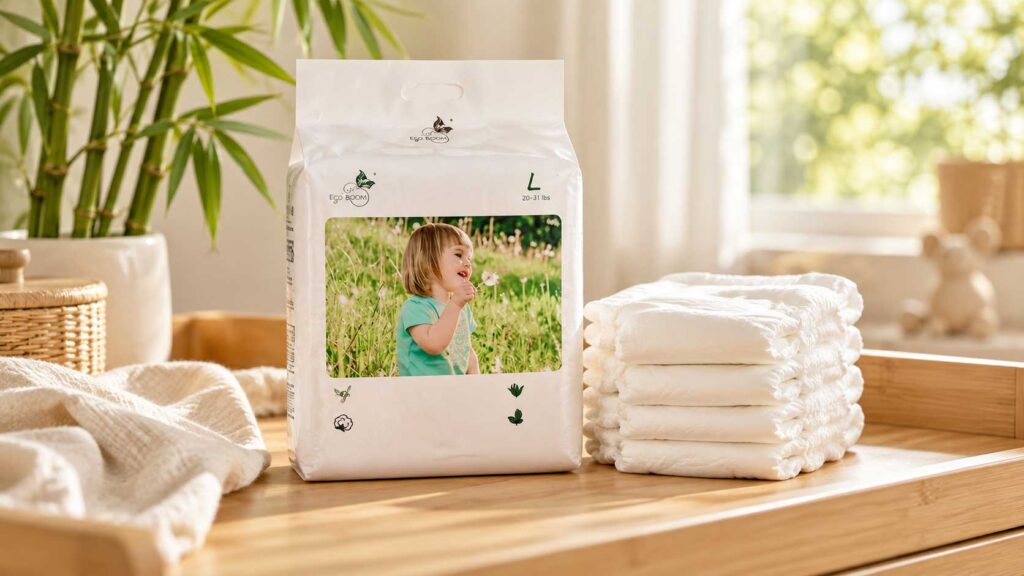
If you want to try bamboo diapers without switching to cloth, ECO BOOM Bamboo Baby Diapers are a convenient place to start. They have a soft bamboo viscose layer against your baby’s skin and a bamboo viscose outer layer, along with an absorbent wood pulp and polymer core to hold moisture.
The appeal is the familiar ease of a disposable diaper with bamboo derived material in its two main surface layers. They’re available in multiple sizes, and ECO BOOM offers a trial pack, which is useful if you want to check the fit before ordering a larger supply. Like other disposables, they also contain synthetic components, so put them in the trash according to your local rules.
Best for: Parents who want to try a bamboo layered disposable diaper.
2. Nest Chlorine-Free Baby Diapers
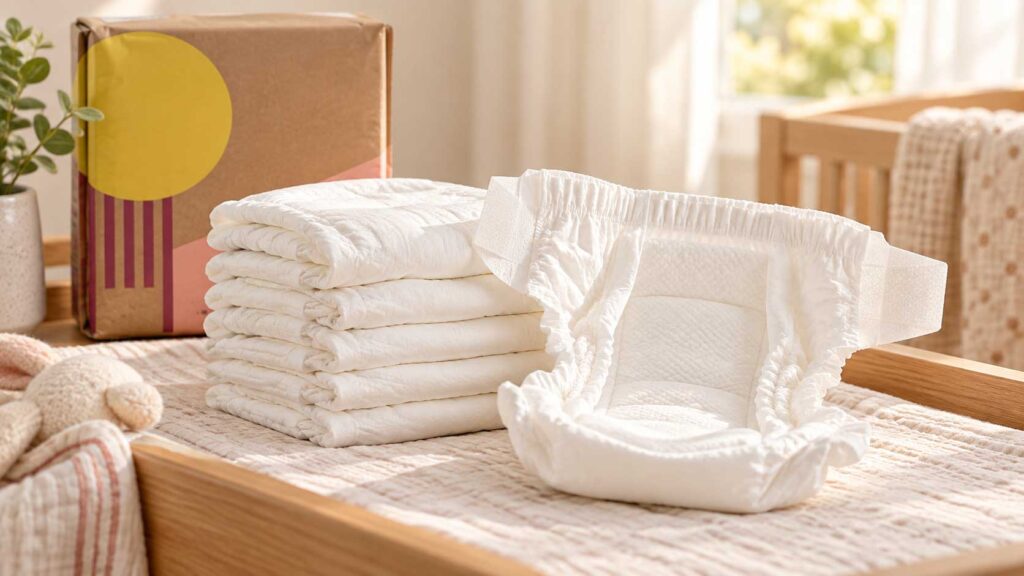
If you prefer a fragrance-free disposable diaper, Nest Chlorine-Free Baby Diapers are another option to compare. They use a wood pulp absorbent core and are made without added fragrance. Nest describes the current diaper as a mix of plant based and petroleum derived materials, so the name Nest Organic does not mean the entire diaper is certified organic.
Nest keeps the design fairly simple, without a wetness indicator. That may appeal to parents who prefer fewer added features, though you’ll need to check the diaper itself to know when it needs changing. As with any new brand, try one pack first to see how the waistband, leg openings, and absorbency work for your baby.
Best for: Parents looking for a fragrance-free disposable diaper with a straightforward design.
3. Naty BioEmbrace Diapers
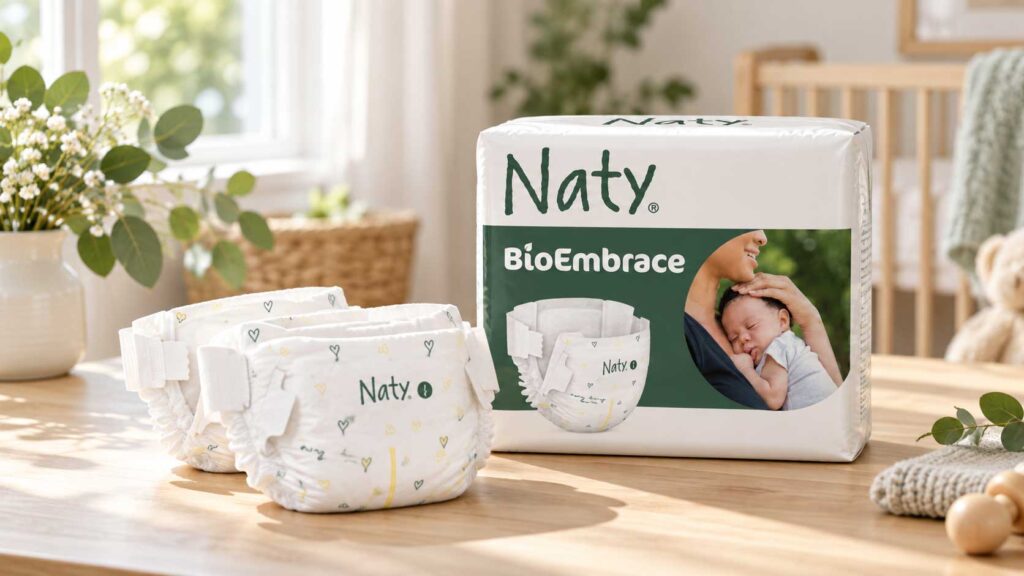
Eco by Naty diapers are now sold as Naty BioEmbrace, so use the current name and product link here. These disposables have a plant based liner and other plant based surfaces against the baby’s skin. Inside, the absorbent core combines FSC certified cellulose with superabsorbent polymer. Naty also includes a wetness indicator and stronger fastening tabs in this updated version.
BioEmbrace is a useful option if you want a disposable diaper with clearly identified plant based surface materials and certifications you can check. It is fragrance-free, but the entire diaper is not organic or compostable. Start with a single pack in your baby’s size before considering a subscription.
Best for: Parents who want plant based materials in the parts of a disposable diaper that touch their baby’s skin.
4. Bambo Nature Dream Diapers
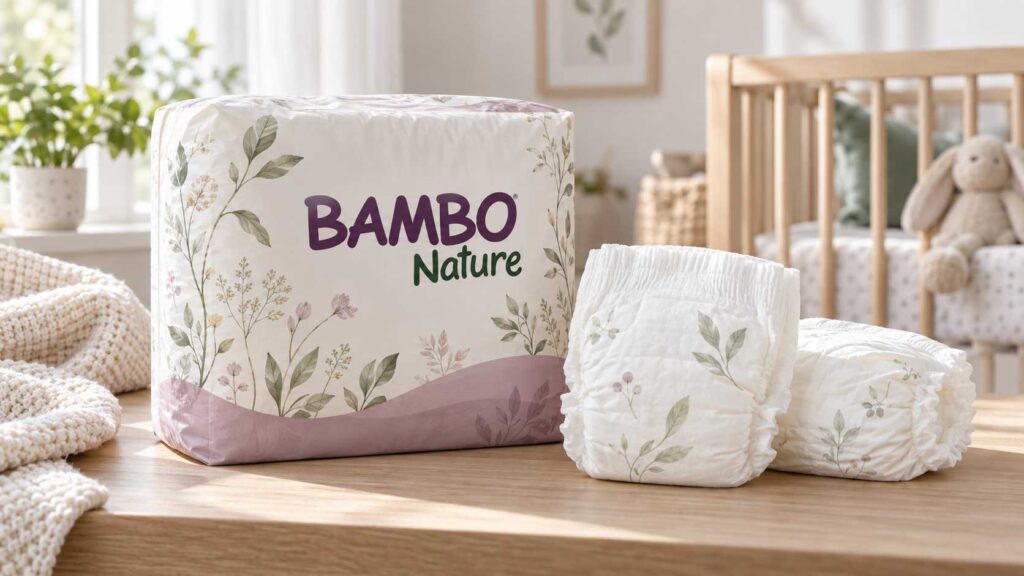
Bambo Nature Dream Diapers are disposable diapers designed with a breathable outer layer, an absorbent core, and a wetness indicator. They’re a strong option to compare if you want a familiar disposable design with independently checked environmental claims. The Dream Diapers sold in the U.S. carry the Nordic Swan Ecolabel and FSC certification.
The soft, flexible design may work well for everyday changes, but fit and absorbency will still vary from baby to baby. These are not certified organic cotton diapers, and the certifications do not mean the used diaper is compostable. Check the weight range and try one pack before stocking up.
Best for: Parents who want an ecolabeled disposable diaper with a wetness indicator.
5. Andy Pandy Bamboo Diapers
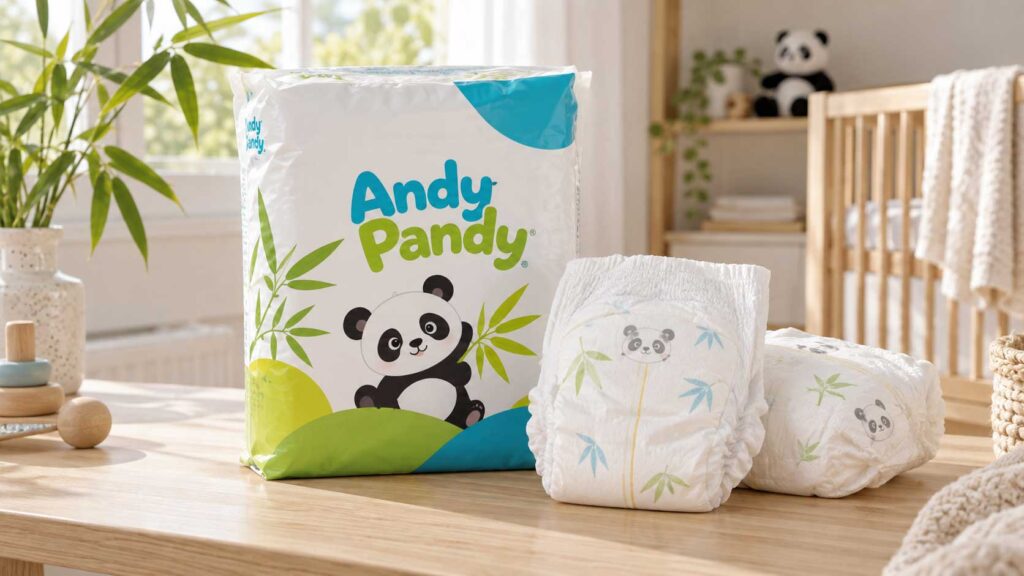
Andy Pandy Bamboo Diapers feature bamboo based inner and outer layers, a flexible waistband, stretchable sides, and a wetness indicator. They offer the convenience of a disposable diaper with a soft bamboo layer against your baby’s skin.
The wetness indicator is handy for quick checks, especially with a newborn. Andy Pandy diapers also contain an absorbent core and other non-bamboo components, so they are not entirely bamboo or certified organic. Availability has varied, so check that the listing shows the right size and a current pack before ordering.
Best for: Parents who want a bamboo layered disposable with a wetness indicator.
6. Little Toes Natural Bamboo Diapers
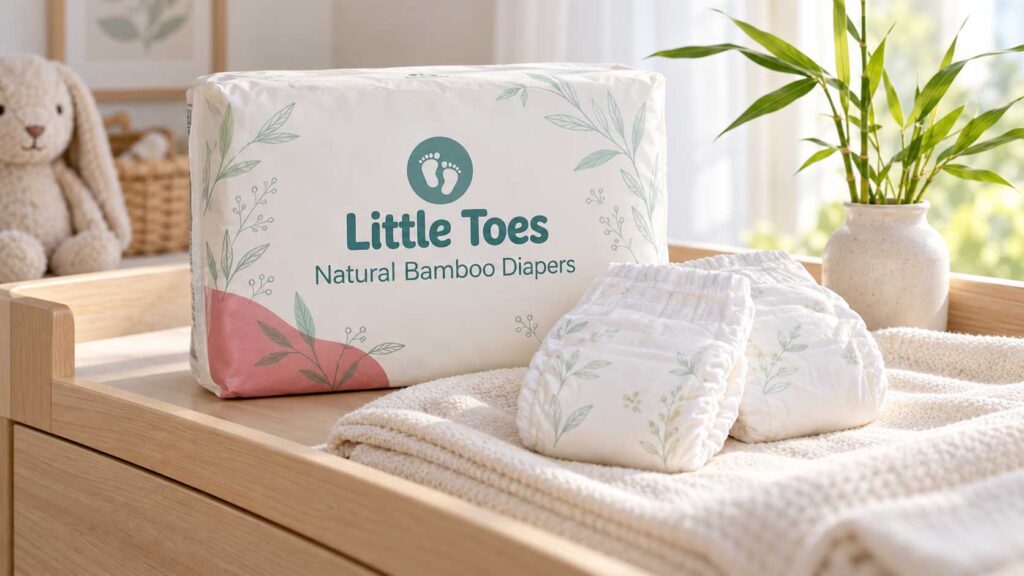
Little Toes Natural Bamboo Diapers come in a 36-pack and have a bamboo viscose top sheet, an absorbent core made with cellulose pulp and superabsorbent polymer, and a wetness indicator. The brand publishes a detailed breakdown of the materials in each layer, which makes it easier to see exactly what you’re buying.
These are worth a look if you want a bamboo layer against your baby’s skin and prefer a diaper with an adjustable waistband and side tabs. The outer sheet and leak guards also contain synthetic materials, so the complete diaper is not made entirely from bamboo or suitable for home composting. Check the weight range for your chosen size before ordering.
Best for: Parents who want a bamboo layered disposable with a detailed materials list.
7. Babyganics Triple Dry Diapers
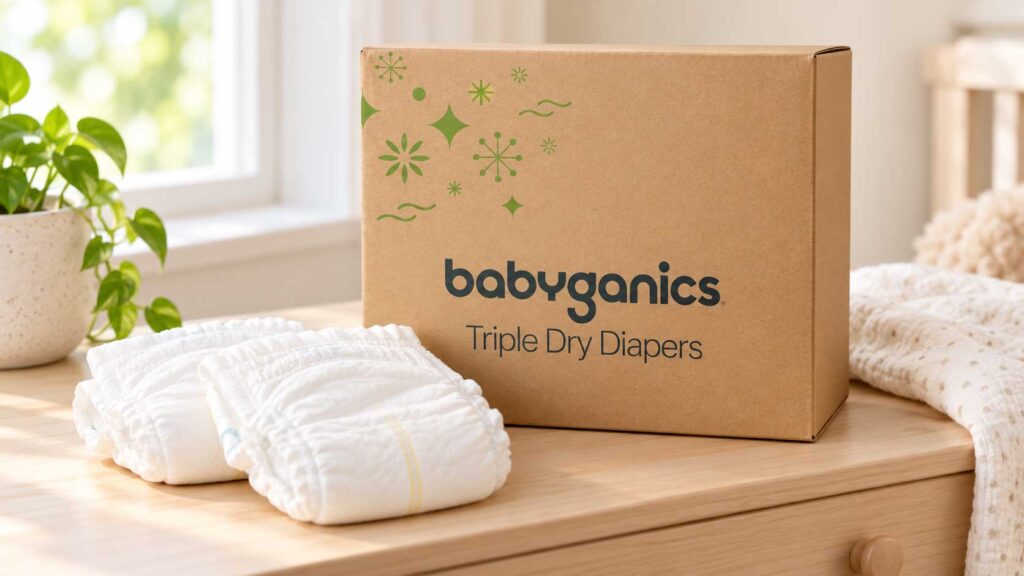
Babyganics Triple Dry Diapers focus on everyday absorbency and fit. Their U-shaped channel moves moisture toward an absorbent core, while a breathable outer layer, stretchy sides, and a wetness indicator make changes straightforward. The current product is made without added fragrance, latex, or petroleum based lotions.
These are a practical disposable option if those features matter to you, but Babyganics does not present them as certified organic or compostable diapers. Some product listings also mention the brand’s seed oil blend on the top sheet, so check the package if you prefer a diaper without an added skin care ingredient.
Best for: Parents looking for a fragrance-free disposable diaper with a wetness indicator.
8. The Honest Company Clean Conscious Diapers
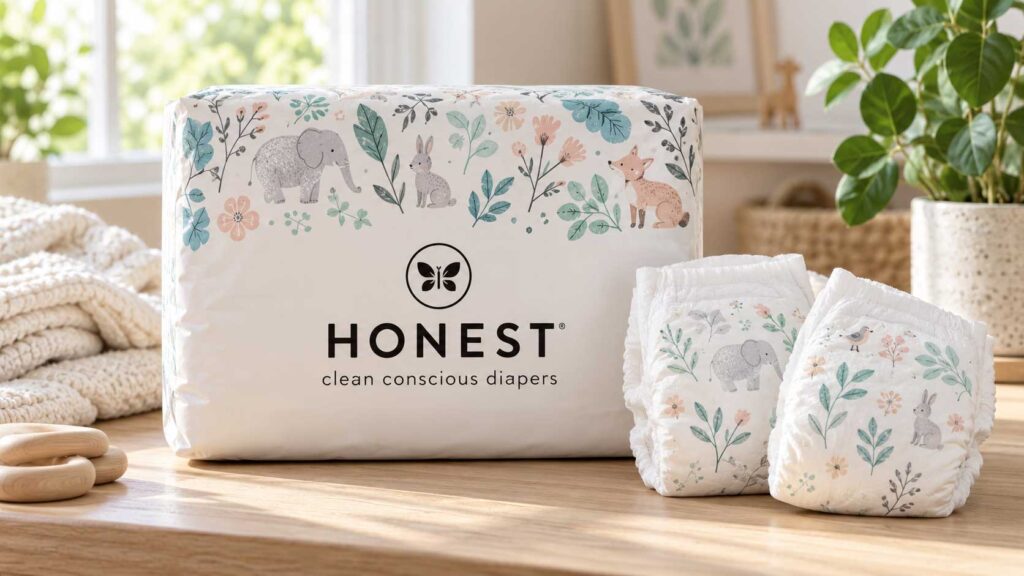
Honest Clean Conscious Diapers combine a soft liner, an absorbent wood pulp and polymer core, stretchy sides, and a wetness indicator. They’re made without added fragrance or natural rubber latex, and the brand offers a wide range of sizes and printed designs.
These are a convenient choice if you want to find the same diaper style as your baby grows. Honest uses some plant based materials, but its published ingredients also include synthetic materials, so Clean Conscious diapers are not certified organic or compostable. Choose a size using the weight guide and try a smaller pack to see how the fit works for your baby.
Best for: Parents who want a fragrance-free disposable available in many sizes and designs.
9. Earth & Eden Sensitive Diapers
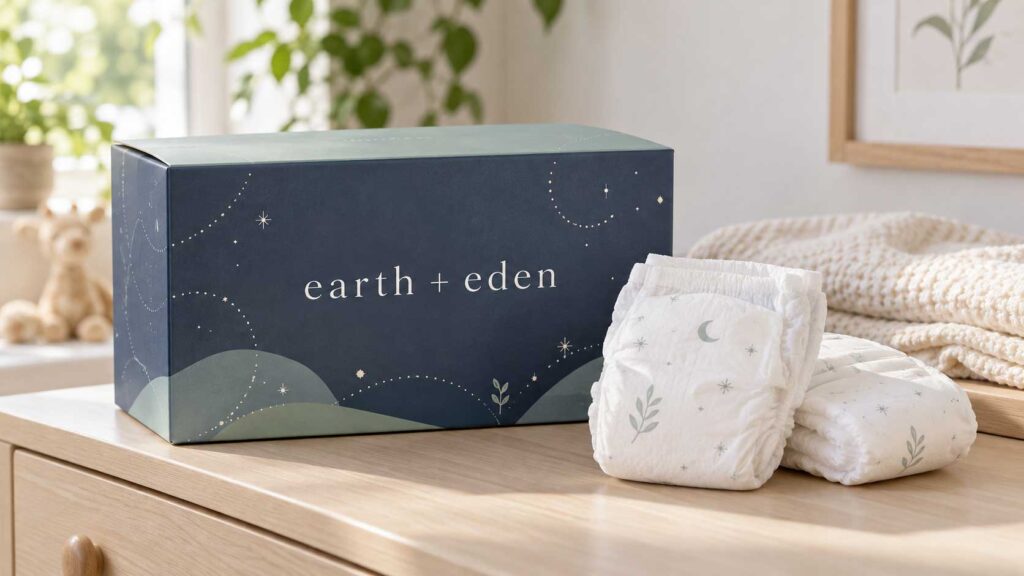
Earth & Eden Sensitive Diapers are soft, fragrance-free disposables with a breathable outer cover, stretchy fit, and absorbent core. The brand uses sustainably sourced fluff pulp certified through the Sustainable Forestry Initiative and says more than 20% of the diaper’s materials are plant based. Its published ingredient list also includes superabsorbent polymer and synthetic fabrics.
These are worth comparing if you want a straightforward, unprinted diaper without added lotion or fragrance. Earth & Eden no longer sells directly from its website, but says its diapers remain available through retail partners. Compare the cost per diaper in your baby’s size, since pack counts vary.
Best for: Parents who want a fragrance-free disposable with certified, responsibly sourced fluff pulp.
See Today’s Price — size 3 listing; select your baby’s size before ordering.
10. HealthyBaby Organic Cotton Enhanced Diapers
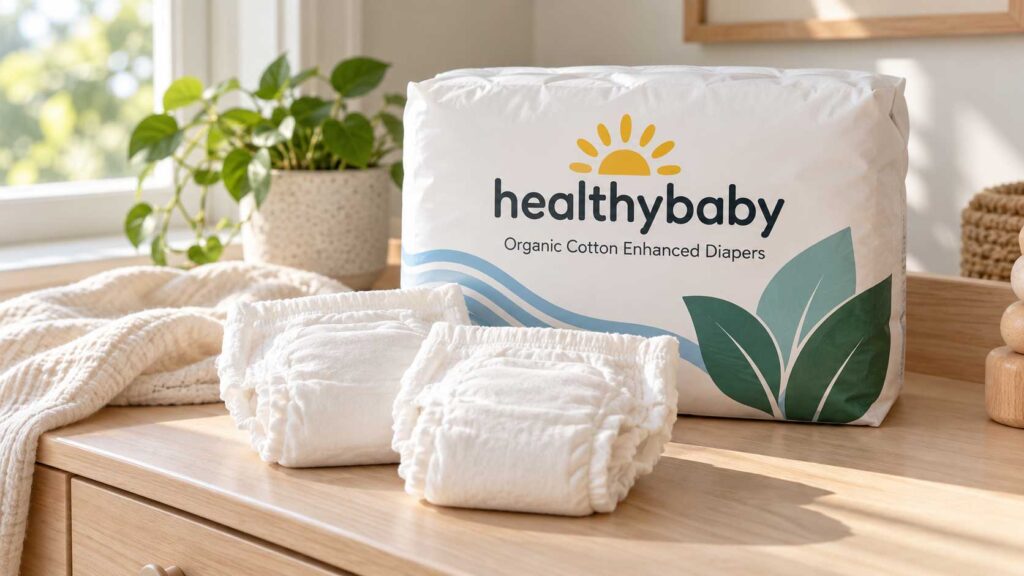
HealthyBaby Diapers stand out because their outer cover contains 15% organic cotton. They also use an absorbent core designed to draw moisture away and flexible tabs for a secure fit. Unlike several diapers above, they do not have a wetness indicator.
This is a strong one to compare if organic cotton is part of what drew you to this guide. Be precise about the label, though: the outer cover is enhanced with organic cotton; the entire disposable diaper is not organic cotton. HealthyBaby sells a single pack as well as larger diaper orders, so you can test the fit before committing to a month’s supply.
Best for: Parents who want a disposable diaper with organic cotton in the outer cover.
Which Diaper Should You Choose?
The best organic diapers for your family should fit your baby well, meet your budget, and use materials that match your priorities.
If certified organic fibers are your priority, start by comparing reusable organic cotton cloth diapers. Among the disposables in this guide, HealthyBaby includes organic cotton in its outer cover, but that does not make the entire diaper organic.
For bamboo derived layers, compare ECO BOOM and Little Toes. If you value an independent environmental label, look at Bambo Nature Dream. For a fragrance-free disposable, Nest, Honest, and Earth & Eden give you different designs and price points to compare.
The best diaper on paper may still be the wrong fit for your baby. Choose two or three options that match your priorities, buy small packs where possible, and compare fit, leaks, and cost per diaper before stocking up.
Frequently Asked Questions About Organic Diapers
Are bamboo diapers organic?
Not necessarily. “Bamboo” identifies the source of a material, while “organic” refers to how a material was produced and certified. A bamboo layer does not make the entire diaper certified organic.
Are organic diapers better for sensitive skin?
An organic label alone cannot tell you how your baby’s skin will respond. Fit, absorbency, and changing wet or soiled diapers promptly all matter. If a rash persists or gets worse, speak with your pediatrician.
Can you compost disposable diapers?
Do not put a used disposable diaper in home compost unless the manufacturer provides specific instructions showing that the entire diaper is suitable and your local rules allow it. Plant based or biodegradable materials in some layers do not make the whole diaper compostable.
Are any disposable diapers organic?
Some disposable diapers include certified organic material in one component. Check the product details to see which part is certified; that does not mean the entire diaper is organic.
Do cloth diapers save money?
They can, particularly if you reuse them for another child, but washing costs and the number of diapers you buy affect the total. Compare the upfront cost and your expected laundry routine with the cost per disposable diaper.
Final Thoughts: Choosing the Right Diaper for Your Family.
The best organic diapers for your family depend on what you want the word organic to mean in practice. If certified organic cotton is your priority, reusable cloth diapers give you a clear place to start. If you need disposables, compare the materials in each layer, the fit, and the cost per diaper rather than relying on the name on the package.
You can use cloth, disposables, or a mix of both. Choose what works for your baby and your daily routine, and be wary of claims that a disposable diaper will quickly disappear after you throw it in the trash.
Read More: Sustainable Baby Essentials
- Best Organic Diaper Bags and Eco-Friendly Options — Compare bags for carrying diapers, spare clothes, and changing supplies.
- 15 Sustainable Baby Gift Ideas — Explore practical gifts, including a cloth diaper starter kit and reusable wipes.
- 10 Easy Ways to Reduce Plastic Waste in Everyday Life — Find other manageable ways to cut household waste.



0 Comments